For more than four decades after World War II, the United States and the Soviet Union were locked in a global rivalry known as the Cold War. They never fought each other directly on a large scale, but they built vast nuclear arsenals, competed for allies and influence, and backed opposing sides in wars from Korea to Afghanistan. The most dangerous moment came in October 1962, when the discovery of Soviet nuclear missiles in Cuba brought the superpowers to the brink. At almost exactly the same time, India was fighting a border war with China, and the two crises became entangled.
How the Cold War began
The United States and the Soviet Union were allies against Nazi Germany, but their wartime partnership broke down soon after 1945. The Soviet Union installed communist governments across Eastern Europe, while the United States and Western Europe feared further Soviet expansion. The two sides also had fundamentally different political and economic systems.
In March 1947, US President Harry Truman pledged to support countries resisting communist pressure, a policy known as the Truman Doctrine. The Marshall Plan provided aid to rebuild Western Europe. In 1949, the United States and its allies formed NATO, and the Soviet Union tested its first atomic bomb. The Soviet-led Warsaw Pact followed in 1955. Europe was divided, and Berlin became the frontline.
A nuclear arms race
Both superpowers raced to build more powerful weapons and better ways to deliver them, from long-range bombers to intercontinental ballistic missiles. Each side's ability to destroy the other became the basis of deterrence, later known as mutually assured destruction. The Cold War also played out in a space race, proxy wars and competition for influence in newly independent countries across Asia and Africa.
Why Cuba?
In 1959, Fidel Castro's revolution took power in Cuba, just 90 miles (about 145 km) from Florida, and the island moved closer to the Soviet Union. In April 1961, a US-backed invasion by Cuban exiles at the Bay of Pigs failed badly. Soviet leader Nikita Khrushchev decided to station nuclear missiles in Cuba, partly to defend his ally and partly to offset American nuclear superiority, including US missiles based in Turkey near the Soviet border.
The thirteen days
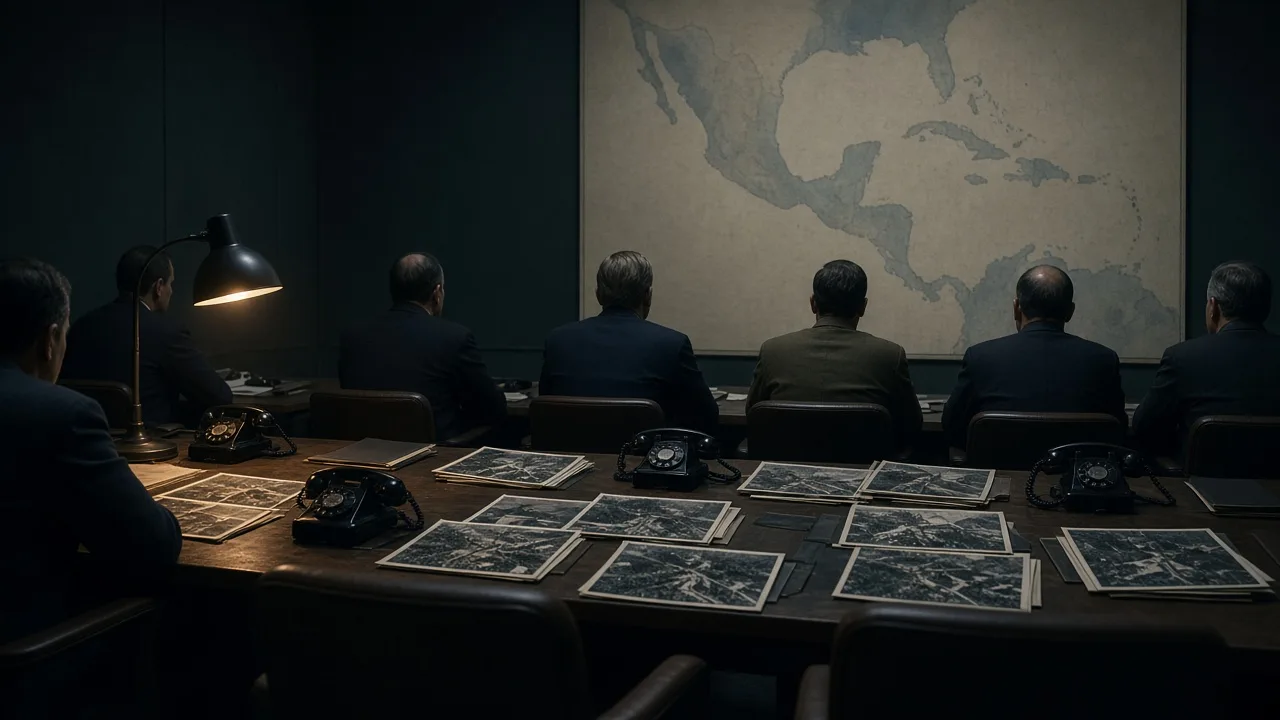
On October 14, 1962, a US U-2 spy plane photographed missile sites under construction in Cuba. President John F. Kennedy was briefed on October 16, and his advisers debated options ranging from air strikes to an invasion. Kennedy chose a naval "quarantine", or blockade, to stop further Soviet shipments, and announced it in a televised address on October 22.
The following days were tense. Soviet ships approached the quarantine line and then turned back. On October 27, a US U-2 was shot down over Cuba, killing its pilot, and the risk of escalation peaked. Behind the scenes, Kennedy and Khrushchev exchanged messages and back-channel talks continued. On October 28, Khrushchev announced that the missiles would be dismantled and returned to the Soviet Union. In return, the United States pledged not to invade Cuba and, secretly, agreed to remove its Jupiter missiles from Turkey.
After the brink
The crisis frightened both sides into new steps to manage the rivalry. In 1963, a direct communication link between Washington and Moscow, often called the hotline, was set up, and the Limited Test Ban Treaty banned nuclear tests in the atmosphere, in space and under water. The Cold War continued for nearly three more decades, through the Vietnam War, détente in the 1970s and renewed tensions in the early 1980s, before ending with the fall of the Berlin Wall in 1989 and the collapse of the Soviet Union in 1991.
Timeline: key moments
- March 1947: The Truman Doctrine is announced.
- 1949: NATO is founded; the Soviet Union tests an atomic bomb.
- 1955: The Warsaw Pact is formed.
- 1959: Castro takes power in Cuba.
- April 1961: The Bay of Pigs invasion fails.
- October 14, 1962: A U-2 photographs Soviet missile sites in Cuba.
- October 22, 1962: Kennedy announces a naval quarantine.
- October 28, 1962: Khrushchev agrees to remove the missiles.
- 1963: The hotline is set up and the Limited Test Ban Treaty is signed.
- 1991: The Soviet Union dissolves, ending the Cold War.
The India connection
India chose not to join either Cold War bloc. Under Jawaharlal Nehru, it became a leading voice of non-alignment, and it was among the founders of the Non-Aligned Movement at its first summit in Belgrade in 1961.
The Cuban crisis coincided with a severe test of that policy. On October 20, 1962, Chinese forces launched major attacks along the disputed Himalayan border, starting the Sino-Indian War. Britannica notes that China chose the height of the Cuban missile crisis to attack, apparently expecting the superpowers to be distracted. As the Indian position deteriorated, Nehru appealed for Western military help. The swift end to the Cuban crisis freed Washington to respond, and China announced a unilateral ceasefire around November 20-21, 1962. The war pushed India to strengthen its military and to rethink the limits of non-alignment.
Why it matters today
- Communication prevents catastrophe. Back-channel diplomacy helped end the crisis, and hotlines between rival powers remain important.
- Nuclear risks have not disappeared. Arsenals, missile deployments and regional rivalries still carry the risk of miscalculation.
- Geopolitical crises are connected. Events in the Caribbean shaped the outcome of a war in the Himalayas.
- Strategic autonomy is hard work. India's balancing between major powers today builds on lessons from the Cold War and 1962.
Frequently asked questions
What was the Cuban Missile Crisis?
It was a 13-day confrontation in October 1962 between the United States and the Soviet Union over Soviet nuclear missiles in Cuba. It is widely seen as the closest the world has come to nuclear war.
How did the Cuban Missile Crisis end?
The Soviet Union agreed to remove its missiles from Cuba. The United States pledged not to invade Cuba and secretly agreed to withdraw its missiles from Turkey.
What does the Cuban Missile Crisis have to do with India?
China attacked India on October 20, 1962, during the crisis. Britannica notes that China appears to have timed its attack expecting the superpowers to be distracted, and the quick resolution in Cuba allowed the US to respond to India's request for help.