
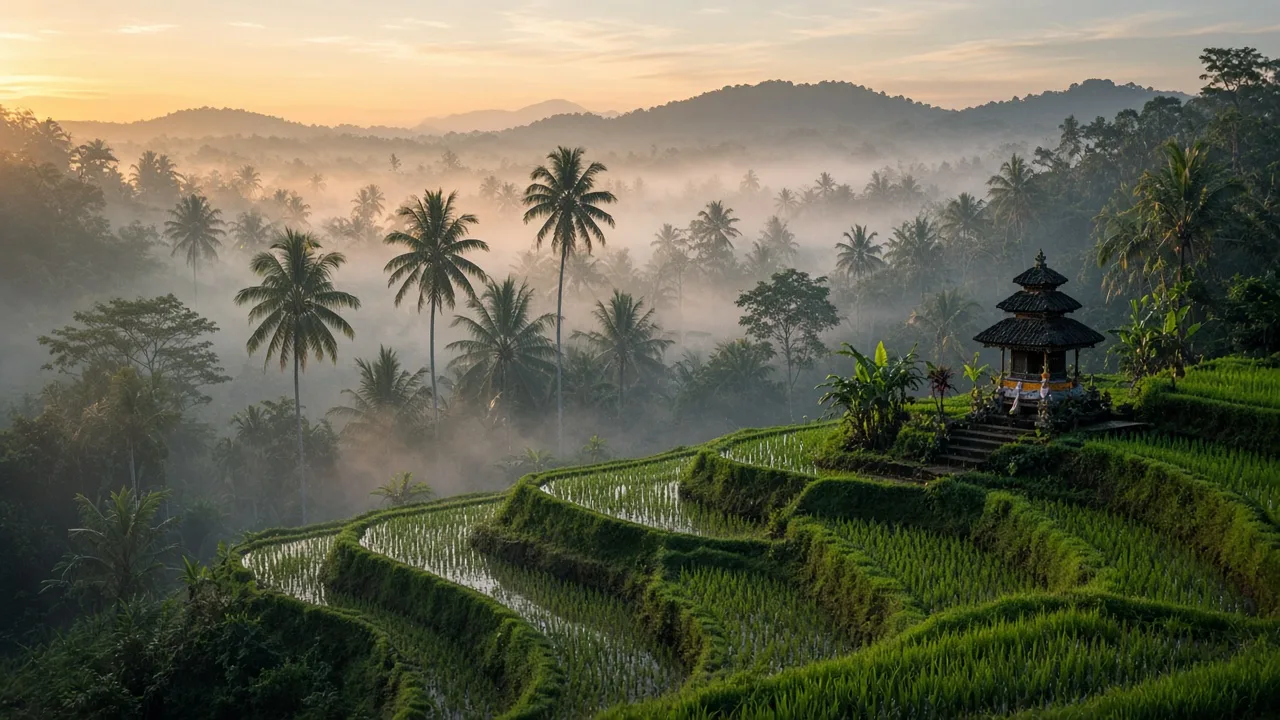
Bali has been a favourite of island-hoppers, surfers and honeymooners for decades. Behind the beach clubs lies a deeply Hindu island of temple ceremonies, rice terraces, volcanoes and craft villages. Choosing the right area to stay and travelling with respect for local customs can transform a trip.
Why go
Bali offers huge variety in a small area. You can spend sunrise on a volcano, the morning in a rice-terrace landscape listed by UNESCO as part of the subak irrigation system, the afternoon at a temple ceremony and the evening at a seafood barbecue on Jimbaran beach. Good-value villas, yoga retreats, diving and a famous food scene complete the picture.
Best time to visit
- Dry season (roughly April to October): sunny, less humid and best for beaches, diving and trekking. July, August and the end-of-year holidays are the busiest periods.
- Shoulder months (April to June and September): good weather with fewer crowds.
- Wet season (roughly November to March): short, heavy tropical downpours, lush scenery and lower prices outside Christmas and New Year. For winter 2026-27, expect rain most afternoons but plenty of dry hours. Seas can be rougher for boat trips to the Nusa islands and the Gilis.
- Nyepi (the Balinese Day of Silence): usually in March. The whole island, including the airport, shuts down for 24 hours. Check the date if you are travelling in spring.
Top things to do
- Ubud: the Sacred Monkey Forest Sanctuary, the Tegallalang and Jatiluwih rice terraces, dance performances and cooking classes.
- Temples: Tanah Lot and Uluwatu at sunset, the "mother temple" of Besakih on Mount Agung's slopes, and the water temple of Tirta Empul.
- Mount Batur sunrise trek: a pre-dawn hike with a licensed local guide.
- Beaches and surf: Uluwatu and Bingin for experienced surfers, Kuta and Canggu for beginners, and Nusa Dua or Sanur for calmer water.
- Nusa Penida and Nusa Lembongan: cliffs, manta-ray snorkelling and quieter bays, reached by fast boat from Sanur.
- North and east Bali: Amed and Tulamben for diving and the USAT Liberty wreck, and Munduk for waterfalls and coffee farms.
Where to stay by area
- Seminyak and Canggu: cafés, boutiques, beach clubs and a lively, international scene. Traffic is heavy.
- Ubud: culture, wellness and jungle villas in the hills.
- Uluwatu and the Bukit Peninsula: clifftop resorts and surf beaches.
- Nusa Dua: large, gated resorts and calm beaches, popular with families.
- Sanur: relaxed, walkable and the main fast-boat hub.
- Amed and Munduk: slow travel, away from the crowds.
Getting there and around
I Gusti Ngurah Rai International Airport (DPS) in the south has direct flights from across Asia, Australia and the Middle East, plus connections from Europe and North America. There is no island-wide public transport network worth relying on. Most visitors use private drivers (often hired by the day), ride-hailing apps such as Grab and Gojek where permitted, or scooters. Only rent a scooter if you hold a valid licence and an International Driving Permit with a motorcycle category, and always wear a helmet. Police checks on foreign riders are common. Allow plenty of time for journeys, as traffic in the south can be slow.
Indicative budget
Approximate per person per day:
- Budget: about US$35 to US$60 with a guesthouse, warung meals and scooter or shared drivers.
- Mid-range: about US$90 to US$180 for a boutique hotel or private villa share, a driver and restaurant meals.
- Luxury: US$350 and up for high-end resorts and private pool villas.
Practical tips: entry rules, taxes and overtourism
- Entry: many nationalities can obtain a tourist visa on arrival or an electronic visa on arrival (e-VOA) through Indonesia's official immigration portal. Some neighbouring countries enjoy visa-free entry. Check the current rules for your passport, carry a passport valid for at least six months, and complete Indonesia's online arrival declaration before landing.
- Bali tourist levy: foreign tourists must pay a one-off levy of IDR 150,000 per person per trip. Pay it online through the official Love Bali website or app before you fly, or at counters at the airport and port. Keep the QR voucher. Holders of certain visas are exempt.
- Behaviour rules: the provincial government has issued guidelines on respectful conduct. Dress modestly at temples (a sarong and sash are usually required), do not climb on sacred structures or trees, and avoid using single-use plastic. Behaving badly can lead to deportation.
- Overtourism: traffic, water stress and waste are real concerns. Consider staying in less crowded regions, using refill stations, and choosing licensed, locally owned operators.
- Health: drink bottled or filtered water, and get travel insurance that covers scooter accidents if you plan to ride.
FAQ
Is Bali good in the rainy season? Yes, for many travellers. Rain often comes in short bursts, prices are lower and the landscape is at its greenest. Diving and boat trips may be affected on some days.
How many days do I need? A week allows two bases, such as Ubud and the south coast. Ten to fourteen days lets you add the Nusa islands or north Bali.
Do I pay the levy every time I enter Bali? The levy is paid once per trip to Bali, before you leave Indonesia. A new trip requires a new payment.


