The United States began as 13 British colonies strung along the Atlantic coast of North America. Between 1775 and 1783, they fought and won a war of independence against the world's leading naval power, and in the process produced the Declaration of Independence and, a few years later, a written constitution that inspired others around the world. Few Indian readers realise how closely this story is tied to India: the tea dumped into Boston Harbour belonged to the East India Company, and the British general who surrendered at Yorktown went on to govern India.
Taxes, debt and "no taxation without representation"
Britain emerged from the Seven Years' War (1756 to 1763) victorious but heavily in debt. Parliament in London decided the American colonies should help pay for their own defence. A series of new taxes and trade rules followed, including the Stamp Act of 1765, which taxed printed materials, and the Townshend Acts of 1767 on imports such as glass, paper and tea.
Many colonists objected that they were being taxed by a Parliament in which they had no elected representatives, a grievance summed up in the popular slogan "no taxation without representation". Boycotts and protests spread. In March 1770, British soldiers fired into a crowd in Boston, killing five people, an event colonists called the Boston Massacre.
The Boston Tea Party
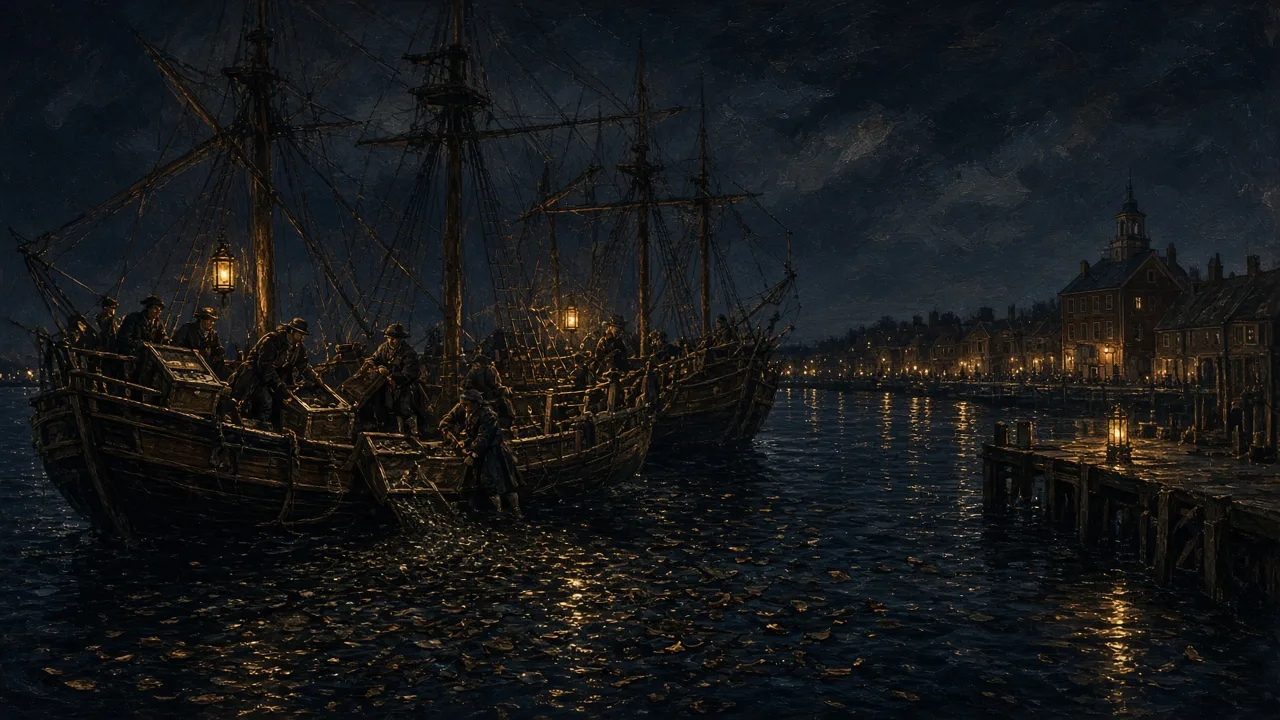
In 1773, Parliament passed the Tea Act. It was designed partly to rescue the struggling British East India Company by allowing it to sell tea directly to the colonies, more cheaply than smuggled tea, while keeping a tax that colonists resented. On December 16, 1773, protesters boarded Company ships in Boston Harbour and dumped more than 340 chests of tea into the water.
Britain responded with harsh measures, which colonists called the Intolerable Acts, closing Boston's port until the tea was paid for. Instead of isolating Massachusetts, the crackdown united the colonies, which sent delegates to a Continental Congress in 1774.
War and independence
Fighting broke out at Lexington and Concord in Massachusetts on April 19, 1775. The Continental Congress appointed George Washington to command a new Continental Army. In January 1776, Thomas Paine's pamphlet Common Sense made a popular case for complete independence.
On July 2, 1776, Congress voted for independence, and on July 4 it adopted the Declaration of Independence, drafted mainly by Thomas Jefferson. It set out the idea that governments derive their power from the consent of the governed, although its promise of equality did not then extend to enslaved people, women or Native Americans.
The war went badly for the Americans at first. The turning point came at Saratoga in New York in October 1777, where a British army surrendered. That victory helped persuade France to sign an alliance with the United States in 1778, and Spain joined the war against Britain in 1779. In 1781, American and French forces, backed by a French fleet, trapped General Charles Cornwallis at Yorktown in Virginia. He surrendered on October 19, 1781. The Treaty of Paris, signed on September 3, 1783, recognised American independence.
The cost in lives is hard to pin down. Estimates vary, but many thousands of Americans died, with disease and harsh conditions in prison ships killing more soldiers than battle did.
Building a new nation
The first national government, under the Articles of Confederation, proved weak. In 1787, delegates in Philadelphia drafted the US Constitution, which created a federal system with separate legislative, executive and judicial branches. It was ratified in 1788, and George Washington became the first president in 1789. A Bill of Rights followed in 1791.
Timeline: key moments
- 1765: The Stamp Act provokes protests across the colonies.
- March 5, 1770: The Boston Massacre.
- December 16, 1773: The Boston Tea Party.
- April 19, 1775: Fighting begins at Lexington and Concord.
- July 4, 1776: The Declaration of Independence is adopted.
- October 1777: British surrender at Saratoga.
- 1778: France allies with the United States.
- October 19, 1781: Cornwallis surrenders at Yorktown.
- September 3, 1783: The Treaty of Paris recognises independence.
- 1787-1789: The Constitution is drafted, ratified and put into effect.
The India connection
India runs through this story in several ways.
- The tea. The Tea Act was meant in part to help the East India Company, which was then also consolidating its power in Bengal. The Boston Tea Party was, in effect, a protest against a company that was becoming a ruler in India.
- A global war. Once France and Spain joined in, the American war became a wider conflict between Britain and its European rivals, fought partly in India. During the Second Anglo-Mysore War (1780 to 1784), Hyder Ali and then his son Tipu Sultan fought the Company with French support.
- Cornwallis in India. The general defeated at Yorktown became governor-general of India from 1786 to 1793. His reforms, including the Cornwallis Code and the Permanent Settlement of land revenue in Bengal in 1793, shaped Indian administration and rural life for generations.
- Constitutional ideas. India's Constitution draws on many sources. Features such as a written bill of rights and judicial review owe something to the American example.
Why it matters today
- Taxation and representation are linked. The colonists' central complaint still frames debates about who gets a say in how public money is raised and spent.
- Corporations can carry political risk. The East India Company's troubles helped trigger a revolution, a reminder that business and state power can collide.
- Alliances decide wars. French money, troops and ships were crucial to American victory.
- Ideals can outrun reality. The Declaration's promise of equality took generations of struggle to be extended to all.
Frequently asked questions
When did the American Revolution take place?
The war lasted from 1775 to 1783. Independence was declared on July 4, 1776, and Britain recognised it in the Treaty of Paris in 1783.
What did the Boston Tea Party have to do with India?
The tea belonged to the British East India Company, which also ruled large parts of India. The Tea Act of 1773 was partly designed to rescue the Company's finances.
Who was Lord Cornwallis?
He was the British general who surrendered at Yorktown in 1781. He later served as governor-general of India from 1786 to 1793 and introduced the Permanent Settlement in Bengal.