
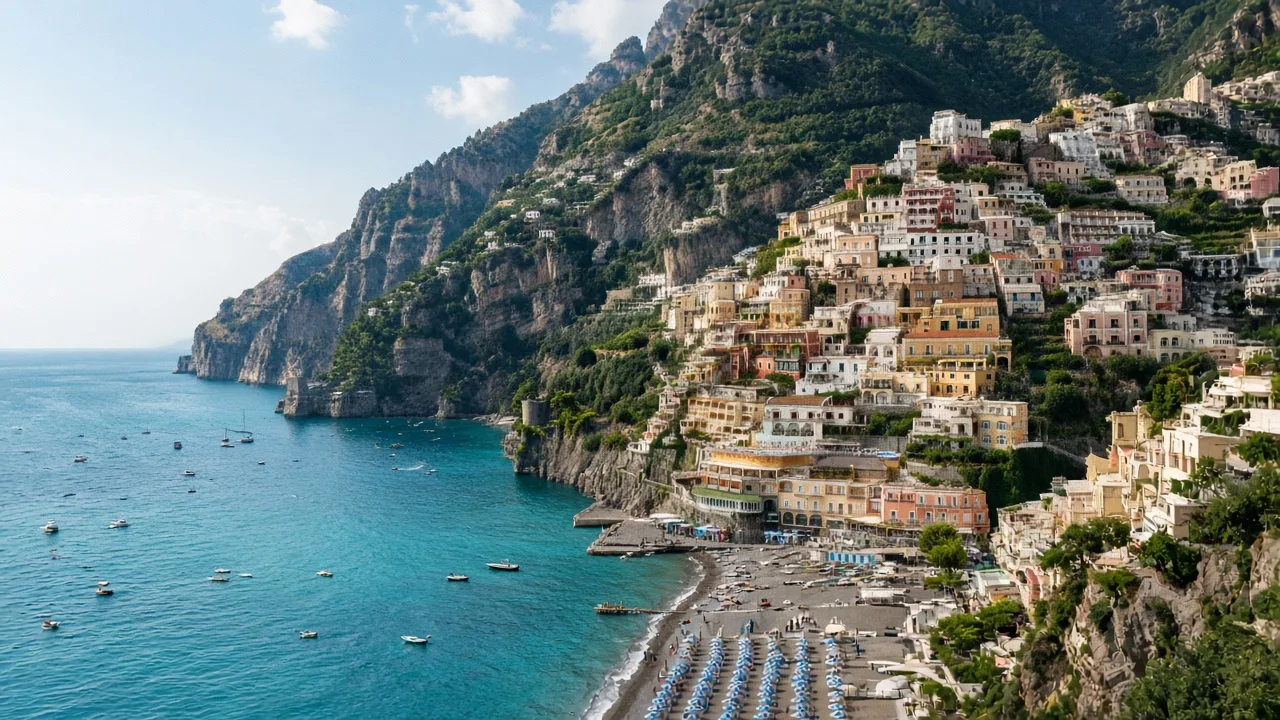
The Amalfi Coast is a 50 km stretch of cliffs, lemon terraces and pastel villages on the Sorrento Peninsula south of Naples. UNESCO lists it as a cultural landscape. It is one of the most photographed places in Europe and among the most crowded in summer, which makes the timing and transport choices for your trip especially important.
Why go
Few coastlines combine scenery, history and food so well. Positano tumbles down to the sea in a cascade of colour. Amalfi was once a powerful maritime republic. Ravello sits high above the water with villa gardens and summer concerts. In between are hiking trails, hidden coves, limoncello and fresh seafood.
Best time to visit
- May, June, September and early October: warm seas, long days and slightly thinner crowds. These are the sweet spots for most travellers.
- July and August: hot, expensive and very busy, with heavy traffic on the coast road.
- Winter (November to March): many hotels, beach clubs and some ferry routes close, and the weather is cool and changeable. Winter 2026-27 suits travellers who want quiet villages, low prices and hiking. Expect a reduced service, and base yourself in Amalfi or Sorrento, where more places stay open. Christmas lights and nativity scenes add festive charm.
Top things to do
- Positano: wander the lanes, swim at Spiaggia Grande or the quieter Fornillo beach, and watch the sunset from a terrace.
- Amalfi: visit the Duomo di Sant'Andrea and its Cloister of Paradise, then walk up the Valle delle Ferriere.
- Ravello: Villa Rufolo and Villa Cimbrone, with the famous Terrace of Infinity.
- Path of the Gods (Sentiero degli Dei): a classic hike from Agerola (Bomerano) towards Nocelle above Positano, best in spring or autumn.
- A boat day: rent a boat or join a small-group trip to see grottoes and coves from the water.
- Capri day trip: ferries run from Positano and Amalfi in season.
- Food: try scialatielli ai frutti di mare, lemon desserts and Colatura di Alici from Cetara.
Where to stay by area
- Positano: iconic and romantic, but steep, pricey and crowded in summer.
- Amalfi town: the transport hub for buses and ferries, with good-value options in the surrounding hamlets.
- Ravello: quieter and elegant, with sweeping views. It is a bus ride up from the sea.
- Praiano and Minori/Maiori: calmer, often cheaper alternatives with good access.
- Sorrento: not on the Amalfi Coast itself, but a practical, well-connected base with year-round services.
Getting there and around
Naples Capodichino is the nearest major airport. From there, private transfers, buses or a train-plus-ferry combination reach the coast. Salerno, with its Costa d'Amalfi airport, is another gateway. On the coast, SITA buses link the towns along the SS163 road, and ferries connect Salerno, Amalfi, Positano and Capri from roughly spring to autumn. Ferries are usually the most relaxing option in summer.
Driving yourself is not recommended in peak season. In 2026, ANAS again applied an alternate number-plate system on the SS163 between 10am and 6pm on set dates. On those days, cars with odd-numbered plates may not drive on odd dates, and even-numbered plates are barred on even dates. The rule covered spring holiday periods, summer weekends, daily operation in August and September, and weekends in October, with exemptions for residents, taxis and certain hotel transfers. Expect similar rules in future seasons and check the municipality's notices.
Indicative budget
Approximate per person per day in high season:
- Budget: about €90 to €140 with a guesthouse room outside Positano, buses, and pizza or deli lunches.
- Mid-range: about €200 to €350 for a three- or four-star hotel, ferries and restaurant dinners.
- Luxury: €600 and up. Top Positano and Ravello hotels often charge well over €1,000 a night in summer.
Prices fall noticeably from November to March.
Practical tips: entry rules, taxes and overtourism
- Entry: Italy is in the Schengen Area, and the usual 90-in-180-day rule applies to visa-exempt visitors. The EU Entry/Exit System is in use at external borders. ETIAS is not yet operating.
- Tourist tax: Amalfi Coast towns charge a municipal tourist tax per person per night. It is typically a few euros, varies by town and hotel category, and is paid at the property.
- Overtourism: besides the plate rule, some towns have used measures such as restrictions on tour groups and fines for inappropriate dress away from the beach. Respect "no swimwear in town" signs, keep noise down on the stairways at night, and carry water and rubbish on hikes.
- Fitness: almost everything involves stairs. Pack light, as porters charge to carry luggage up to hillside hotels.
FAQ
Which town is best for a first visit? Amalfi is the most convenient for transport. Positano offers the classic views, and Ravello is quieter.
Can I visit the Amalfi Coast as a day trip from Naples? Yes, but it makes for a long day. Two or three nights allows a more relaxed pace.
Are ferries running in winter? Services are much reduced from about November to March, so rely on buses at that time of year.


