Many people notice that their hair behaves very differently once winter sets in. The scalp turns flaky and itchy, the ends feel rough, and more strands seem to collect on the comb. The good news is that a few small changes to your routine can make a big difference.
Why winter is hard on hair
- Dry air: low humidity pulls moisture out of the scalp and hair.
- Hot water baths: very hot water strips natural oils, leaving the scalp dry and flaky.
- Less water intake: we tend to drink less in cold weather.
- Woollen caps and scarves: friction can cause breakage and trap sweat and oil.
- Seasonal shedding: some people naturally shed more hair at certain times of the year.
Tackling dandruff
Winter dandruff is often linked to a dry scalp, but flaky, oily patches can also come from a common yeast that lives on the skin.
- Use an anti-dandruff shampoo with ingredients such as ketoconazole, zinc pyrithione, selenium sulphide or salicylic acid, two or three times a week. Leave it on the scalp for a few minutes before rinsing.
- Do not over-oil a scalp that already has dandruff. Heavy oil left on for days can feed the yeast and make flakes worse.
- Rinse thoroughly so no shampoo or conditioner residue remains.
- Keep combs and pillow covers clean.
Fixing dryness and breakage
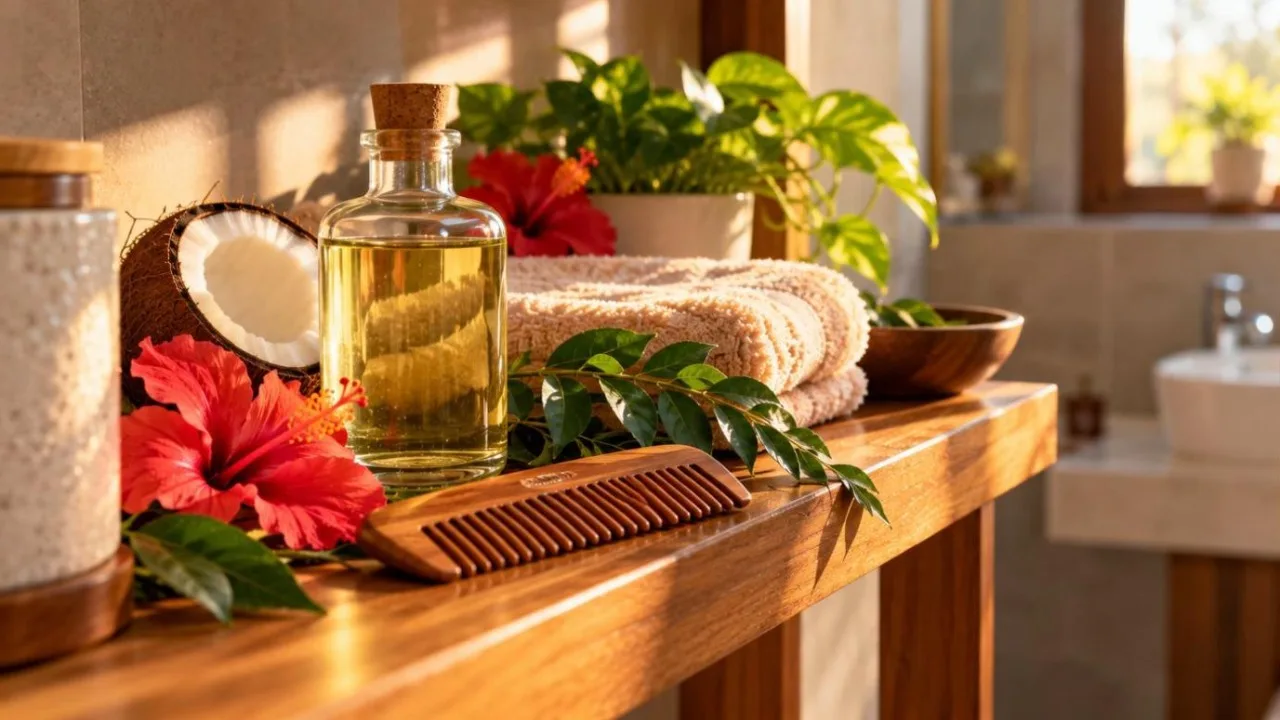
- Oil before washing: warm coconut, sesame or almond oil, massaged gently into the scalp and lengths an hour or two before your hair wash, adds nourishment without leaving oil on for long.
- Use lukewarm water instead of hot water, with a cool final rinse.
- Always condition the lengths and ends after shampooing.
- Do a weekly hair mask with curd, aloe vera gel or a ready-made deep conditioner.
- Limit heat styling with dryers and straighteners, and use a heat protectant if you must.
- Use a wide-toothed wooden comb and detangle gently from the ends upwards.
- Line woollen caps with a silk or cotton scarf to reduce friction.
Reducing hair fall
- Eat enough protein: dal, eggs, paneer, curd, fish, nuts and seeds.
- Include iron, zinc and vitamin rich foods: leafy greens, dates, amla, seasonal fruits and whole grains.
- Drink water regularly even if you do not feel thirsty.
- Avoid tight hairstyles that pull on the roots.
- Manage stress and sleep well; both affect the hair growth cycle.
Simple home remedies people use
- Curry leaf and coconut oil: heat a handful of curry leaves in coconut oil, cool and strain, then use for a pre-wash massage.
- Hibiscus and fenugreek pack: grind soaked methi seeds with a few hibiscus leaves or flowers into a paste and apply for 20 to 30 minutes.
- Aloe vera gel: soothes an itchy, dry scalp.
Always do a patch test first, and stop if anything causes irritation.
When to see a dermatologist
- Hair fall lasting longer than two to three months
- Bald patches or a visibly widening parting
- Red, painful, oozing or very itchy scalp
- Dandruff that does not improve after a few weeks of medicated shampoo
Persistent hair fall can be linked to thyroid problems, low iron or vitamin levels and other conditions that need proper testing.
This article is for general information. If you have severe hair loss, bald patches or a painful, itchy scalp, please consult a dermatologist.