Lead poisoning rarely makes headlines, because it usually causes no obvious symptoms until damage is done. On 15 October 2026, marking International Lead Poisoning Prevention Week, the World Health Organization called on countries to speed up action against a toxic metal it says contributes to more than 3.5 million deaths a year and affects hundreds of millions of children.
What WHO announced
WHO says its member states have recognised lead exposure as a pressing public health concern and asked it to develop a Global Action Plan on Lead Mitigation, which will go to the World Health Assembly in 2027. WHO will also launch a PREVENT Technical Package on Lead Poisoning Prevention in 2027 to help countries identify their main sources of exposure, choose the interventions with the biggest impact, enforce regulations and track progress.
This year's theme is "From Detection to Prevention". WHO points out that fewer than half of countries had confirmed legally binding controls on lead paint in its latest published global assessment.
"Lead poisoning should not be stealing children's potential in 2026," said Bruce Gordon, acting Director of WHO's Department of Environment, Climate Change, One Health and Migration. "Countries now need to move upstream, removing lead from products and environments before it reaches a child's bloodstream."
WHO also noted that, through the Lead Poisoning Prevention Initiative, it is helping build laboratory capacity for blood lead testing in several places, including five states in India, as well as Brazil, Nepal and six countries in sub-Saharan Africa.
Why lead is so harmful
Lead is a naturally occurring metal, but there is no known safe level of exposure, according to WHO. Once it enters the body it travels to the brain, liver, kidneys and bones, and it is stored in bones and teeth, where it can build up over time.
Children are especially vulnerable. WHO says young children can absorb four to five times as much lead as adults from the same amount swallowed, and their habit of putting hands and objects in their mouths increases exposure. Even relatively low levels can permanently affect brain development, with effects on IQ, attention, behaviour and learning. Children who are short of iron or calcium absorb more lead.
Adults are harmed too. Lead raises the risk of high blood pressure, heart disease and kidney damage, and WHO says most lead-linked deaths are due to cardiovascular effects. In pregnancy, lead stored in a mother's bones can be released into the blood and reach the developing baby, which is linked to reduced foetal growth and preterm birth.
The scale of the problem in South Asia
A 2020 report by UNICEF and Pure Earth estimated that around one in three children worldwide, up to 800 million, had blood lead levels at or above 5 micrograms per decilitre, the level at which action is required. Nearly half of those children lived in South Asia.
A peer-reviewed study of children in Patna, Bihar, published in PLOS Global Public Health, cited an estimate that 275 million children aged 0 to 9 in India had blood lead levels at or above that threshold in 2020. In the study itself, about 87% of the children tested were at or above that level, and lead in spices, particularly turmeric, was among the factors associated with higher levels.
Where lead can hide
WHO lists a wide range of sources. Those most relevant to households include:
- Old or lead-based paint, especially when it flakes or is sanded.
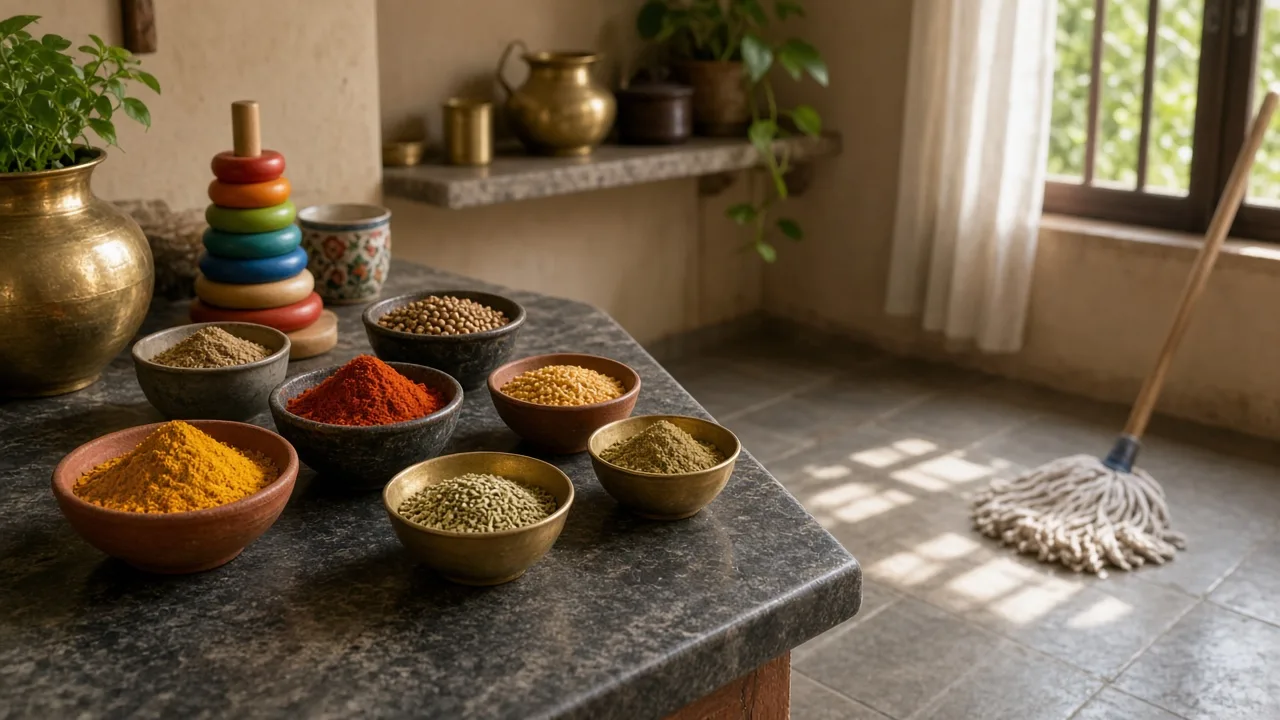
- Spices that have been adulterated, sometimes to make the colour brighter.
- Cookware and ceramics, including some glazed pottery.
- Some traditional cosmetics and traditional medicines.
- Informal recycling of lead-acid batteries, which can contaminate soil, dust and air in nearby neighbourhoods.
- Water from old plumbing containing lead pipes, solder or fittings.
Practical steps for families
Most sources of lead are beyond any one household's control, which is why WHO is pressing governments to act. But a few habits can reduce risk:
- Buy spices from reputable sources. Be cautious about loose spices with an unusually bright colour, and prefer products from established sellers that follow food safety standards.
- Keep dust down. Wet-mop floors and wipe windowsills rather than dry sweeping, especially in older homes with peeling paint.
- Wash hands often. Make sure children wash hands before eating and after playing outdoors, and wash toys regularly.
- Choose lead-safe paint when repainting, and keep children away while old paint is scraped.
- Avoid unknown remedies and cosmetics, especially for babies and young children.
- Feed children well. A diet with enough iron and calcium may reduce how much lead the body absorbs.
- Ask a doctor about testing. Lead exposure usually has no clear symptoms, and only a blood test can confirm it. If your child lives near battery recycling or smelting, or has delays in development, speak to a paediatrician.
FAQ
What are the symptoms of lead poisoning? Often there are none at first. Very high exposure can cause serious illness, but lower exposure may only show up later as learning or behaviour problems. A blood test is the only reliable way to check.
Is any amount of lead safe? No. WHO says there is no level of lead exposure known to be without harmful effects.
Can lead damage be reversed? WHO describes the harm to children's brains as potentially irreversible, which is why prevention matters most. A doctor can advise on what to do if a test shows raised levels.
Who is most at risk? Young children, pregnant women, people living near lead industries or informal battery recycling, and people who work with lead.
Sources
- WHO: Countries move to accelerate action against lead poisoning (15 October 2026)
- WHO fact sheet: Lead poisoning
- UNICEF: A third of the world's children poisoned by lead, new groundbreaking analysis says (2020)
- PLOS Global Public Health: Prevalence of elevated blood lead levels and risk factors among children living in Patna, Bihar, India