As of about 9:00 AM IST, Thursday 26 November 2026. Based on the Office of the US Trade Representative's announcement and reporting by Reuters, CNBC and Politico Europe. The proposals were published on Wednesday 25 November (US time) and are open for public comment; no new tariffs have taken effect yet.
The United States has opened a new front in its trade policy. On Wednesday, the Office of the US Trade Representative (USTR) found that 14 economies, including China, the European Union, Japan, South Korea and Taiwan, fuel "structural excess capacity" in manufacturing, and proposed new tariffs on their goods. The duties would not take effect until after public hearings in late January, and for most partners they are designed to match rates already agreed in trade deals.
That makes the move less of a shock than a rebuild. It aims to put President Donald Trump's tariff wall back on firmer legal ground after the Supreme Court struck down his broad global duties in February. Here is what was proposed, who is affected and what it means for companies.
What USTR announced
US Trade Representative Jamieson Greer determined under Section 301 of the Trade Act of 1974 that policies in the 14 economies that "create, sustain, or contribute to" excess production are unreasonable and burden US commerce. The full list is China, the EU, Singapore, Switzerland, Indonesia, Malaysia, Cambodia, Thailand, South Korea, Vietnam, Taiwan, Bangladesh, Japan and India. Investigations into Mexico and Norway, which were among the 16 economies probed since 11 March, remain open.
"For decades, many of our trading partners have adopted industrial strategies built on targeting manufacturing, wage and labor suppression, financial and other support, non-market economy inputs, and other market distorting practices that tilt the trade balance in their favor while eroding America's manufacturing base," Greer said in the USTR announcement. USTR said it received testimony from nearly 140 witnesses and 1,070 written comments during the investigations.
The proposed rates, economy by economy
According to USTR, the proposed tariffs would apply to all goods from each economy, with exemptions for certain products:
- China: up to 20%, with up to 10% on goods in one annex and exemptions for products on a list of about $30 billion of imports being considered for tariff cuts through the US-China Board of Trade. USTR said the rate reflects the trade arrangement reached by Trump and Xi Jinping in Kuala Lumpur in October 2025.
- EU, Japan, South Korea, Taiwan and Switzerland: up to 15%, including existing most-favoured-nation duties, in line with their framework trade deals.
- Indonesia, Malaysia, Cambodia, Thailand and Bangladesh: up to 18%.
- Vietnam: up to 35%, or 20% if it reaches a reciprocal trade agreement.
- Singapore: up to 20%, or 10% with an agreement.
- India: up to 25%, or 17% with an agreement.
Reuters reported that China's rate would rise to 40% if the US-China trade truce, which expires on 10 January, unravels.
A top-up, not a new wall, says Greer
Greer told CNBC that the new rates are "not really additive" and generally will not stack on top of existing duties. "In effect, it'll look more like a top up," he said. "When it all nets out, it really will just top up a few percentage points." According to Reuters, the new duties would not add to the 10% or 12.5% tariffs imposed under a separate probe into forced-labour enforcement in 60 economies, nor to national security tariffs on steel, aluminium, cars and other goods.
China is the exception. A senior US official told reporters that the 20% rate would come on top of roughly 25% in tariffs from Trump's first term, bringing US duties on Chinese goods to about 45% depending on the product, CNBC reported. Written comments and requests to appear are due by 5 January 2027, and USTR will hold hearings starting 25 January.
Why Washington is doing this now
The move is about legal durability as much as trade. In February, the Supreme Court struck down the sweeping tariffs Trump had imposed under an emergency powers law. The administration then used a temporary 10% global tariff, which expired after 150 days and was replaced by the forced-labour duties, according to CNBC. Section 301 is a well-tested statute, and Reuters noted that grounding the tariffs and related trade deals in it puts them on firmer legal and political footing. Concern about subsidised overproduction, particularly in China, also has support from both parties in Congress.
Politics is the wild card. Democrats won both chambers of Congress in the 3 November midterms, and Senator Ron Wyden, expected to chair the Senate Finance Committee from January, said he would "use every tool at my disposal to end Trump's disastrous tariffs", Reuters reported. A former USTR official now at Baker McKenzie, Nathaniel Halvorson, told Reuters that undoing the tariffs could cause some trade deals to collapse.
How trading partners reacted
China rejected the premise. "The so-called issue of 'industrial overcapacity' does not really exist and should not be used as a pretext for political manipulation," a spokesperson for China's embassy in Washington said, according to Reuters, which noted Beijing stopped short of threatening retaliation.
The European Commission said it would study the findings but "strongly" rejected the idea that Europe causes overcapacity. "To the contrary, Europe is among those most exposed to overcapacity," deputy chief spokesperson Olof Gill said, according to Politico Europe. Bernd Lange, who chairs the European Parliament's trade committee, called the report's conclusions "absurd". Politico reported that Greer is expected to join a meeting of EU trade ministers next Monday, where steel-related tariffs are also likely to come up.
What it means for companies
For many importers, the immediate cost change may be small because the proposed rates mirror existing deals. The bigger impact is uncertainty. Companies sourcing from Vietnam, India or Singapore face a wide gap between the deal rate and the fallback rate, and the outcome depends on negotiations that are not finished. Businesses with Chinese supply chains face a higher bill and the risk of a much higher one if the truce collapses. Recent trade tensions are already reshaping sectors such as cars, as seen in the EU's new quotas on hybrid imports and Ford's tariff-driven reopening of its Oakville plant.
Markets noticed. Reuters said the prospect of new trade barriers weighed on stocks on Wednesday amid a renewed tech sell-off. "It is another reminder that while the legal justification for tariffs keeps changing, US protectionism is becoming increasingly difficult to unwind," ING analysts wrote, according to Reuters.
What to watch next
The key dates are the 5 January comment deadline, the 10 January expiry of the US-China truce and the hearings from 25 January. Watch whether Vietnam, India and Singapore close deals to secure lower rates, whether the EU's trade ministers push back next week, and whether the new Democratic-led Congress tries to curb the tariffs. Separately, USTR also proposed a 10% tariff on finished Embraer commercial aircraft from Brazil and higher duties on Brazilian sugar above quota, Reuters reported, a reminder that the administration's trade agenda is far from finished.
Sources
- USTR: Determinations and proposed actions in 14 Section 301 investigations on structural excess capacity
- Reuters: Trump unveils new tariffs over excess industrial capacity, undeterred by midterms defeat
- CNBC: US proposes new tariffs on 14 trading partners, including China and the EU
- Politico Europe: EU rejects Trump's case for new tariffs
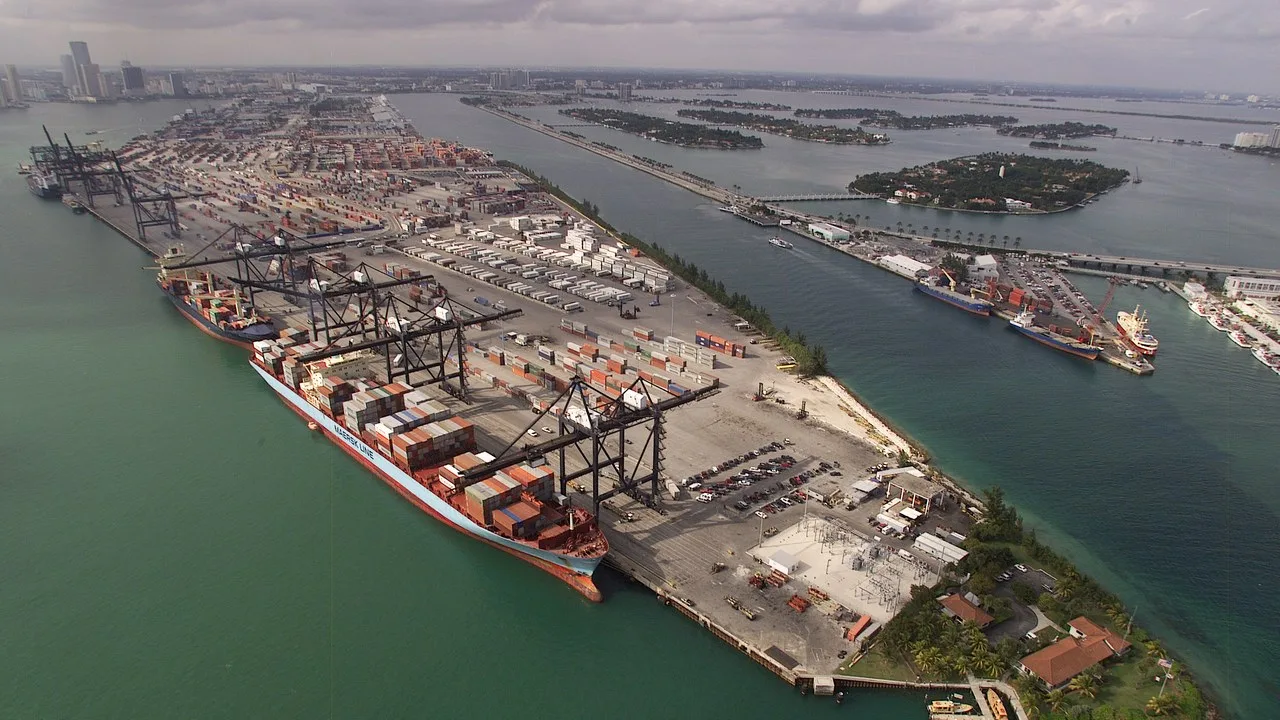
Featured image: Aerial view of the container port at PortMiami, Florida (undated file photo), James R. Tourtellotte, U.S. Customs and Border Protection, public domain, via Wikimedia Commons (cropped).