As of about 8:30 AM IST, Saturday 21 November 2026. Based on statements from the governments of Canada and Ontario, and reporting by The Canadian Press (via CBC News), The Globe and Mail and AFP. Dollar figures are Canadian dollars unless stated.
Ford Motor Co. officially reopened its Oakville Assembly Complex in Ontario on Friday, 20 November, after a two-year shutdown and rebuild. The plant west of Toronto now builds F-Series Super Duty pickup trucks, the heavy-duty F-250, F-350 and F-450 models used by contractors, farmers and emergency services.
The restart brings more than 2,000 workers back to the production line and is part of a nearly $5 billion investment backed by the federal and Ontario governments. It also lands in the middle of a bitter trade war with the United States, where President Donald Trump has used tariffs to push carmakers to build vehicles on American soil. That is why the opening ceremony felt as much like a political statement as a factory launch.
What Ford has built
Ford of Canada chief executive Bev Goodman told The Canadian Press that the plant was taken "down to the studs effectively. Everything that was in the plant came out." The project also added Ford's first stamping plant in Canada, a new building on site where flat sheets of aluminium are pressed into body panels, an operation the Ontario government says had long been done only in the US.
The Ontario government says the plant can build up to 100,000 vehicles a year. The Globe and Mail reported that Oakville made 3,488 trucks in October as production ramped up, and Goodman said shipments began two weeks ahead of schedule. Some trucks will use the 7.3-litre V8 petrol engine made at Ford's Essex engine plant in Windsor, Ontario, which is being expanded to support the extra output.
Who paid for it
Industry Minister Mélanie Joly announced $464.5 million in federal support through the Strategic Response Fund. Both the federal and Ontario government releases put Ontario's contribution at $464 million, although The Globe and Mail reported the provincial share as $295 million. Beyond the Oakville retool, the nearly $5 billion programme also covers the new stamping plant and Ford's engine operations in Windsor, according to CBC.
Ottawa said the money will protect more than 2,000 jobs at Oakville and support Ford's plans for future "multi-energy" versions of the Super Duty, a hint at hybrid or electrified options later. Ford employs about 7,000 people in Canada.
From electric vehicles to heavy pickups
Oakville was not originally meant to build pickups. The plant, which opened in 1953, used to make the Ford Edge and Lincoln Nautilus. Ford had announced a $1.8 billion plan to turn it into an electric vehicle hub, then delayed and dropped the idea as EV demand grew more slowly than expected. In July 2024, it switched to Super Duty trucks instead, which meant some workers returned a year earlier than planned.
The switch reflects a wider industry retreat from EV investment in Canada. CBC noted that Honda froze its $15 billion EV complex in Alliston, Ontario, and General Motors ended production of its BrightDrop electric van. In the US, Ford is pressing ahead with more affordable EVs, starting LFP battery cell production in Marshall, Michigan for its Fathom pickup. Demand for Super Duty trucks, by contrast, is in Goodman's words "surprisingly resilient", because commercial buyers need them for work.
A bet made under tariff pressure
The trade backdrop is harsh. CBC reported that vehicles made in Canada currently face a 25 per cent US tariff, minus the value of their American content, and that Trump threatened in August to raise tariffs on Canadian vehicles, parts and steel to 50 per cent on 1 January. The Globe and Mail noted that the US widened its tariffs in October 2025 to cover heavy-duty trucks like those built in Oakville, and that work on the plant continued anyway.
Goodman was careful in her comments. "None of us know what the trade environment is going to look like. But we do know that Canada is a significantly important part of Ford globally," she told The Canadian Press. Flavio Volpe, head of the Automotive Parts Manufacturers' Association, was more direct, telling The Globe and Mail: "It's a very public bet that they think they'll have tariff peace between Canada and the U.S."
Canada pulled out of trade talks with Washington in August, but negotiations have gathered momentum again in recent weeks, AFP reported. Prime Minister Mark Carney has said talks are making progress, but that Ottawa will not accept a deal that does not leave a viable auto sector.
A contrast with Stellantis
Ford's commitment stands out because a rival is heading the other way. Stellantis, owner of Jeep, Chrysler and Fiat, moved planned Jeep Compass production from Brampton, Ontario, to Illinois last year and confirmed on 9 November that it was selling the Brampton plant to a defence company, AFP reported. CBC identified the buyer as defence contractor Roshel. The facility employed nearly 3,000 people, and Carney has called Stellantis's actions a "betrayal". Joly was due to meet the Stellantis chief executive later on Friday.
Unifor national president Lana Payne, whose union represents about 5,000 Ford employees in Canada, called the reopening "nothing short of an industrial rebirth for Canada", according to The Globe and Mail. Unifor's new three-year contract with Ford renewed a no-closure agreement at all of the company's Canadian facilities. Unifor's contract talks with Stellantis remain at a standstill, CBC reported.
Why it matters for the North American auto industry
The Super Duty is one of Ford's most important products. Ontario says the F-Series has been Canada's best-selling truck for 60 consecutive years, and that nearly one in every two trucks sold in its segment is a Super Duty. Oakville adds a third production site alongside Ford's Super Duty plants in Kentucky and Ohio, which Goodman said will help meet demand, offer more configurations and shorten waiting times.
The bigger question is whether integrated North American manufacturing survives the trade war. Car parts and vehicles have crossed the Canada-US border tariff-free for decades, and Ford says it wants the USMCA trade agreement renewed. At the same time, Canada has opened its market to up to 49,000 Chinese EVs a year at a 6.1 per cent tariff, a quota Goodman said is "absolutely something that's on our mind". European carmakers face similar cost and competition pressures, as seen in Volkswagen's push for a two-year pay freeze.
For now, Oakville gives Canada a rare piece of good news in autos. Whether it becomes a model for others or a one-off depends largely on what happens in Washington before 1 January.
Sources
- Government of Canada: Major investment in Ford Motor Company of Canada
- Ontario Newsroom: Ontario welcomes nearly $5 billion investment from Ford of Canada
- CBC News (The Canadian Press): Ford officially producing Super Duty trucks at Oakville assembly plant after retool
- The Globe and Mail: Ford's Oakville assembly plant reopens after more than two years, defying trade war
- AFP: Ford reopens Canada auto plant, defying Trump tariffs
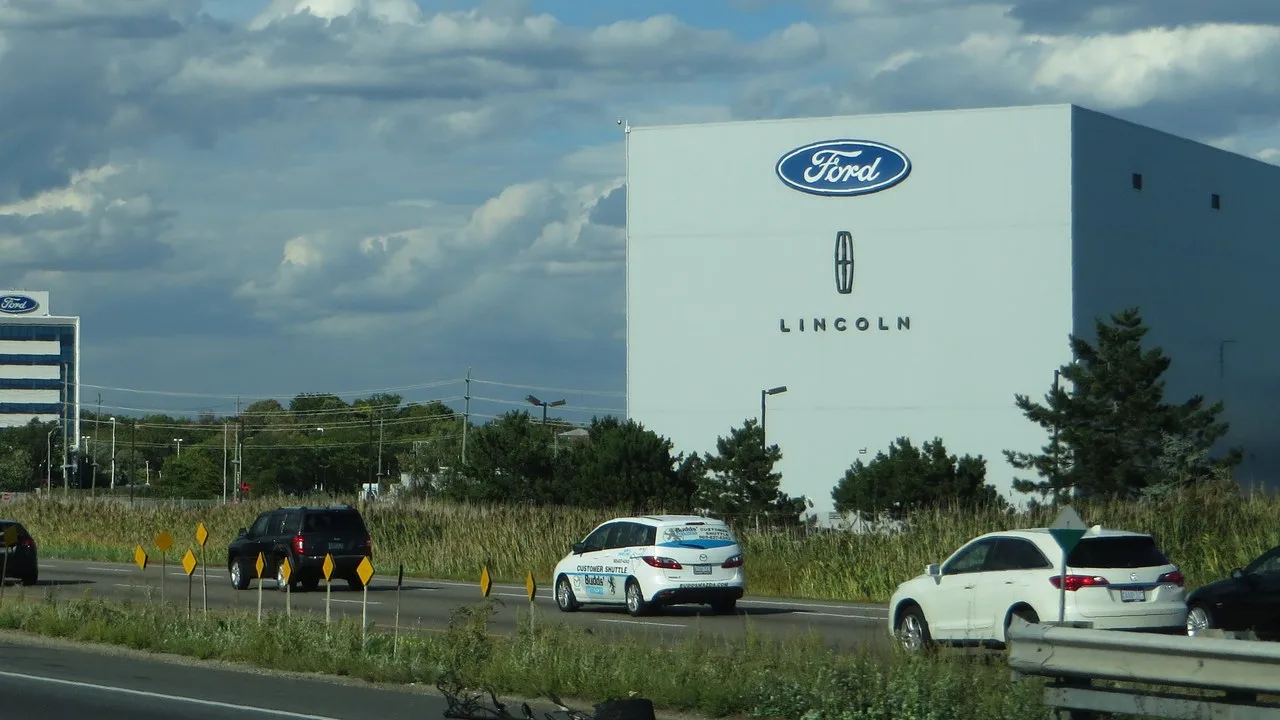
Featured image: Ford Oakville Assembly Plant, Oakville, Ontario (27 September 2016, file photo), Ken Lund, CC BY-SA 2.0, via Wikimedia Commons (cropped).