As of about 9:00 AM IST, Tuesday 24 November 2026. Based on a leaked draft reported by Automotive News Europe and summarised by GlobalChinaEV and Quattroruote, plus MLex, The Guardian, Hürriyet Daily News and the EU's Official Journal. The European Commission had not published the legal text at the time of writing.
The European Union's planned limits on hybrid car imports will reach well beyond China. A leaked draft of the safeguard measure, seen by Automotive News Europe, sets first-year import quotas of 350,000 hybrid and plug-in hybrid cars from China, 310,000 from Japan, 230,000 from Turkey, 190,000 from the United Kingdom and 105,000 from South Korea. The quotas would apply to cars cleared through EU customs from 1 December, only a week away.
Brussels sold the measure as a deal with Beijing to slow a surge of Chinese plug-in hybrids. But World Trade Organization rules mean a safeguard has to cover imports from everywhere, so close partners such as Japan, the UK and Turkey now face caps of their own. The figures could still change before the Commission publishes the text, which Italian magazine Quattroruote said could come as early as today, 24 November.
What the draft says
According to the reports, each country's quota is based on its 2025 import volumes. The limits cover conventional (self-charging) hybrids and plug-in hybrids, and apply only to cars cleared through customs on or after 1 December, so vehicles already imported can be sold normally. After the first year, each quota would rise by 6% a year over a four-year term, taking China's to about 417,000 cars by 2030, GlobalChinaEV calculated. The leaked list reportedly also covers Morocco and Serbia.
Crucially, quotas follow where a car is built, not the brand on its badge. A Chinese-brand hybrid assembled in Turkey would count against Turkey's allocation, a European-brand model built in China would use up China's, and cars built inside the EU would not count at all. Key details remain unpublished, including whether imports above a quota would be blocked outright or charged an extra duty, and how each country's allowance would be shared among carmakers.
How Brussels got here
The China number is not new. On 9 October, after talks in Beijing, EU trade commissioner Maroš Šefčovič announced an understanding with Chinese commerce minister Wang Wentao that he said "opens the prospect of cutting China's export [of hybrids] by more than a half," The Guardian reported. He called it the first time China had agreed to moderate its exports "without going through the phase of prior trade tension." In return, Beijing agreed to cut tariffs on a range of EU goods, from car parts to olive oil, worth almost €4 billion in current exports, according to GlobalChinaEV.
To give that deal legal force under WTO rules, the Commission opened a formal safeguard investigation on 30 October. Its notice in the EU's Official Journal said hybrid imports from all non-EU countries rose 49%, from 957,965 cars in 2023 to 1,423,691 in the 12 months to 30 June 2026, and that cheap imports threatened "serious injury" to European producers. EU governments backed provisional measures on Friday 20 November, MLex reported, with the Commission targeting a 1 December start.
Why China's plug-in hybrids surged
The squeeze on hybrids is a direct result of the EU's earlier action on electric cars. When Brussels imposed anti-subsidy duties of up to 35.3% on Chinese battery-electric cars in 2024, plug-in hybrids fell outside the measure. Chinese brands such as BYD responded by shipping far more of them. EU imports of Chinese hybrids rose from about 46,000 in 2023 to 107,000 in 2024 and roughly 302,000 in 2025, GlobalChinaEV reported, and a Commission official estimated 2026 imports at around 800,000, more than twice the planned cap.
If the 350,000 limit holds, Chinese carmakers will have to ration what they send, prioritise higher-margin models or build more in Europe. BYD's new plant in Hungary is expected to enter mass production soon, though Hungarian press reports suggest a full ramp-up may run into 2028. Range-extender EVs, which customs rules class as battery-electric, are likely to fall outside the hybrid quota but remain subject to the EV duties.
Japan, Turkey and the UK caught in the net
For other exporters, the caps are an unwelcome surprise. Japan and South Korea both have free trade agreements with the EU that removed car tariffs. At a WTO goods council meeting on 16 and 17 November, South Korea questioned whether the investigation was fair and transparent and raised concerns about a "predetermined outcome", while Japan, the UK, Switzerland and Turkey stressed due process, according to GlobalChinaEV.
Turkey may be the most exposed. Hybrids make up nearly half of its car exports, and many of the hybrids built there are made specifically for European buyers by international carmakers, Hürriyet Daily News reported. Turkey's Automotive Manufacturers Association (OSD) has applied to take part in the investigation as an interested party, as have industry groups from Japan, South Korea, the UK and Russia. For the UK, which sends hybrids from its factories to the EU, the 190,000 cap adds another layer of friction to post-Brexit trade.
Who wins and who loses
The design favours carmakers that already build in Europe. Hyundai and Kia, for example, make some hybrid models such as the Tucson and Sportage in Czechia and Slovakia, so only cars shipped from South Korea would count against its quota. European brands that import hybrids from plants in China or Turkey could find themselves competing for the same limited allowance as Chinese rivals.
For buyers, the risk is fewer cheap plug-in hybrids and possibly higher prices from 2027, just as many Europeans are choosing hybrids as a stepping stone to full electric cars. Our five-year cost comparison of EVs and hybrids shows how much the purchase price matters to that decision. For European makers, the quotas offer some breathing space at a hard time: German carmakers face tense wage talks and cost cuts, and Chinese rivals are also being challenged in court, as in last week's Dutch ruling against BYD's Ti7.
What happens next
The immediate question is whether the Commission publishes the regulation in time for a 1 December start, and whether the final numbers match the leaked draft. Provisional measures would be followed by a definitive decision; the Commission has nine months from the start of the investigation, with a possible two-month extension, and a vote by member states would be needed. Under WTO rules, a safeguard must be temporary and ease over time, and affected exporters can seek compensation or suspend equivalent trade concessions, so Japan, Korea, Turkey and the UK may press for larger allocations or something in return.
Whatever the final figures, the message is clear: Europe is moving from tariffs to volume limits to protect its car industry, and allies will share the cost of a measure aimed at China.
Sources
- Automotive News Europe: EU plans quotas on hybrid imports from China, UK, Turkey, other exporters
- GlobalChinaEV: Draft EU hybrid quotas reach beyond China's 350,000 to Japan, Turkey and the UK
- Quattroruote: Auto ibride, limiti UE all'import da Cina, Giappone, Turchia e Regno Unito (Italian)
- MLex: EU governments back provisional safeguard on hybrid vehicle imports
- Official Journal of the EU: Notice of initiation of a safeguard investigation concerning imports of certain new hybrid vehicles
- The Guardian: China agrees to 'halve' hybrid car exports to EU in landmark deal
- The European Post: Hybrid car safeguard probe tests Europe's Asian trade partners
- Hürriyet Daily News: Turkish auto industry takes action against EU hybrid car safeguard probe
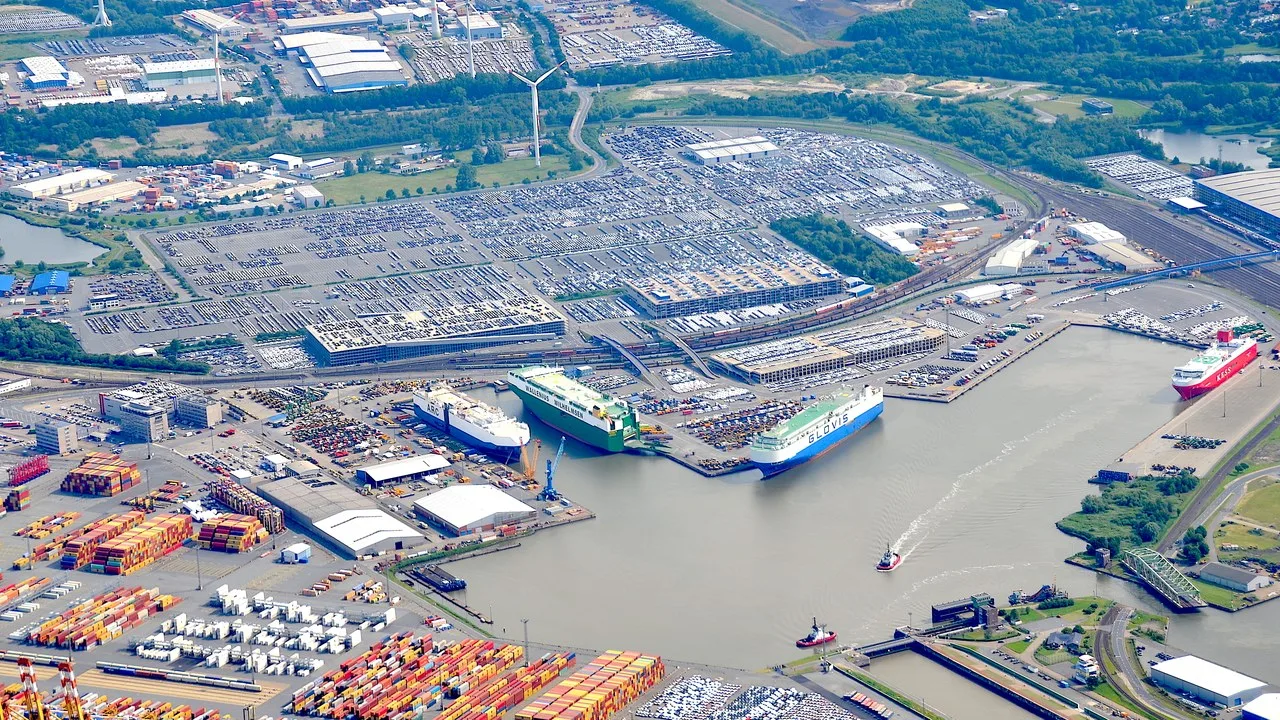
Featured image: Aerial view of the Autoport in Bremerhaven, Germany (16 June 2019, file photo), Olga Ernst, CC BY-SA 4.0, via Wikimedia Commons (cropped).