
As of about 8:30 AM IST, Saturday 28 November 2026. Based on Puig's announcement and inside-information filing with Spain's CNMV, and reporting by Reuters (via Euronext) and WWD. The deal was announced on Friday 27 November.
Spanish beauty group Puig is making its biggest bet yet on luxury "niche" perfume. The company behind Rabanne, Carolina Herrera and Charlotte Tilbury said on Friday it had agreed to buy 75% of Artessence, the owner of Parfums de Marly and Initio Parfums Prives, from private equity firm Advent International and the brands' founder, Julien Sprecher. The deal values Artessence at about $1.9 billion including debt, and Puig will pay roughly 1.2 billion euros ($1.31 billion) in cash for its stake.
The purchase confirms months of speculation and comes barely two months after Puig agreed to take full control of the skincare brand ISDIN. Here is what Puig is buying, what it is paying and why niche fragrance has become one of the most contested corners of the beauty industry.
The deal in numbers
According to Puig's filing with the Spanish market regulator, Artessence is expected to generate about $420 million to $440 million in net revenue and $180 million to $190 million in EBITDA in its fiscal year ending 31 March 2027. That is an EBITDA margin of more than 40%, high even by the standards of prestige beauty. WWD calculated that the $1.9 billion enterprise value equates to a multiple of less than 10 times EBITDA.
The structure is more complicated than a straight purchase. Sprecher's holding company will reinvest and keep the remaining 25%. Puig has agreed to put and call options over that stake, exercisable within four years of completion at a price based on Artessence's performance, giving it a path to 100% ownership. Sprecher's holding can also earn up to $100 million more over two years if the business hits its targets. Puig says the deal will be "highly accretive".
Who are Parfums de Marly and Initio?
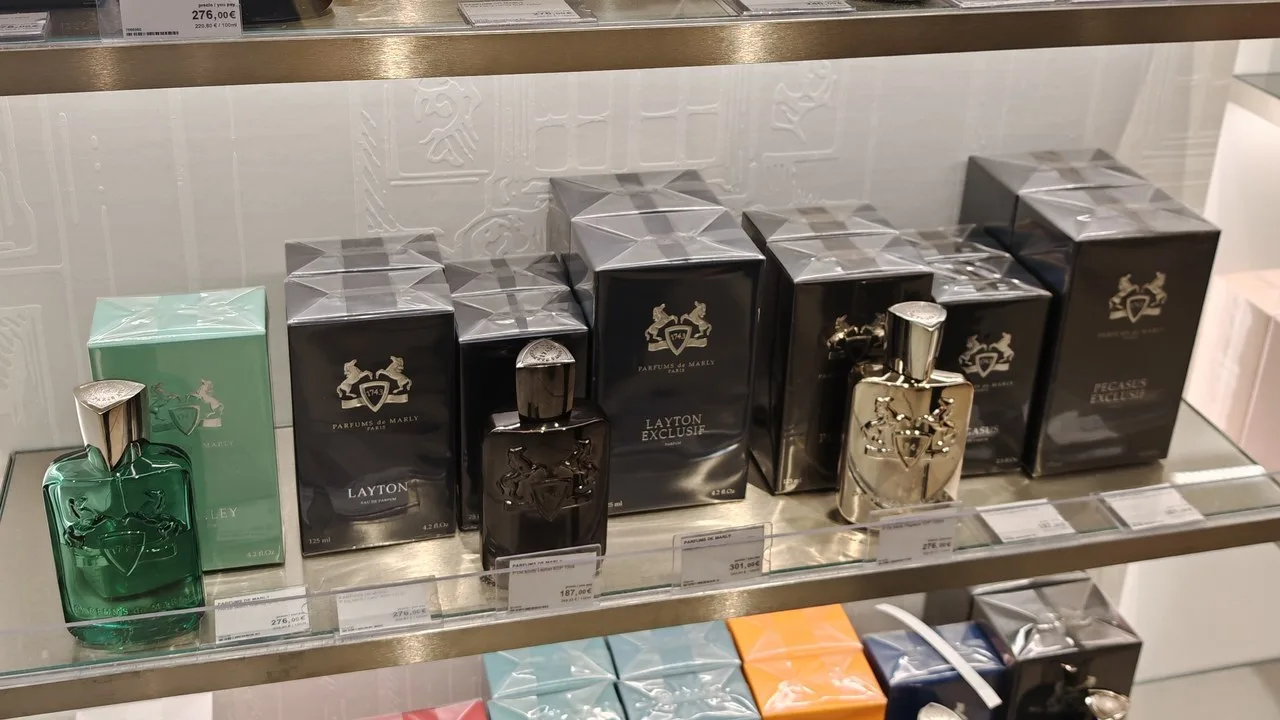
Sprecher founded Parfums de Marly in 2009, drawing on 18th-century French perfumery for scents such as Layton, Delina and Valaya. Bottles generally sell for around 250 euros or more, Reuters noted. Initio, launched in 2015, markets what it calls functional fragrances built around the emotional effects of scent. Together, the two brands sell in about 70 countries, with North America their biggest market, followed by strength in Europe and the Middle East, WWD reported.

Their growth has been rapid. In the fiscal year to March 2026, combined retail sales of the two brands rose 39% to more than $1 billion for the first time, according to WWD, with Parfums de Marly above $780 million and Initio slightly above $220 million. Those retail figures measure what shoppers paid in stores, which is why they are well above the net revenue Artessence itself books.
Why niche perfume matters to Puig
Fragrance is already Puig's largest business, and niche brands are its fastest-growing slice. The company owns Byredo, Penhaligon's, L'Artisan Parfumeur and Dries Van Noten in the category. At its first capital markets day in October, Puig set out a "Vision 2032" plan to lift sales above 8 billion euros by 2032, from 5.04 billion euros in 2025, and to take its niche fragrance business past 1 billion euros, which it says would make it the second-largest player in the segment worldwide, WWD reported. Puig says niche has been the fastest-growing part of the perfume market since 2022 and could make up close to 20% of global selective fragrance by 2032.
"Niche fragrances offer one of the most attractive opportunities within our core fragrance business," said chief executive Jose Manuel Albesa. "Parfums de Marly brings meaningful growth and an established position in North America, while Initio is a distinctive brand with significant potential ahead." Executive chairman Marc Puig called the two "exceptional brands that combine desirability with an impressive track record of profitable growth".
A big win for Advent
For Advent, the sale caps a short and lucrative ownership. The buyout firm took a majority stake in the business in June 2023 in a deal that industry sources valued at more than $700 million, and the business grew about threefold under its ownership, according to WWD. Reuters reported a month ago that Advent was exploring a sale. The exit adds to a busy year for corporate deal-making in consumer and technology businesses, from Altria's possible bid for Imperial Brands to Intuit's sale of Mailchimp to Bending Spoons.
Paying for it: debt, cash and ISDIN
Puig will fund the purchase with new debt and existing resources. It already has a large commitment: in September it agreed to buy the 50% of ISDIN it did not own from Esteve for 1.2 billion euros, a deal expected to close by the end of the first quarter of 2027. Even with both transactions, Puig says it expects to stay within its leverage ceiling of 2.0 times at the end of fiscal 2027. "This transaction reflects our selective approach to M&A," Marc Puig said, adding that the company aims to preserve its financial flexibility.
Investors will judge whether that holds. Two deals worth about 2.4 billion euros in quick succession are a significant step for a group with 2025 sales of about 5 billion euros, and the earn-out and options on the final 25% could add further payments if Artessence keeps growing. The announcement came on Friday evening after European markets had closed, so the first share-price reaction will come on Monday.
What happens next
The deal is not yet a binding purchase agreement. Puig has granted Advent, Sprecher's holding and other minority shareholders a put option, which they can exercise only after Artessence's employee representatives in France have been consulted. Completion then requires regulatory approvals and a vote at Puig's general shareholders' meeting, and is expected in the second quarter of 2027. Artessence will keep a high degree of independence in the medium term, Puig says, with Sprecher continuing to provide services to the business.
What to watch: the investor call on 30 November at 8:30 CET, Monday's share-price reaction, the French works council process, and whether rivals respond with deals of their own in a category where independent brands of this size are increasingly scarce.
Sources
- Puig: Puig has agreed to acquire a 75% stake in Parfums de Marly and Initio
- CNMV: Puig Brands inside information on the Artessence acquisition (PDF)
- Reuters (via Euronext): Puig to buy Parfums de Marly owner from Advent in 1.2 billion euro deal
- WWD: Puig to Acquire 75 Percent of Parfums de Marly, Initio for 1.2 Billion Euros
- Puig: Puig to acquire 50% stake in ISDIN, reaching full ownership
Featured image: A selection of Parfums de Marly fragrances on display in a perfumery (April 2026, file photo), Yulli, CC0 1.0, via Wikimedia Commons (cropped).