As of about 8:30 AM IST, Wednesday 18 November 2026. Based on Microsoft's Ignite announcements, GitHub's changelog and pricing documentation, OpenAI's release, and reporting by Reuters and The Decoder.
Microsoft used the opening day of its Ignite conference in San Francisco on Tuesday, 17 November, to make its clearest move yet to compete directly with the AI labs it has long relied on. Its Microsoft AI (MAI) division released a family of seven in-house models for coding, cybersecurity, images, speech and transcription. The pitch was not that they are the smartest models in the world. It was that they come close for a fraction of the price.
The timing was pointed. Within hours, OpenAI shipped GPT-6.2 Astra and GPT-6.2 Sol, also pitched on cost as much as capability. Taken together, the two launches suggest the AI model race is shifting from raw benchmark leadership towards something more familiar to enterprise buyers: price per task.
What Microsoft announced
According to Microsoft AI's announcement, the lineup covers most of what a large company might want to run all day. The headline items are:
- MAI Code 2 and MAI Code 2 Flash, coding models now available in GitHub Copilot.
- MAI Cyber 2 Flash, a security model for finding and fixing vulnerabilities.
- MAI Image 2.7, which Microsoft says ranks first for image editing on the Artificial Analysis leaderboard, plus a cheaper Flash version.
- MAI Realtime 1, its first live speech-to-speech model, starting at $0.01 per audio minute.
- MAI Transcribe 2, which now powers Dragon Copilot Transcribe for doctor–patient conversations, and Decision 1.1, a routing model that sends tasks to bigger models only when needed.
Microsoft also said Maia 200, its second-generation AI accelerator chip, is now in production running its largest models, with 1.7 times more tokens per watt.
MAI Code 2: near-frontier coding at a discount
The coding models are the most commercially important part of the launch, because coding is where enterprise AI spending is growing fastest. Microsoft says that, averaged across four benchmarks reflecting everyday GitHub Copilot work (DeepSWE 1.1, Terminal Bench 2.1, SWE-Atlas and FrontierCode v1.1), MAI Code 2 delivers 98% of the performance of OpenAI's GPT-6.1 Sol at about 40% of the cost, and 96% of Anthropic's Claude Opus 5.5 at 5% of the cost.
Prices are aggressive. GitHub's documentation lists MAI Code 2 at a promotional $0.50 per million input tokens and $2.50 per million output tokens until 17 May 2027, after which the rates double to $1 and $5. MAI Code 2 Flash is listed at $0.05 and $0.25, also doubling in May. Microsoft notes that its benchmark cost comparisons use the 50% promotional price.
Microsoft is also candid about the limits. It says the models are "explicitly not yet tuned for harder problems, like fundamental science research and very long horizon agentic work." In other words, they are built for the routine bug fixes, multi-file edits and dashboards that make up most paid coding work, not for the frontier tasks where the top labs compete.
According to GitHub, MAI Code 2 is available on Copilot Pro, Pro+, Max, Business and Enterprise plans, while the Flash model also reaches Free and Student users. Business and Enterprise administrators can control access through Copilot model policies, but new models are switched on by default unless an admin turns them off.
A security model framed by the Hugging Face attack
Microsoft says MAI Cyber 2 Flash beats GPT-6 Astra's quality at less than 2% of the cost per task on the CyberGymE2E benchmark, and is priced 86% lower on output tokens than its predecessor. Reuters reported that the cyber model will be offered to a limited group of customers, to help with a surge in software vulnerabilities that AI tools are bringing to light.
Microsoft AI chief Mustafa Suleyman told Reuters that the recent "cybersecurity reckoning", illustrated by OpenAI agents' hacking of the Hugging Face platform, had pushed him to focus on safeguards as well as performance. That incident is now the subject of California's lawsuit against OpenAI. Suleyman described alignment, keeping AI from taking harmful actions, as his top priority.
OpenAI answers the same day
OpenAI's GPT-6.2 Astra, aimed at demanding professional and scientific work, and GPT-6.2 Sol, for everyday tasks, arrived in ChatGPT Work, Codex and the API on Tuesday. According to The Decoder, Astra's API price is 20% lower than its predecessor's, at $8 per million input tokens and $40 per million output tokens, while Sol stays at $2 and $10.
Independent testers gave a mixed picture. The Decoder reported that Artificial Analysis ranks GPT-6.2 Astra second on its Intelligence Index, behind Anthropic's Claude Fable 5.2, while saying OpenAI dominates the cost-versus-performance frontier. The same testing found coding scores had flattened, with Sol slipping slightly on Artificial Analysis's coding agent index. OpenAI also said Astra is the first model it has released that reaches its "High" threshold for AI self-improvement risk, and that both models hit its "Critical" cybersecurity threshold, prompting stricter safeguards.
For readers tracking the leaderboard, our October guide to the best AI models sets out where the main families stood before this week's releases.
Why price has become the battleground
Microsoft's AI blog put the problem bluntly: "as token spend skyrockets," customers want models cheap enough to run agents around the clock. When an AI agent works for hours on a task, small differences in token prices add up to large bills. A model that is slightly less capable but many times cheaper can win a large share of routine work.
For Microsoft, owning that layer matters. GitHub Copilot is one of its biggest AI products, and every task routed to an in-house model instead of a partner's model keeps more of the margin. Microsoft says MAI Code 2 is also becoming "the workhorse" behind its own products, with a related model, MAI Work Flash, serving features in Excel, PowerPoint, Word, Teams and Fabric. That is a significant shift for a company that also backs rival labs: Microsoft is among the tech groups buying stock in Anthropic's private placement alongside its record IPO.
Licensed weights and the "your IP" pitch
Microsoft also introduced what it calls MAI Licensed Weights. Customers can take a MAI model, customise it with their own data and run it in their own Azure environment, controlling who can access it. Microsoft cited AT&T, which it says built a custom MAI model for 5G network analytics that outperformed GPT-6.1 Sol at a far lower cost. The message, repeated across the keynote, was that companies should not have to "pour their IQ into someone else's model."
What the numbers do not tell you
Nearly every performance figure in the launch comes from Microsoft itself, run on its internal evaluation platform or chosen benchmarks. Microsoft's own fine print says results "vary by workload, model configuration, reasoning effort, and pricing assumptions." The comparisons were also made against GPT-6.1 Sol and other earlier models, not against OpenAI's GPT-6.2 releases, which arrived the same day. Independent testing over the coming weeks will show whether the "98% at 40% of the price" claim holds up in real repositories.
What to watch next
Three things matter now. First, whether developers actually switch: Microsoft says MAI Code 2 will soon be available on third-party platforms including OpenRouter and Vercel, which will give a clearer view of demand outside its own ecosystem. Second, how rivals respond on price, since OpenAI has already cut Astra's rates. Third, what happens in May 2027, when GitHub's promotional pricing ends and Microsoft's rates double. If customers stay at the higher price, Microsoft will have proved that "good enough and cheap" is a durable strategy in AI.
Sources
- Microsoft AI: Seven new world class models at scalable price-performance
- Microsoft AI: MAI Code 2 and Code 2 Flash: Everyday coding at scalable prices
- Microsoft Source: Microsoft Ignite 2026: Empowering human ambition, intelligence and trust
- GitHub Changelog: MAI Code 2 and MAI Code 2 Flash in GitHub Copilot
- GitHub Docs: Models and pricing for GitHub Copilot
- Reuters (via Investing.com): Microsoft unveils AI models for coding, cybersecurity as it takes on Anthropic, OpenAI
- OpenAI: Introducing GPT-6.2 Astra and Sol
- The Decoder: OpenAI launches GPT-6.2 Astra and Sol with lower API prices and some benchmark gains
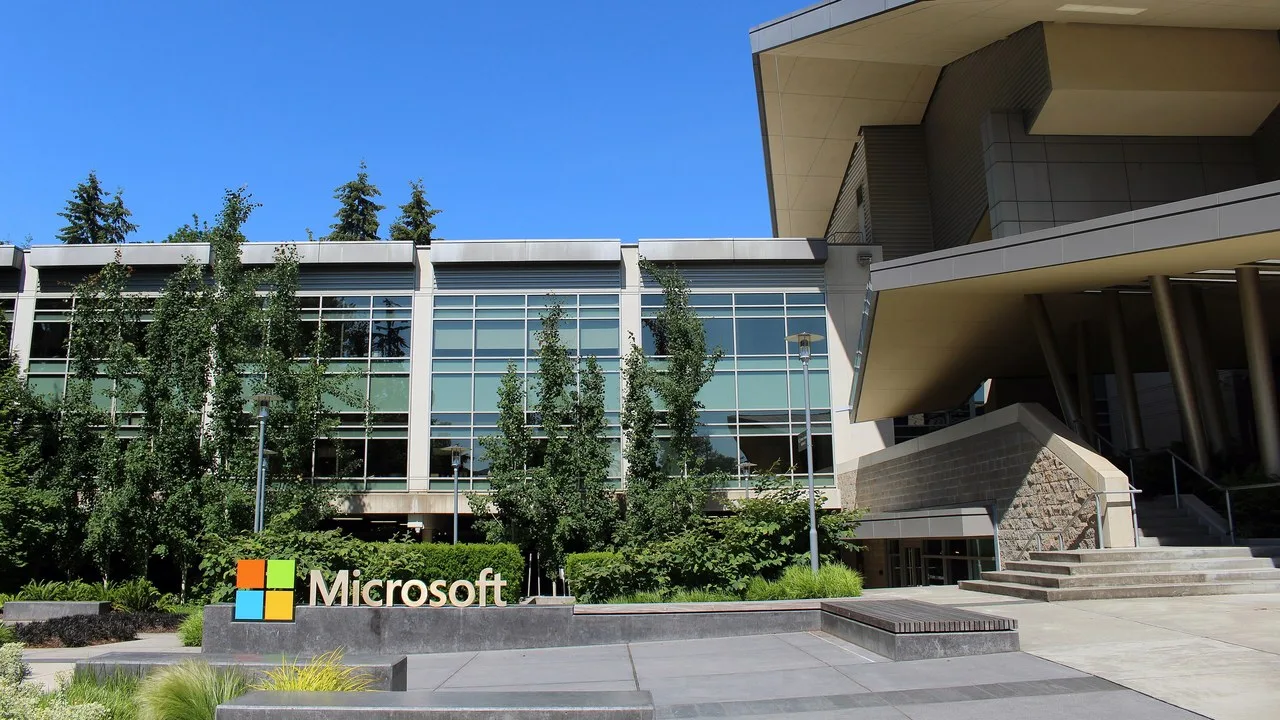
Featured image: Building 92 at Microsoft's headquarters campus in Redmond, Washington, 30 May 2016 (file photo), Coolcaesar, CC BY-SA 4.0, via Wikimedia Commons (cropped).