As of about 8:30 AM IST, Friday 20 November 2026. Based on statements from JPMorgan Chase, Visa and Mastercard, and reporting by Reuters, Yahoo Finance, BankInfoSecurity and Cybernews.
JPMorgan Chase, Visa and Mastercard confirmed on Thursday, 19 November, that outside companies that handle their marketing were hit by a cyberattack, and that some customer contact details were stolen. A new extortion gang called n0n had already published samples of the data on its dark-web leak site after a 48-hour ransom deadline passed.
All three companies say their own systems were not breached and that no card numbers or payment data were taken. Even so, the incident is a clear example of a growing problem in cybersecurity: a large company can protect its own network well and still lose customer data through a smaller supplier that holds a copy of it.
What the companies have confirmed
"Based on our investigation so far, we believe the attackers accessed certain marketing data held by those vendors, which may include some customer names and email addresses," a JPMorgan spokesperson said, according to Reuters. The bank said it would contact affected customers directly. Cybernews reported that JPMorgan will offer support, including free credit monitoring, where appropriate.
Visa said the claims were "associated with an incident involving a third-party service provider in Asia Pacific," adding: "Visa's systems were not involved and were not impacted. No payments data such as card numbers were affected." Mastercard said a third-party provider had exposed "a limited amount of email addresses" from "a small subset of cardholders enrolled in a specific benefit program," and that there was no impact on its payment network.
None of the three has named the vendor or vendors involved, or said how many customers in total were affected.
What the leaked data appears to contain
Reuters said its review of the JPMorgan files found what appear to be 124 bank employee email addresses and more than 16,000 customer email addresses, some with phone numbers and postal codes. Reuters said it could not independently verify the data. BankInfoSecurity and Cybernews reported that the JPMorgan records relate to the Chase Reserve programme, an invitation-only card for very wealthy clients that typically requires around $10 million in assets with the bank.
The Visa files cover marketing and booking-reminder campaigns in Asia-Pacific markets, including Hong Kong, Taiwan, South Korea, Japan, the Philippines and Singapore. BankInfoSecurity counted more than 6,000 records with names, emails, phone numbers and details of restaurant, hotel and travel bookings. The Mastercard data relates to travel newsletters and event guides in North America, the Middle East and Africa, with almost 2,000 records from the Middle East and Africa programmes, the publication said.
The gang claims to hold much more than it has posted. According to BankInfoSecurity, n0n says it holds about 17,000 more Chase cardmember emails and phone numbers, more than 76,000 Visa customer emails and 10,000 North American Mastercard emails. Those claims have not been verified, and the datasets published so far are much smaller than the gang's own tallies.
Who is n0n?
n0n is a new group. It was first tracked in mid-September and has claimed roughly 200 incidents since then, according to the cybercrime research platform eCrime.ch, cited by Reuters. BankInfoSecurity said the group runs a "double-extortion" model, stealing data and then threatening to publish it, and had posted data from 179 companies, with 29 more under ransom countdowns. Last week it claimed to have stolen traveller records from Expedia, Cybernews reported; that claim has also not been independently confirmed.
Cybersecurity firm SOCRadar told Yahoo Finance that it had not verified whether n0n carried out the intrusion itself, but agreed that the data most likely came from a third-party vendor and covered marketing and benefit-programme information. Aras Nazarovas, a senior researcher at Cybernews, said the JPMorgan batch looks as though it was taken from an outside supplier rather than from the bank directly, which is what the bank itself says.
Why marketing data still matters
Names and email addresses sound harmless next to card numbers, but security researchers say they are exactly what criminals need for convincing scams. "The most immediate risk for consumers is targeted phishing that impersonates their bank or card provider," SOCRadar's chief information security officer, Ensar Seker, told Yahoo Finance.
The risk is higher here because of who was affected. Nazarovas said the link to an ultra-premium card programme makes the leak "a lot more sensitive," since everyone on the list is a potentially lucrative target. The exposed employee addresses can also be used for spear-phishing and fake help-desk calls aimed at bank staff, he said. Booking details in the Visa files could make fake messages about a real hotel or restaurant reservation look genuine.
On the other hand, Cybernews noted that regulatory exposure is probably limited. Most breach-notification laws are triggered when data such as passwords, Social Security numbers or financial account numbers is exposed, not email addresses alone.
The vendor problem
Large banks and card networks share customer data with dozens of outside firms that run email campaigns, loyalty schemes and concierge services. "Customers don't distinguish between a bank and a vendor when it comes to a cyberattack, so there is a question of reputational risk here," Carissa Robb of consulting firm SolomonEdwards told Reuters. She said companies need to scrutinise more closely how much data they share with vendors and whether it is needed at all.
This is not the first such case for JPMorgan. Cybernews noted that a hack last year at SitusAMC, a vendor used by several big Wall Street banks, also exposed customer details. US bank regulators issued joint guidance on managing third-party risk in 2023, and incidents like this one are likely to add to the pressure on banks to limit what they hand to suppliers.
A rough week for digital services
The breach landed during a period of unusual disruption. JPMorgan stressed that the leak has "no connection" to the service outage some customers suffered earlier this week, which it blamed on a software bug that also affected other banks. Reuters reported that the US banking regulator, the Office of the Comptroller of the Currency, made inquiries after that outage. Visa also said the incident was unrelated to "system disruptions across different industries this past week."
Recent weeks have also seen a nationwide FAA ground stop and a global Microsoft 365 outage, both cited by Reuters. None has been linked to this attack.
What customers should do
For most cardholders, there is no need to cancel cards, because no card numbers were reported stolen. The bigger risk is fraud by message. Treat any unexpected email, text or call about your card, a booking or a "security issue" with suspicion, even if it uses your real name. Do not click links or share one-time passcodes; contact the bank using the number on the back of your card or its official app instead.
If you are offered credit monitoring, it is worth accepting, and it helps to know how your credit file works. Our guide to what actually moves your credit score explains what lenders look at.
The key open questions are which vendor was breached, whether other banks and brands used the same supplier, and whether n0n releases the larger datasets it says it holds.
Sources
- Reuters (via Investing.com): JPMorgan, Visa, Mastercard say third-party vendors targeted in cyberattack
- Yahoo Finance: JPMorgan, Visa, and Mastercard disclose cyberattack on third-party vendors
- BankInfoSecurity: JPMorgan's Elite Cardholders Exposed in Vendor Hack
- Cybernews: Hackers leak stolen JPMorgan data about rich people
- Cybernews: Visa confirms cyberattack as hackers claim JPMorgan was hit too
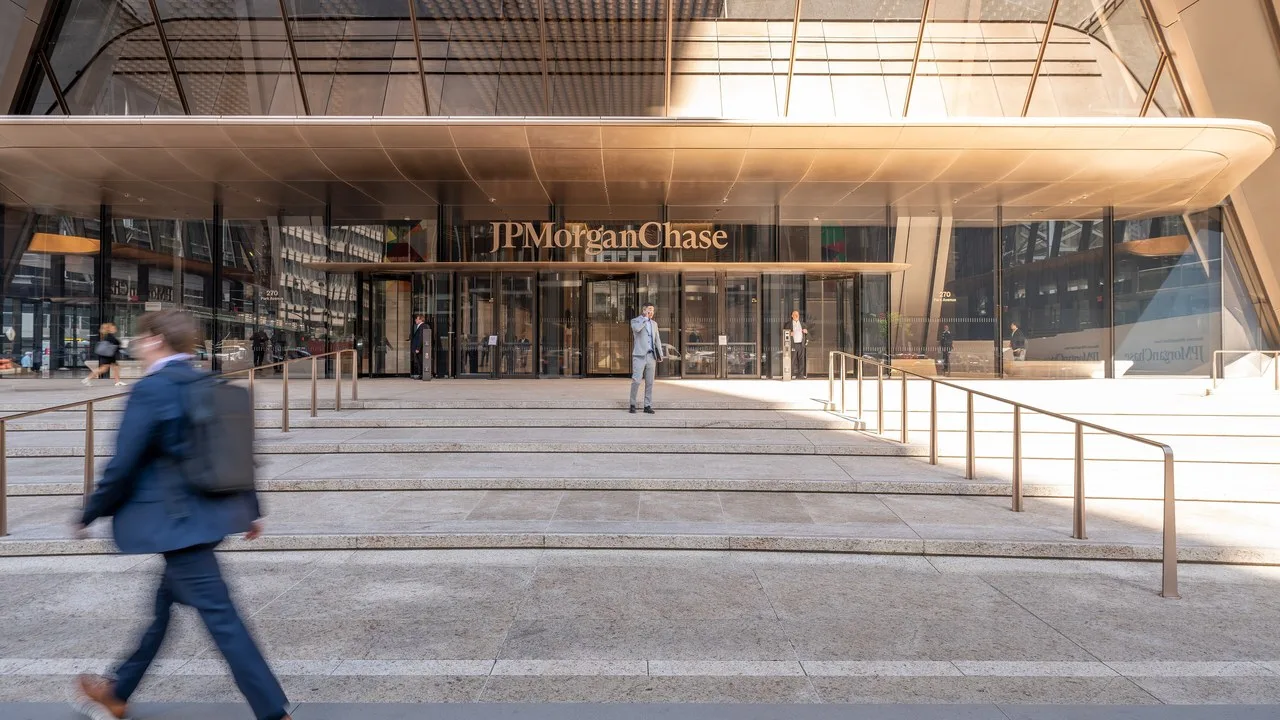
Featured image: The JPMorgan Chase entrance at 270 Park Avenue, New York, 18 May 2026 (file photo), ajay_suresh, CC BY 4.0, via Wikimedia Commons (cropped).