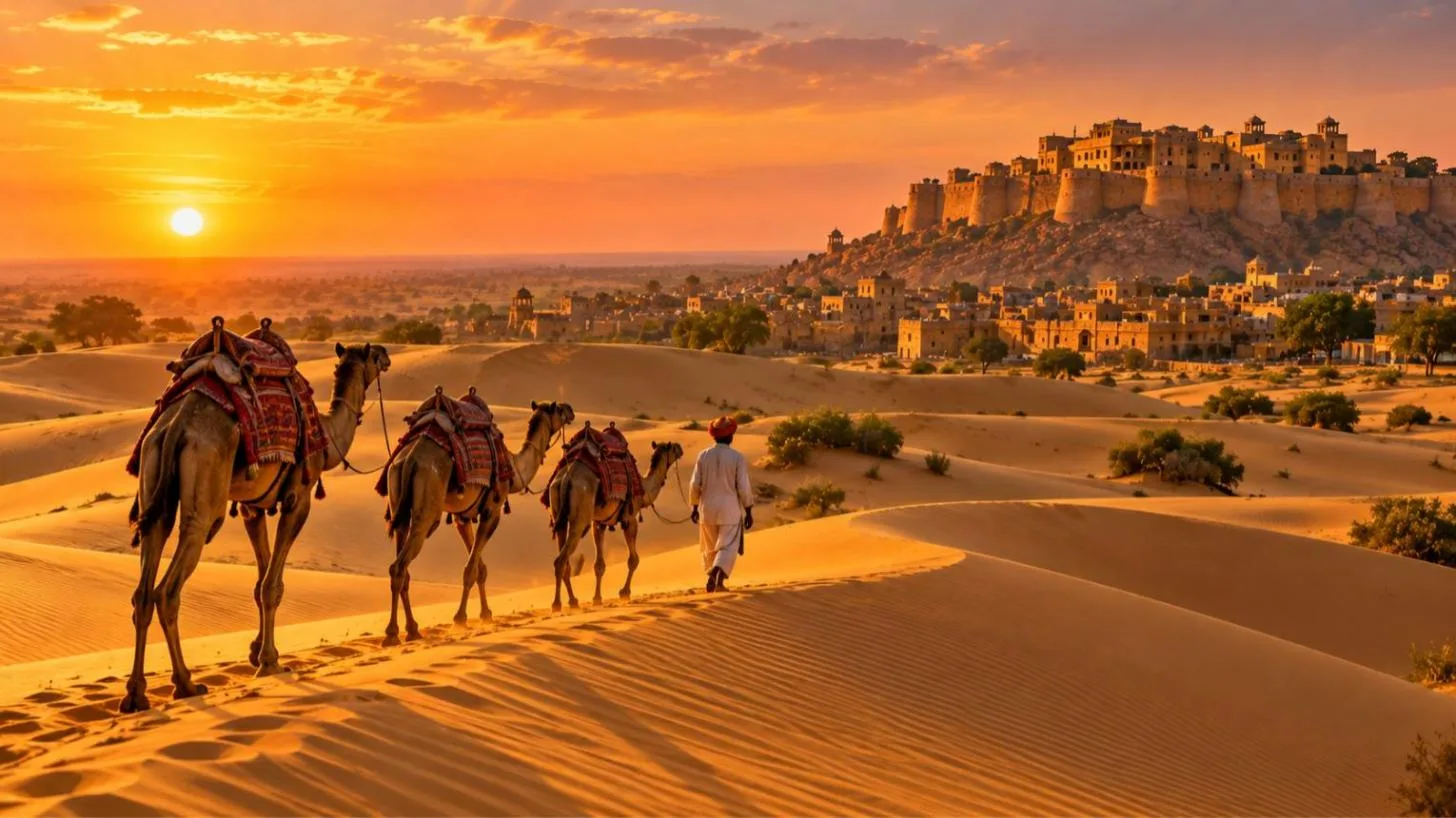
Rising out of the Thar Desert like a sandcastle, Jaisalmer is Rajasthan's most magical city. Its honey-coloured sandstone fort, carved merchant mansions and the rolling dunes just beyond town make it a highlight of any winter trip to India. With the desert season now starting, here is everything you need to plan a visit.
Why go
- A living fort: Jaisalmer Fort, founded in the 12th century, is one of the few forts in the world where people still live and work inside the walls. It is part of the UNESCO-listed Hill Forts of Rajasthan.
- Golden architecture: intricately carved havelis built by wealthy traders on the old caravan routes.
- The desert: camel rides, starry nights and folk music at a dune camp.
Best time to visit
October to March is the best time. Days are warm and sunny, while desert nights can get cold in December and January, so pack layers. April to June is extremely hot, with temperatures often above 40°C, and many camps close. The monsoon brings little rain but humid heat.
The colourful Jaisalmer Desert Festival, with camel races, turban-tying contests, folk performances and the Mr Desert competition, is usually held in late January or February around the full moon of the Hindu month of Magh. Check Rajasthan Tourism for confirmed dates.
Top things to do
Jaisalmer Fort (Sonar Qila)
Wander the narrow lanes inside the fort, visit the royal palace museum and the beautifully carved Jain temples, and watch the city below from the ramparts. Because it is a living fort with homes, shops and guesthouses, be respectful and mindful of water use, which strains the old structure.
The havelis
Patwon ki Haveli, a cluster of five connected mansions, is the grandest. Salim Singh ki Haveli, with its peacock-shaped brackets, and Nathmal ki Haveli are also worth seeing.
Gadisar Lake
A peaceful man-made reservoir lined with shrines and ghats. Go at sunrise or take a boat ride in the evening.
Bada Bagh and Kuldhara
Bada Bagh's royal cenotaphs are stunning at sunset. Kuldhara, an abandoned village famous for its legends, makes a good stop on the way to the dunes.
Sam vs Khuri dunes
Sam Sand Dunes, about 40 km from town, are the most popular, with many camps, camel and jeep rides and lively evening programmes. Khuri, a similar distance to the south-west, is quieter and feels more rural. Choose Sam for energy and convenience, and Khuri for a calmer desert night.
Tanot and Longewala
For a full-day trip towards the border, visit the Tanot Mata temple and the Longewala War Memorial, site of a famous 1971 battle. Carry ID, as this is a sensitive border area.
Desert camps: what to expect
Camps range from basic tents to luxury "glamping" with private bathrooms. A typical package includes a camel ride at sunset, folk music and dance around a bonfire, dinner and breakfast. Look for camps with recent good reviews, clear pricing and proper waste management. Some travellers prefer a smaller, quieter camp away from the main strip for better stargazing.
Getting there and around
By train: Jaisalmer is connected to Jodhpur, Jaipur and Delhi; overnight trains are a classic way to arrive. By air: Jaisalmer airport has limited, often seasonal flights, so check schedules; Jodhpur airport is about 5 hours away by road. By road: good highways link Jaisalmer with Jodhpur and Bikaner.
In town, the old city is best explored on foot. Hire an autorickshaw or a taxi for Bada Bagh, Kuldhara and the dunes.
Indicative budget
- Budget: ₹2,000-3,500 per person per day with fort guesthouses and simple camps.
- Mid-range: ₹5,000-10,000 per person per day with heritage hotels and better camps.
- Luxury: ₹15,000 and up for luxury tented camps and palace hotels.
Prices rise sharply around Christmas, New Year and the Desert Festival. These are rough estimates; check current rates.
A 3-day itinerary
- Day 1: Jaisalmer Fort, Jain temples and the palace museum; sunset from the ramparts or a rooftop café.
- Day 2: Gadisar Lake at sunrise, Patwon ki Haveli and Salim Singh ki Haveli; afternoon drive via Kuldhara to Sam or Khuri for a camp night.
- Day 3: Sunrise on the dunes, return via Bada Bagh, or take a full-day trip to Tanot and Longewala.
Practical tips
- Carry sunglasses, a scarf for dust and warm layers for the night.
- Agree on camel and jeep ride prices before you start.
- Dress modestly at temples and remove leather items where required in Jain temples.
- Stay hydrated, even in winter; the desert air is very dry.
FAQ
How many days do I need in Jaisalmer?
Two to three days, including one night at a desert camp, is ideal.
Should I stay inside the fort?
It is atmospheric, but many conservationists encourage visitors to stay outside the fort to reduce pressure on its fragile foundations.
Sources
Rajasthan Tourism; UNESCO World Heritage Centre (Hill Forts of Rajasthan); Utsav (Government of India) on the Desert Festival. Prices and schedules are indicative and may change.