This is Part 1 of Incredible India, our state-by-state travel series.
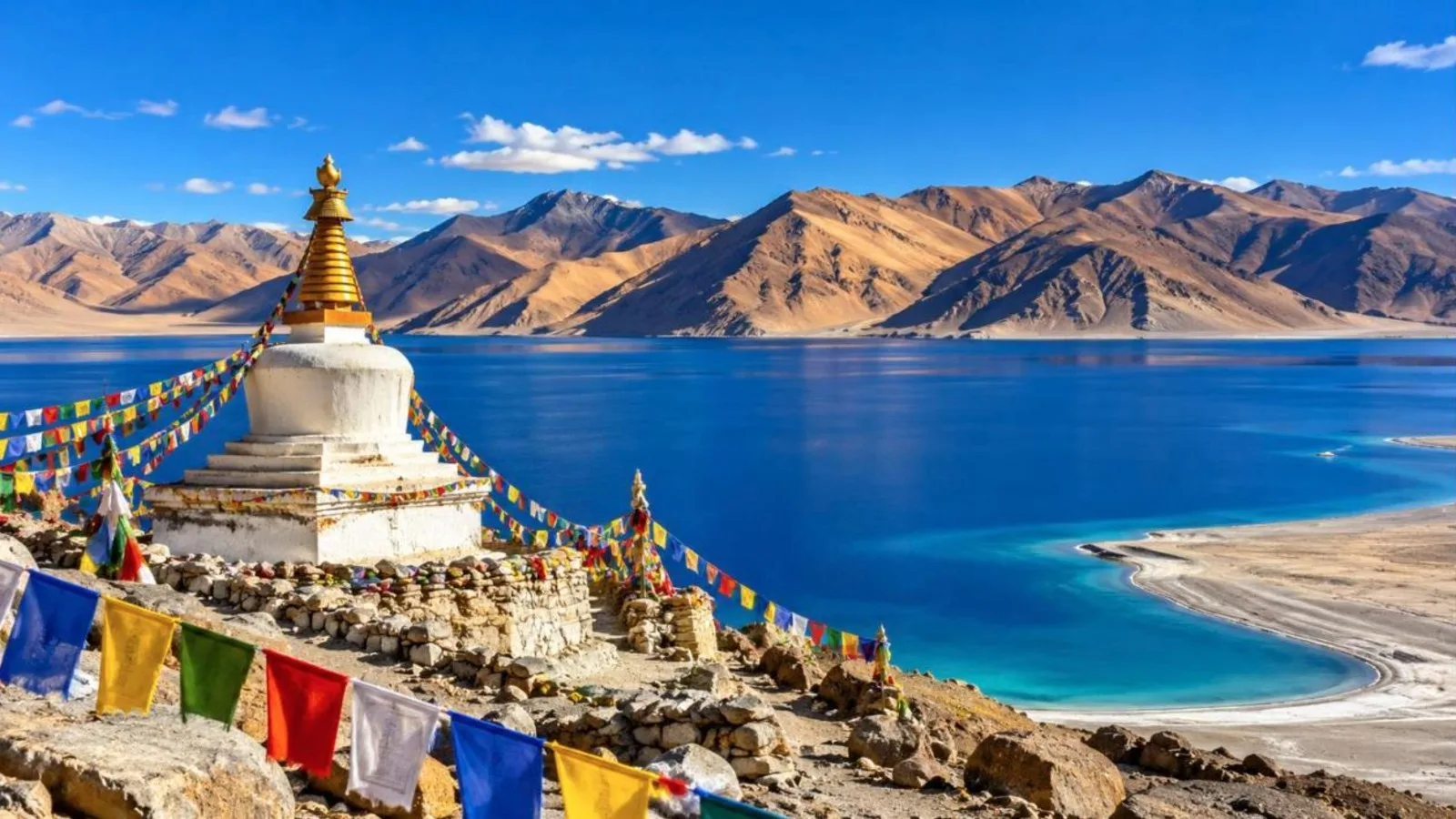
Welcome to Incredible India, our new series exploring India one state at a time. We begin at the top of the map, in Ladakh, a high-altitude desert of stark mountains, blue lakes and whitewashed Buddhist monasteries that feels like nowhere else in the country.
Why go
- Dramatic landscapes: Pangong Tso, Tso Moriri and the sand dunes of Nubra Valley.
- Centuries-old monasteries such as Hemis, Thiksey, Diskit and Alchi.
- Some of the world's highest motorable roads, a dream for bikers and road-trippers.
Best time to visit
May to September is the main season, when roads from Manali and Srinagar are open and days are pleasant. July and August are busiest. Winter (December to February) is extremely cold, often far below freezing, but suits experienced travellers chasing the frozen Zanskar river and snow leopard tours. Leh is reachable by air all year.
Top places to see
- Leh: Leh Palace, Shanti Stupa and the old town bazaar.
- Monasteries near Leh: Thiksey, Hemis, Shey and Stok.
- Nubra Valley: via Khardung La, with double-humped Bactrian camels at Hunder and the giant Maitreya Buddha at Diskit.
- Pangong Tso: the famous colour-changing lake on the India-China border.
- Tso Moriri: a quieter, high-altitude lake in Changthang.
- Lamayuru and Alchi: ancient monasteries and "moonland" landscapes west of Leh.
Getting there and around
By air: Kushok Bakula Rimpochee Airport in Leh has direct flights from Delhi and other cities. By road: the Manali-Leh and Srinagar-Leh highways open roughly from May or June to October, depending on snow. Within Ladakh, hire a local taxi (outside taxis face restrictions), or rent a motorbike in Leh.
Permits and practical tips
- Permits: areas such as Nubra, Pangong and Tso Moriri require online registration and environmental fees for Indian visitors; foreign nationals need a Protected Area Permit. Rules change, so check the official Leh administration portal before you go.
- Acclimatise: Leh is about 3,500 m high. Rest completely for the first 24-48 hours, drink water, avoid alcohol and ascend gradually. Seek medical help for severe headache or breathlessness.
- Connectivity: only postpaid connections from some networks work in many areas; carry cash, as ATMs are limited outside Leh.
- Respect the environment: avoid plastic bottles and carry a reusable one.
Sample 7-day itinerary
- Arrive in Leh and rest.
- Leh Palace, Shanti Stupa, local market (light activity).
- Thiksey, Hemis and Shey monasteries.
- Drive over Khardung La to Nubra Valley.
- Nubra to Pangong via the Shyok route.
- Pangong back to Leh via Chang La.
- Depart, or extend to Tso Moriri or Lamayuru.
What to eat
Try thukpa, momos, skyu (hand-made pasta stew), khambir bread and butter tea. Read more about Himalayan food in our Flavours of India: Sikkim article.
Indicative budget
Expect around ₹3,500-6,000 per person per day for mid-range travel, excluding flights. Taxi hire for multi-day circuits is the biggest cost; sharing a vehicle helps.
Next in Incredible India: Jammu and Kashmir.