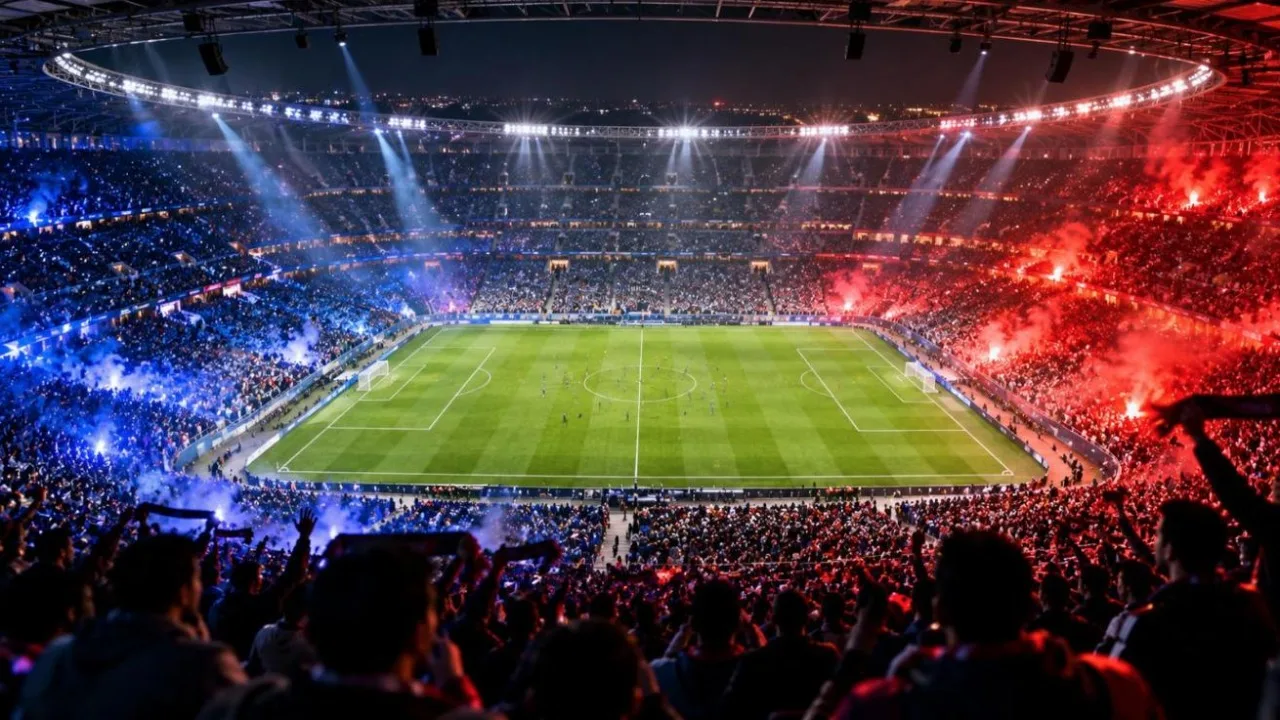
Few fixtures in world football attract as much attention as El Clásico, the match between Real Madrid and FC Barcelona. Hundreds of millions of fans around the world watch, and the rivalry carries more than a century of history, identity and drama. In Part 3 of The Greatest Rivalries in Sport, we look at why this game means so much.
Two great clubs
FC Barcelona was founded in 1899 and Real Madrid in 1902. They first met in 1902, and since then they have become two of the most successful and richest clubs in the world, with many Spanish league titles and European Cups between them.
More than football
The rivalry is often linked to Spain's history and politics. Madrid is the capital and seat of central government, while Barcelona is the capital of Catalonia, a region with its own language and strong sense of identity. During the dictatorship of Francisco Franco (1939 to 1975), Catalan culture was suppressed, and Barcelona's motto, "Més que un club" ("More than a club"), came to symbolise Catalan pride for many supporters.
Historians note that the political story is more complex than a simple good-versus-bad narrative, but these associations have shaped how fans see the fixture.
Moments that fuelled the fire
- The Di Stéfano affair (1953): both clubs claimed to have signed Argentine star Alfredo Di Stéfano. He joined Real Madrid and led them to five straight European Cups from 1956 to 1960, a source of lasting bitterness in Barcelona.
- Cruyff's arrival (1973): Dutch star Johan Cruyff joined Barcelona and inspired a 5 to 0 win at Madrid's Bernabéu stadium in 1974. He later returned as coach and shaped Barcelona's style of play for decades.
- Luís Figo (2000): Barcelona captain Figo moved directly to Real Madrid. On his return to Barcelona in 2002, fans threw objects onto the pitch, famously including a pig's head.
- Standing ovations: in rare moments of respect, Madrid fans applauded Barcelona's Ronaldinho in 2005 and Andrés Iniesta in 2015 for their brilliance.
The Messi vs Ronaldo era
From 2009 to 2018, the rivalry reached new heights as Barcelona's Lionel Messi and Real Madrid's Cristiano Ronaldo competed for goals, trophies and the Ballon d'Or. Between them they won the award ten times from 2008 to 2017. Messi became El Clásico's all-time top scorer.
The period also featured famous coaching clashes, especially between Barcelona's Pep Guardiola and Madrid's José Mourinho, and matches such as Barcelona's 5 to 0 win in 2010 and Real's victories in tense cup and league games.
Style and identity
Barcelona became associated with possession-based football and a famous youth academy, La Masia. Real Madrid became associated with signing global stars, the "Galácticos", and a remarkable record in the European Cup and Champions League, which it has won more than any other club.
Why it matters
El Clásico combines sporting quality, history and identity. Even when the teams change, the rivalry endures, passed down from generation to generation of fans worldwide.
In Part 4, we move to motor racing and the intense rivalry between Ayrton Senna and Alain Prost.
The Greatest Rivalries in Sport: the full series
- Part 1: Federer vs Nadal
- Part 2: Ali vs Frazier
- Part 3: Real Madrid vs Barcelona (you are here)
- Part 4: Senna vs Prost
- Part 5: Magic vs Bird
- Part 6: The Ashes
- Part 7: Borg vs McEnroe
- Part 8: Evert vs Navratilova
- Part 9: Yankees vs Red Sox
- Part 10: Coe vs Ovett
Records, scores and statistics are commonly cited figures and may vary slightly between sources.