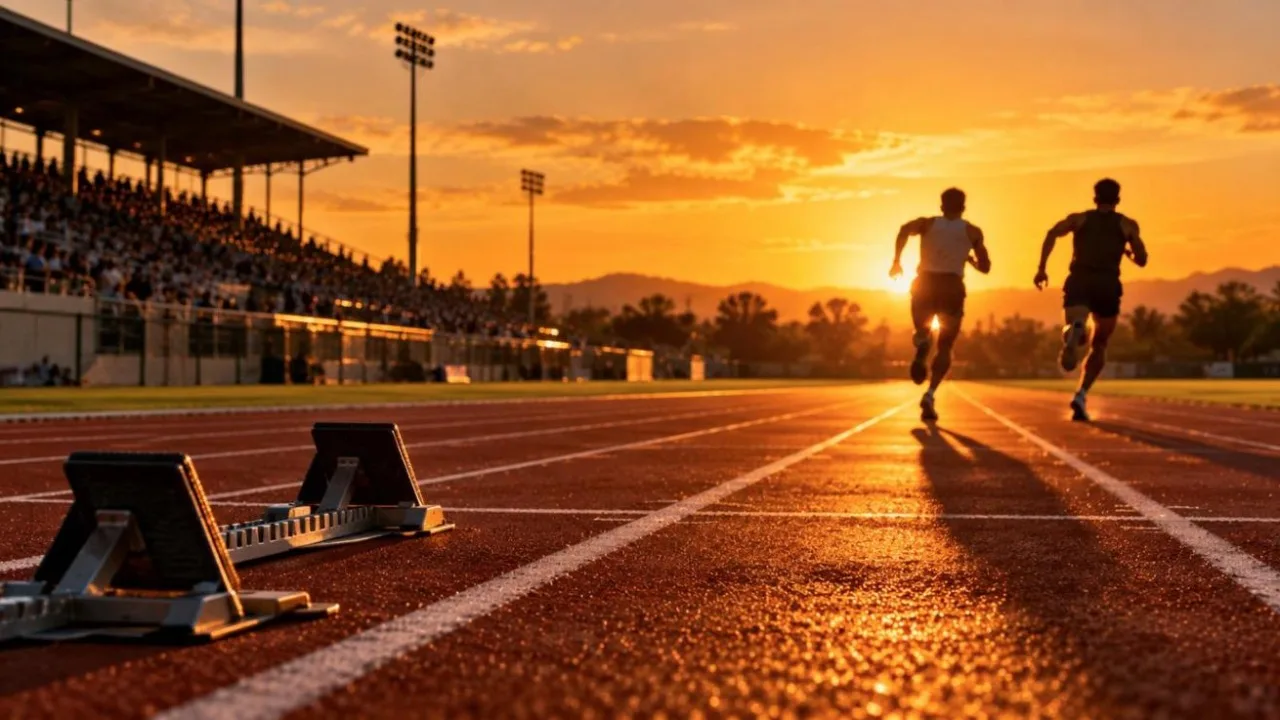
In the late 1970s and early 1980s, two British runners dominated the world of middle-distance running. Sebastian Coe and Steve Ovett broke world records, won Olympic gold medals and divided fans, yet they rarely raced each other. In the final part of The Greatest Rivalries in Sport, we look at their story, then sum up lessons from the whole series.
Two different paths
Steve Ovett, from Brighton, born in 1955, was a powerful runner with a devastating finishing kick. He was known for waving to the crowd before winning and for keeping his distance from the press.
Sebastian Coe, born in 1956 and raised in Sheffield, was coached by his father, Peter. He was light, elegant and extremely fast, and he was more comfortable with the media. Their contrasting personalities and styles made the public eager to pick sides.
Trading world records
In 1979, Coe set three world records in just 41 days, in the 800 metres, the mile and the 1,500 metres. Ovett answered with world records of his own. Over the next few years, the two (and later Steve Cram) traded records in the mile and 1,500 metres. Coe's 800 metres world record of 1:41.73, set in 1981, stood for 16 years.
Because they seldom raced against each other outside major championships, fans eagerly waited for the Olympics.
Moscow 1980: a twist
At the 1980 Moscow Olympics, Coe was the favourite in the 800 metres, his best event, and Ovett was the favourite in the 1,500 metres. The results surprised everyone.
- 800 metres: Ovett won gold, and Coe, who ran a poor tactical race, took silver.
- 1,500 metres: six days later, under great pressure, Coe won gold, with Ovett taking bronze.
Los Angeles 1984 and beyond
At the 1984 Los Angeles Olympics, Coe won the 1,500 metres again, becoming the first man to win the event at consecutive Games, and took silver in the 800 metres. Ovett, struggling with illness, did not finish the 1,500 metres final.
Later, Coe became a politician and led the organising committee for the London 2012 Olympics, then became president of World Athletics. In recent years the former rivals have spoken warmly about each other.
Why it matters
Coe and Ovett showed that rivalry can drive extraordinary performance even when athletes rarely compete head to head. Each world record was a challenge to the other.
What the ten greatest rivalries have in common
Across this series, from tennis courts to boxing rings, football stadiums and running tracks, the best rivalries share some key ingredients:
- Contrast: different styles and personalities, such as Federer and Nadal, Borg and McEnroe, or Magic and Bird.
- High stakes: titles, championships and records on the line.
- Memorable moments: the 1980 tie-break, the Thrilla in Manila, Suzuka, the 2004 comeback.
- Mutual improvement: rivals pushed each other to become better.
- Respect over time: many fierce rivals became friends, from Evert and Navratilova to Senna and Prost.
- Bigger than sport: El Clásico and the Ashes carry history, culture and identity.
Thank you for following The Greatest Rivalries in Sport. The next great rivalry may be forming right now.
The Greatest Rivalries in Sport: the full series
- Part 1: Federer vs Nadal
- Part 2: Ali vs Frazier
- Part 3: Real Madrid vs Barcelona
- Part 4: Senna vs Prost
- Part 5: Magic vs Bird
- Part 6: The Ashes
- Part 7: Borg vs McEnroe
- Part 8: Evert vs Navratilova
- Part 9: Yankees vs Red Sox
- Part 10: Coe vs Ovett (you are here)
Records, scores and statistics are commonly cited figures and may vary slightly between sources.