The European Union's plan to end sales of new petrol and diesel cars in 2035 has been under pressure for months. Now Europe's two largest economies have put forward a joint compromise. On 16 October 2026, on the sidelines of an EU leaders' summit in Brussels, France and Germany set out a deal that would loosen the 2035 CO2 target for new cars while tying public car subsidies to strict "Made in Europe" rules aimed squarely at Chinese competition.
What France and Germany agreed
The agreement is a joint national position, not EU law. It is meant to shape negotiations with the other member states and the European Parliament, and some details are still being worked out. Its two main parts are a trade-off between Paris and Berlin:
- Germany wanted looser emissions rules to protect its car industry, and France accepted them.
- France wanted a strong "European preference" against Chinese imports, and Germany accepted stricter local-content rules.
Part 1: a 90% target instead of 100%
| Version | CO2 cut for new cars by 2035 |
|---|---|
| Current EU law | 100%, effectively ending new petrol and diesel car sales |
| European Commission proposal (December 2025) | 90% |
| France–Germany position (October 2026) | 90%, with no requirement for carmakers to offset the remaining 10% |
In practice, a 90% target would allow carmakers to keep selling some plug-in hybrids and combustion-engine models after 2035. According to electrive, citing Der Spiegel, the growing use of renewable fuels in existing cars would also be taken into account.
Part 2: "Made in Europe" rules for subsidies
Only cars that meet European production rules would qualify for public purchase, leasing or rental subsidies, or for purchase by public authorities. From 2028, according to EUobserver:
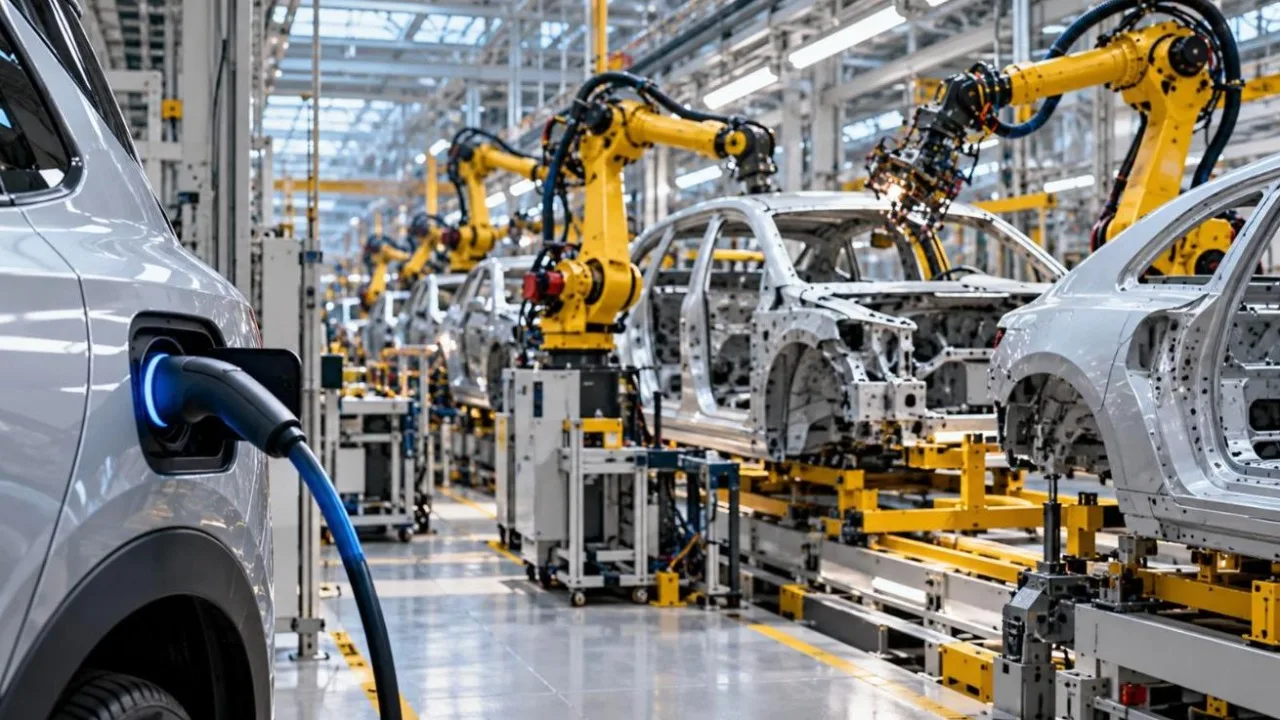
- Cars must be assembled in Europe.
- At least 70% of the value of components, excluding the battery, must come from Europe.
Euronews also reports a requirement that at least 10% of battery content comes from European sources. France had wanted "Europe" to mean only the 27 EU countries, while Germany wanted trusted partners included. Under the compromise, the UK, Norway, Iceland and Switzerland could count, provided they sign agreements guaranteeing fair access to their public markets.
What leaders and critics said
President Emmanuel Macron said the aim is to transform the car industry while keeping both climate goals and production in Europe. Chancellor Friedrich Merz called it an investment signal to industry. Both governments said the deal does not undermine their climate targets.
Environmental groups disagree. Transport & Environment called the plan a "historic mistake" that will slow electric car sales. German Social Democrat MEP Tiemo Wölken said the draft was not sufficient and would make transport climate goals very hard to meet. Merz may also face resistance at home, where his Social Democratic environment minister has pushed for a 95% target.
The China factor
Behind the deal is concern about Chinese carmakers. In October 2024 the EU imposed extra duties on Chinese battery electric cars of between 7.8% and 35.3%, on top of the standard 10% tariff. But hybrids were not covered, and Chinese brands shifted towards them: imports of Chinese plug-in hybrids reached more than 217,000 units in the first seven months of 2026, according to Eurostat data cited by Asia Times.
On 9 October, the EU and China reached an initial trade deal that EU Trade Commissioner Maroš Šefčovič said could cut up to 50% of Chinese electric and plug-in hybrid imports. Meanwhile, BYD's new factory in Hungary, built for 300,000 cars a year, is due to start mass production in the fourth quarter of 2026. Cars built there could count as "Made in Europe", one reason the details of these rules matter so much.
What it means for car buyers
- Petrol and hybrid cars may not disappear in 2035. If the 90% target becomes law, some combustion-engine and hybrid models could stay on sale.
- Subsidies may favour European-built cars. Cheaper imported electric cars could lose access to public incentives.
- Nothing changes yet. Current rules stay in force until new legislation is agreed.
What happens next
The other EU countries and the European Parliament must decide whether to back the Franco-German position. Members of the European Parliament are due to vote on the Commission's 2035 proposal in plenary in Strasbourg on 23 November. After that, Parliament and EU governments will negotiate the final target. Ireland, which holds the rotating EU Council presidency, hopes for agreement on the related industrial plan by mid-November.
For more on the shift to electric cars, see our look at the affordable EV wave.
Sources
- Euronews – France and Germany strike car industry deal linking 2035 engine rules to Made in Europe (16 Oct 2026)
- electrive – France and Germany propose 90 per cent CO₂ cut for new cars by 2035 (16 Oct 2026)
- EUobserver – Germany and France want own Made in Europe rules for cars outside EU industry law (16 Oct 2026)
- Fortune (AP) – EU says trade deal could cut up to 50% of Chinese EV and plug-in hybrid imports (10 Oct 2026)
- Asia Times – EU weighs safeguard tariffs as China refuses hybrid car limits