As of about 8:30 AM IST, Saturday 28 November 2026. Based on MG's announcement at Auto Guangzhou 2026 as reported by CnEVPost, Gasgoo, GlobalChinaEV and Automotive World, plus Electrek and CarNewsChina on other show news. The announcement was made on Friday 27 November.
One of the best-known names in Chinese motoring is giving up on petrol-only cars at home. SAIC Motor's MG brand said at the Guangzhou auto show on Friday that it will stop producing its current pure combustion-engine models for mainland China from 1 January 2027 and focus entirely on what China calls new energy vehicles: battery-electric cars, plug-in hybrids and range extenders.
The move costs MG little at home, where its petrol cars had already been overtaken many times over by its electric models. But it is a clear marker of how fast China's car market is turning, and it raises an awkward question for Europe, where MG still sells petrol and hybrid cars in large numbers.
What MG announced
MG said the decision follows the global shift towards new energy vehicles and that it will expand its electric line-up and service network in China at the same time. Owners of its existing petrol cars will keep receiving maintenance and parts for the full life of their vehicles, according to CnEVPost and Gasgoo. The models affected are the MG5, MG6 and MG7, which make up MG's current combustion-only range in mainland China.
The company stressed that the cut applies only to cars built for the Chinese mainland and is not a worldwide end to combustion-engine production. MG said it respects the energy mix, buying habits and policies of each region and will move towards electrification market by market.
What MG has not said
Several questions remain open. MG has not said when sales of its remaining petrol-only models will end or how dealers' stock will be handled, Gasgoo and GlobalChinaEV reported. The announcement also refers only to combustion-only models, so it says nothing about conventional hybrids. With barely five weeks of production left, the coming months of sales data should show whether dealers clear the stock with discounts or let it run down quietly.

The numbers behind the decision
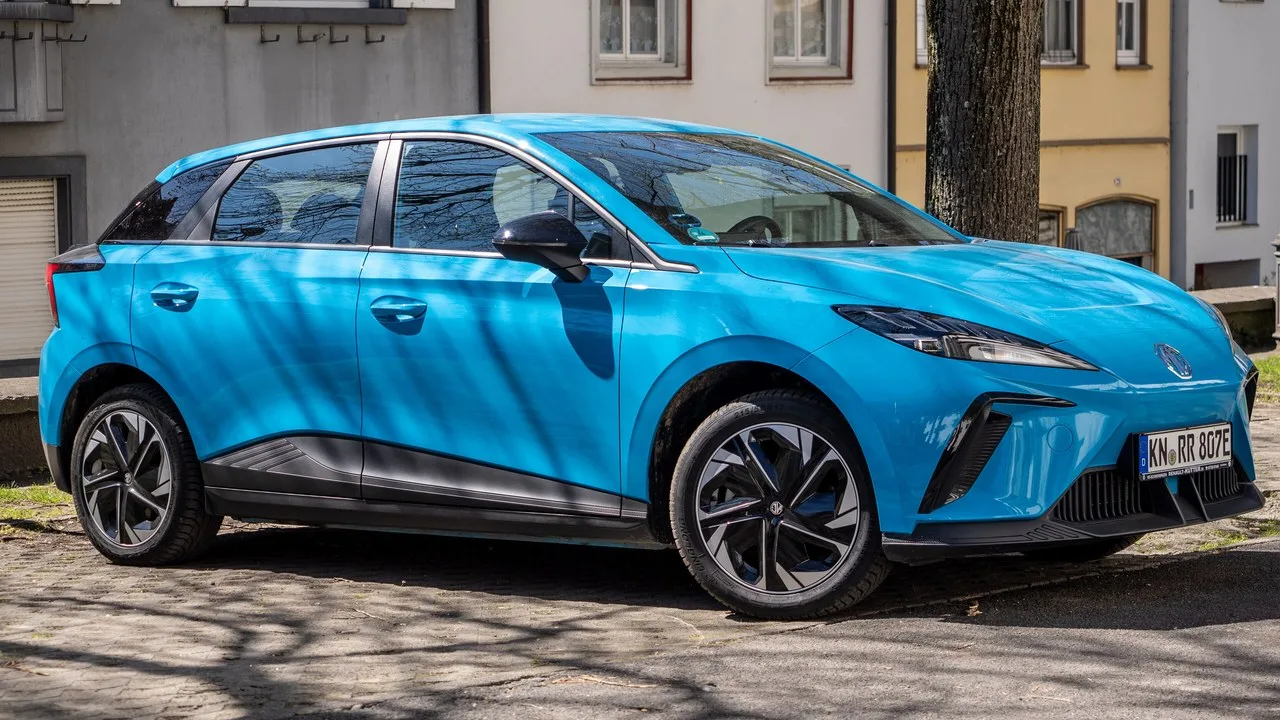
The petrol cars were no longer doing much of the selling. The MG5 saloon recorded 374 domestic sales in October, according to data provider Yiche, cited by GlobalChinaEV and Automotive World. In the same month the electric MG4 hatchback sold 15,503 and the electric MG 07 sports saloon 12,393. Together, those two electric models outsold the MG5 by more than 70 to one.
MG said its global new energy sales topped 85,000 in October, including more than 31,000 in China, and that its battery-electric sales in China have stayed above 30,000 a month for three months in a row. SAIC's passenger car unit, which includes MG and Roewe, sold 124,000 vehicles in October, up 32.7% from a year earlier, GlobalChinaEV reported.
The figures also show a shift inside SAIC itself. Its new energy sales reached 491,000 in January to October, up 157.4%, with the MG4 and MG 07 among the models behind that growth. Automotive World argued that strong sales of SAIC's in-house electric models, set against shrinking volumes at its joint ventures with foreign carmakers, suggest the group is becoming less dependent on those partnerships. Ending petrol production for China is, in that sense, a bet on its own brands as much as a response to buyers.

China's market passes a tipping point
MG's move reflects a wider shift. New energy vehicles took a record 67.5% of China's passenger car retail sales in October, according to the China Passenger Car Association (CPCA), which expects that share to rise to 70.6% in November, above 70% for the first time, CnEVPost reported. The milestone is being driven mainly by the shrinking petrol market rather than booming electric sales: retail sales of new energy cars fell 13.7% from a year earlier in October. On the production side, China built 1.02 million combustion-engine vehicles in October, down 35%, against 2.03 million new energy vehicles, up 17%, according to GlobalChinaEV.
MG is not the first big Chinese brand to quit petrol-only cars at home. BYD stopped producing combustion-only vehicles in March 2022 to concentrate on battery-electric and plug-in hybrid models, also promising continued service for existing owners.
Abroad, a very different line-up
The contrast with MG's overseas business is sharp. MG is the first Chinese car brand to pass 1 million cumulative deliveries in Europe, CnEVPost noted, and Europe is SAIC's largest overseas region. MG delivered 320,000 cars there in January to October, up 24.7% from a year earlier, according to GlobalChinaEV. That growth rests on a wider mix of powertrains than MG will offer at home, including the MG ZS Hybrid+ and the MG S9 plug-in hybrid alongside electric cars such as the MG4.
That exposes MG to Europe's tightening trade defences. Automotive World pointed out that the EU's new quota on Chinese hybrid imports takes effect on 1 December, a measure we explained in our report on EU hybrid import quotas. The analysis site argued that Chinese carmakers may increasingly use export markets to extend the life of powertrains that domestic buyers are abandoning, adding to tensions over surplus capacity. European rivals are already feeling the pressure, as shown by Stellantis pausing its French plants.
The rest of the Guangzhou show
MG was not the only carmaker using the show, which runs from 27 November to 6 December, to signal a faster shift. Toyota's Chinese joint venture GAC Toyota said its first extended-range electric vehicle will be the Highlander 9X, due in early 2027 with a CATL battery and Huawei driver-assistance and cockpit systems, Electrek reported, citing Nikkei for a target of 200,000 such vehicles in China in 2027. Volkswagen's China chief Robert Cisek said the brand expects to deliver a record 32,000 new energy vehicles in November and aims to be one of China's ten best-selling new energy brands by 2027, according to CarNewsChina.
What to watch next: whether MG clarifies the fate of its hybrids and remaining petrol stock in China, whether other domestic brands follow with their own cut-off dates, the CPCA's November figures, and how MG's European hybrid sales hold up under the new EU quota. For European buyers, MG's petrol and hybrid models remain on sale for now.
Sources
- CnEVPost: SAIC's MG goes all-in on NEVs, to halt ICE vehicle production for Chinese mainland in 2027
- Gasgoo: MG to end production of pure combustion-engine models for Chinese Mainland in 2027
- GlobalChinaEV: MG ends combustion-only car production for mainland China from January 1, 2027
- Automotive World: MG to end ICE-only car production for China in 2027
- Electrek: Toyota confirms the Highlander 9X as its first EREV
- CarNewsChina: VW China CEO expects record 32,000 electric car deliveries in November
Featured image: An MG4 Electric hatchback parked on a street in Radolfzell, Germany (April 2025, file photo), JoachimKohler-HB, CC BY-SA 4.0, via Wikimedia Commons (cropped).