As of about 8:30 AM IST, Thursday 19 November 2026. Based on Ford's announcement and reporting by CNBC, MLive and InsideEVs from the company's plant in Marshall, Michigan.
Ford has started making lithium iron phosphate (LFP) battery cells in the United States, using technology licensed from China's CATL, the world's largest battery maker. The company said on Wednesday, 18 November, that production at its $3 billion BlueOval Battery Park Michigan in Marshall began last month and that the first cells are now shipping to its Louisville Assembly Plant in Kentucky, where they will power prototypes of the Fathom, its upcoming low-cost electric pickup.
Ford calls it the first U.S. production of LFP cells for mainstream consumer cars. It is also one of the clearest tests yet of whether an American carmaker can use Chinese know-how to build cheaper EVs at home without falling foul of Washington's growing suspicion of Chinese ties.
What Ford announced
The plant, about 100 miles west of Detroit, covers roughly 2 million square feet, CNBC reported. Ford says its lines can turn out 40 cells a minute, which it describes as among the fastest LFP prismatic (rectangular) cell lines outside China. At full speed, that equals about 20 gigawatt-hours a year for vehicles and for Ford's energy-storage business, according to CNBC.
The first cells are going to Louisville for Fathom prototypes, and some test vehicles are already on the road with Marshall batteries, a Ford engineer told MLive. A battery pack plant on the same Marshall site is due to start in 2027, Ford said. MLive quoted the plant's operations manager as saying it would be fully running by spring. Ford said it is still certifying its processes and will ramp up cell output next year.
Why LFP matters for cheaper EVs
LFP cells use no nickel or cobalt, which keeps costs down, and they tend to last through many years of charging, Ford said. They store less energy for their weight than the nickel-rich cells used in many long-range EVs, so carmakers usually pair them with efficient vehicle designs. The chemistry was invented in the U.S. but commercialised mainly in China, CNBC noted, which is why Chinese EV makers have held a large cost advantage.
Ford is building the Fathom around that trade-off. The battery pack forms part of the vehicle's structure, and prismatic cells were chosen because they fit directly into the chassis and cut structural costs, the company said. Workers use AI-based image recognition to spot defects, and Ford says its goal is to make faulty cells so rare that it tracks them per billion rather than per million.
For buyers weighing whether an EV makes financial sense, cheaper batteries matter more than anything else. Our five-year cost comparison of EVs and hybrids shows how much the upfront price affects the total.
The Fathom: Ford's $28,350 bet
The Fathom is a midsize electric pickup and the first vehicle on Ford's new Universal EV Platform. It will start at $28,350, MLive reported, the cheapest all-electric vehicle Ford has offered. Preorders open in early 2027, and CNBC said Ford expects to launch the truck in the fourth quarter of 2027. Chief executive Jim Farley has pitched it as a rival to Tesla and to Chinese EV makers.
Ford is also building a new production system at Louisville. Alan Clarke, Ford's vice president of advanced development projects and a former Tesla engineer, told InsideEVs that building a battery factory, a new casting operation and Ford's most automated vehicle plant in under five years would be "faster than China speed."
How the CATL licence works
The plant is wholly owned and operated by Ford. CATL has no equity stake but supplied the technology, equipment and training, MLive reported, and Ford pays CATL an undisclosed royalty based on a percentage for every cell produced. InsideEVs said CATL engineers helped set up thousands of production tools and train workers, and that the cell design is unique to Ford rather than an existing CATL product.
"If we want to get to being able to produce affordable EVs in the United States, we need to also do it the fastest way possible," Clarke told reporters, according to CNBC. "CATL being the biggest in the world means that they're the best supplier to get us that technology and help us learn ourselves how to produce LFP cells."
Ford officials also told InsideEVs that raw materials for the plant do not come from what the U.S. government calls foreign entities of concern, which include China. That claim matters because U.S. battery tax credits and political support increasingly depend on keeping Chinese-linked suppliers out of the supply chain.
The political risk
The CATL link has drawn criticism from some lawmakers and from U.S. Transportation Secretary Sean Duffy, CNBC reported. In September, Duffy wrote to Farley expressing "profound concern" about Ford's ties to Chinese companies. A day later, the White House praised Ford for its U.S. jobs and manufacturing.
The timing is sensitive. CNBC noted that President Donald Trump is meeting China's Xi Jinping and Russia's Vladimir Putin at this week's APEC summit in Shenzhen. Michigan Governor Gretchen Whitmer, who visited the plant on Wednesday, framed it as a way to "outcompete and beat China" by bringing the technology onshore, MLive reported.
A smaller plant than first planned
The project has been scaled back. Ford originally planned up to 40 gigawatt-hours a year at Marshall, CNBC said, double the current target, before the industry's EV slowdown. Ford also halted construction for nearly two months in late 2023 as EV sales softened, and some residents opposed the project, MLive reported. Ford says the site has room to add capacity if demand returns.
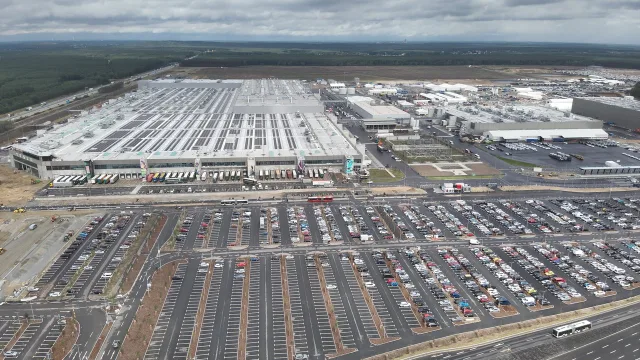
The local stakes are still large. Whitmer credited the plant with 1,700 new jobs, and more than 700 people already work there, according to the Marshall Area Economic Development Alliance. Other carmakers are placing different bets: Tesla, for example, is expanding its German factory for robotaxis while several rivals cut back.
What to watch
The key questions are whether Marshall can reach full speed with good quality in 2027, whether Washington adds new restrictions on licensing deals with Chinese battery firms, and whether the Fathom's price holds until launch. LFP is today's practical route to cheaper EVs; newer chemistries are further away, as our look at solid-state battery timelines explains. Ford's lessons in Michigan will also feed its energy-storage plans in Glendale, Kentucky, the company said.
Sources
- Ford: Ford Ships First Battery Cells from Michigan Plant for Fathom Electric Truck
- CNBC: Ford starts U.S. battery cell production using Chinese tech amid geopolitical tensions
- MLive: Ford opens $3B battery plant in Marshall, production underway on cells for Ford Fathom EV
- InsideEVs: Ford Fathom's LFP Batteries Begin Production In Michigan
- The Verge: Ford's first ultra-cheap EV is called Fathom, a full-featured truck for $28,350
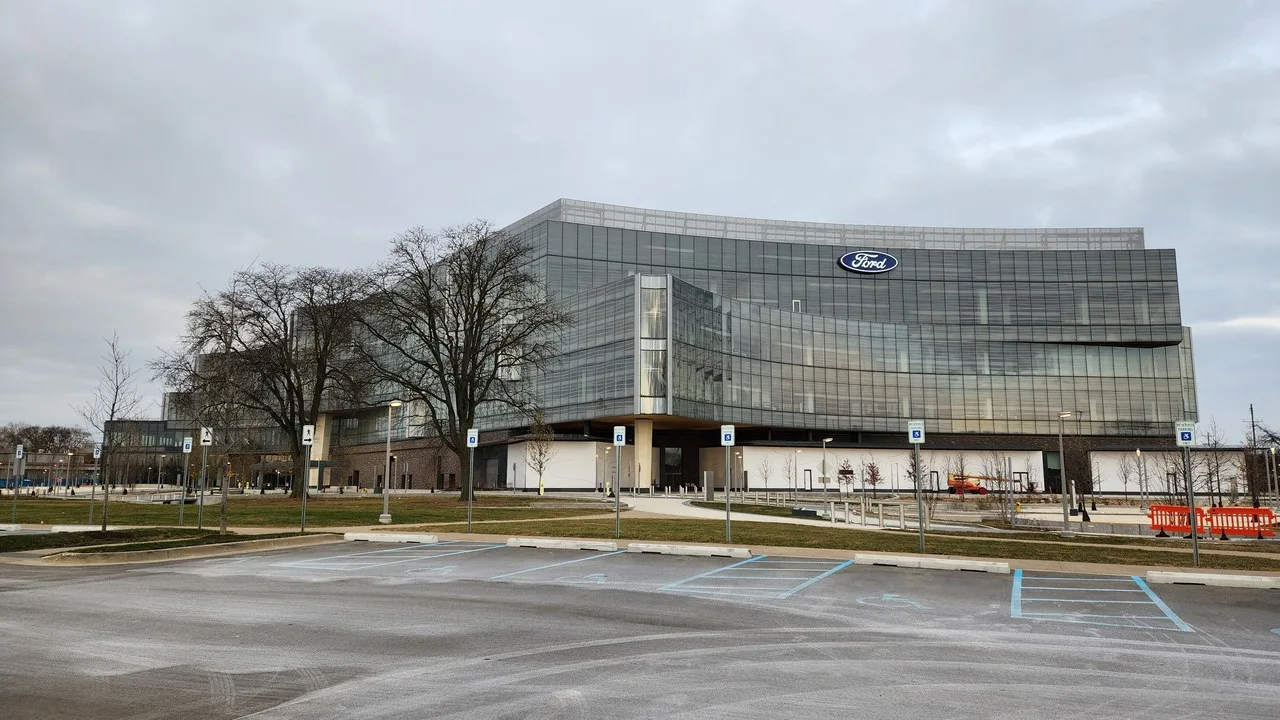
Featured image: Ford World Headquarters in Dearborn, Michigan, 29 November 2025 (file photo), 42-BRT, CC BY-SA 4.0, via Wikimedia Commons (cropped).