This is Part 4 of Flavours of India. Earlier parts: Chettinad, Kerala and Bengal.
Punjab, the "land of five rivers", is India's breadbasket, and its food reflects its fertile fields and farming life: hearty, generous and unapologetically rich in ghee and butter. Much of what the world calls "Indian food", from tandoori chicken to dal makhani and naan, has its roots in Punjabi kitchens and roadside dhabas.
What makes Punjabi cuisine special
- Wheat and maize breads: roti, paratha, naan, kulcha and, in winter, makki di roti (maize flatbread).
- Dairy: ghee, white butter (makhan), paneer, curd and thick lassi.
- The tandoor: clay ovens used for breads and marinated meats.
- Seasonal greens: mustard leaves, spinach and bathua in winter.
- Community kitchens: the langar at gurdwaras, including the Golden Temple in Amritsar, which feeds tens of thousands of people every day.
Why sarson da saag is a winter ritual
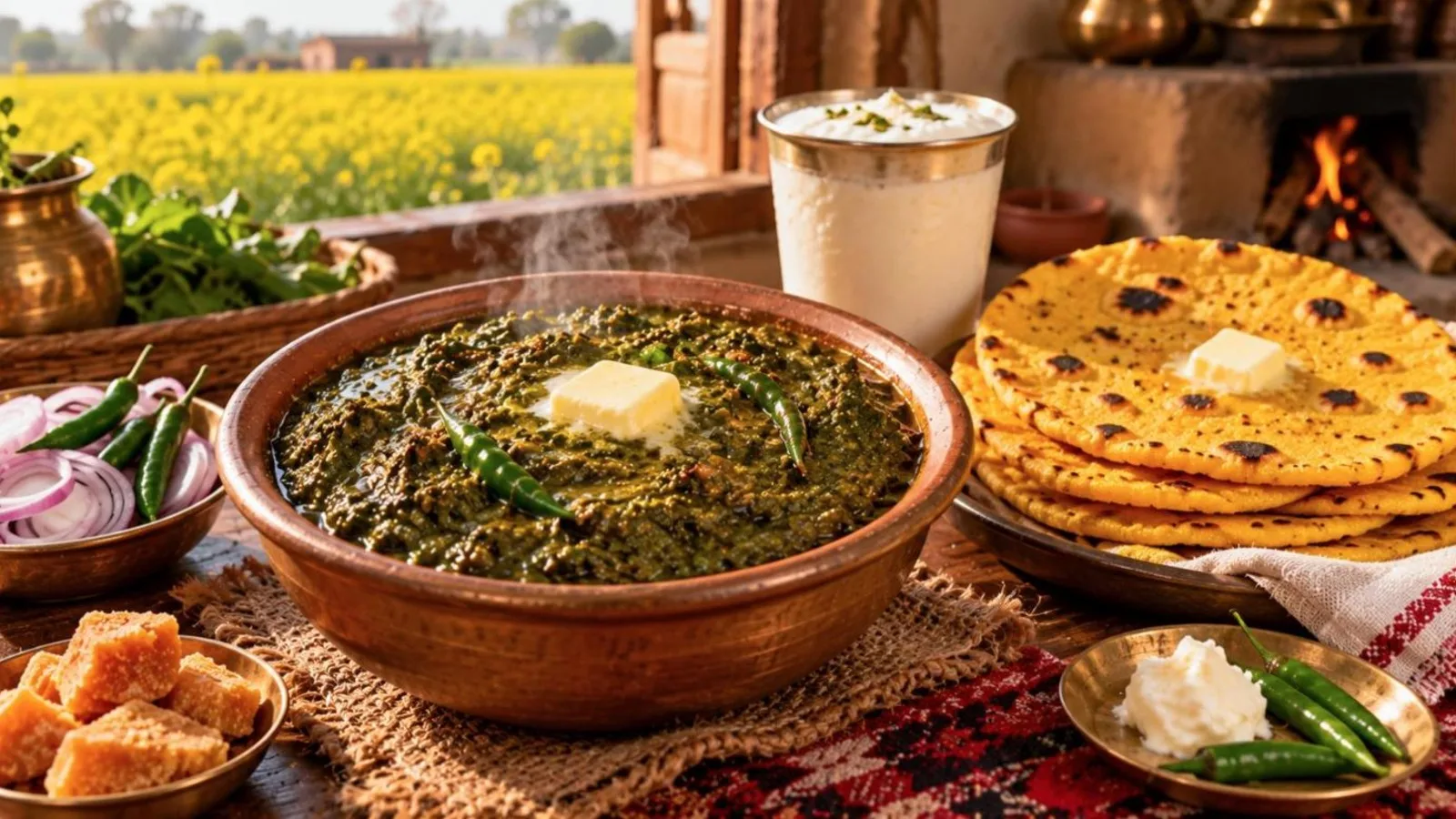
Mustard greens (sarson) grow across Punjab's fields from November to February. Cooked slowly for hours, traditionally in a clay pot over a wood fire, and served with maize rotis and a generous dollop of white butter, sarson da saag is the taste of a Punjabi winter. With mustard greens arriving in markets now, it's the perfect time to make it.
Sarson da saag recipe
Serves: 4 · Prep: 30 minutes · Cook: 1 hour
Ingredients
- 500 g mustard greens (sarson), tough stems removed
- 250 g spinach (palak)
- 100 g bathua (chenopodium) leaves, optional
- 1 small radish with leaves or a few turnip pieces, optional
- 2-3 green chillies
- 1 inch ginger and 6-8 garlic cloves
- 2-3 tbsp makki ka atta (maize flour)
- Salt to taste
For the tadka
- 2-3 tbsp ghee
- 1 medium onion, finely chopped
- 1 tbsp each chopped ginger and garlic
- 1-2 green chillies, chopped
- 1/2 tsp red chilli powder
- White butter (makhan) to serve
Method
- Clean the greens: wash the mustard greens, spinach and bathua several times to remove grit, then roughly chop.
- Cook: place the greens with green chillies, ginger, garlic, salt and 1 cup water in a pressure cooker. Cook for 3-4 whistles, then simmer for 10 minutes. (Or simmer covered in a heavy pot for 40-45 minutes until very soft.)
- Mash: mash the greens with a wooden masher (ghotna), or pulse briefly in a blender. Keep a slightly coarse texture; it should not be a smooth purée.
- Thicken: return to the heat, sprinkle in the maize flour while stirring and cook on low heat for 15-20 minutes, stirring occasionally, until creamy and the raw taste of the flour is gone.
- Tadka: heat ghee, fry the onion until golden, add ginger, garlic and green chillies, then the chilli powder. Pour over the saag and mix.
- Serve hot with a generous spoonful of white butter on top.
Makki di roti recipe
Makes: 6 rotis · Time: 30 minutes
Ingredients
- 2 cups makki ka atta (maize flour)
- 1/2 tsp salt and 1/4 tsp ajwain (optional)
- Warm water to knead
- Ghee for cooking
Method
- Mix the flour, salt and ajwain. Knead small batches with warm water, using the heel of your palm, into a soft, smooth dough. Maize dough has no gluten, so knead each portion just before rolling.
- Place a ball between two sheets of butter paper or a cut plastic bag and gently pat or roll into a thick roti.
- Carefully transfer to a hot tawa. Cook on medium heat until spots appear, then flip.
- Apply ghee on both sides and cook until golden. Serve hot.
Tip: If the roti cracks, knead the dough longer with a little more warm water. Adding a spoon of wheat flour makes it easier for beginners.
How to serve
Serve saag and makki di roti with white butter, jaggery, raw onion, green chillies, pickle and a tall glass of lassi or chaas.
Other Punjabi dishes to try
- Amritsari kulcha with chole
- Dal makhani: black lentils slow-cooked with butter and cream
- Chole bhature
- Amritsari fish: batter-fried fish with ajwain
- Pinni and gajar ka halwa: classic winter sweets
We also have a recipe for the Punjabi-origin aloo paratha and butter chicken in our archive.
Next in Flavours of India: the royal Hyderabadi dum biryani.