This is Part 3 of Flavours of India. Catch up on Part 1: Chettinad and Part 2: Kerala.
There is a Bengali saying, "maachhe bhaate Bangali": fish and rice make a Bengali. Shaped by the rivers of the Ganga delta, Bengali cuisine is subtle, seasonal and deeply tied to culture, from everyday home meals to the feasts of Durga Puja.
What makes Bengali cuisine special
- Freshwater fish: rohu, katla, prawns and above all ilish (hilsa), the "queen of fish".
- Mustard in two forms: pungent mustard oil for cooking and freshly ground mustard paste (shorshe) for sauces.
- Panch phoron: a five-spice blend of fenugreek, nigella (kalonji), cumin, black mustard and fennel seeds.
- A balance of flavours: a touch of sweetness appears even in savoury dishes.
- The order of the meal: a traditional Bengali meal moves from bitter (shukto) to dal and fries, vegetables, fish, meat, chutney and finally sweets.
Why hilsa is so special
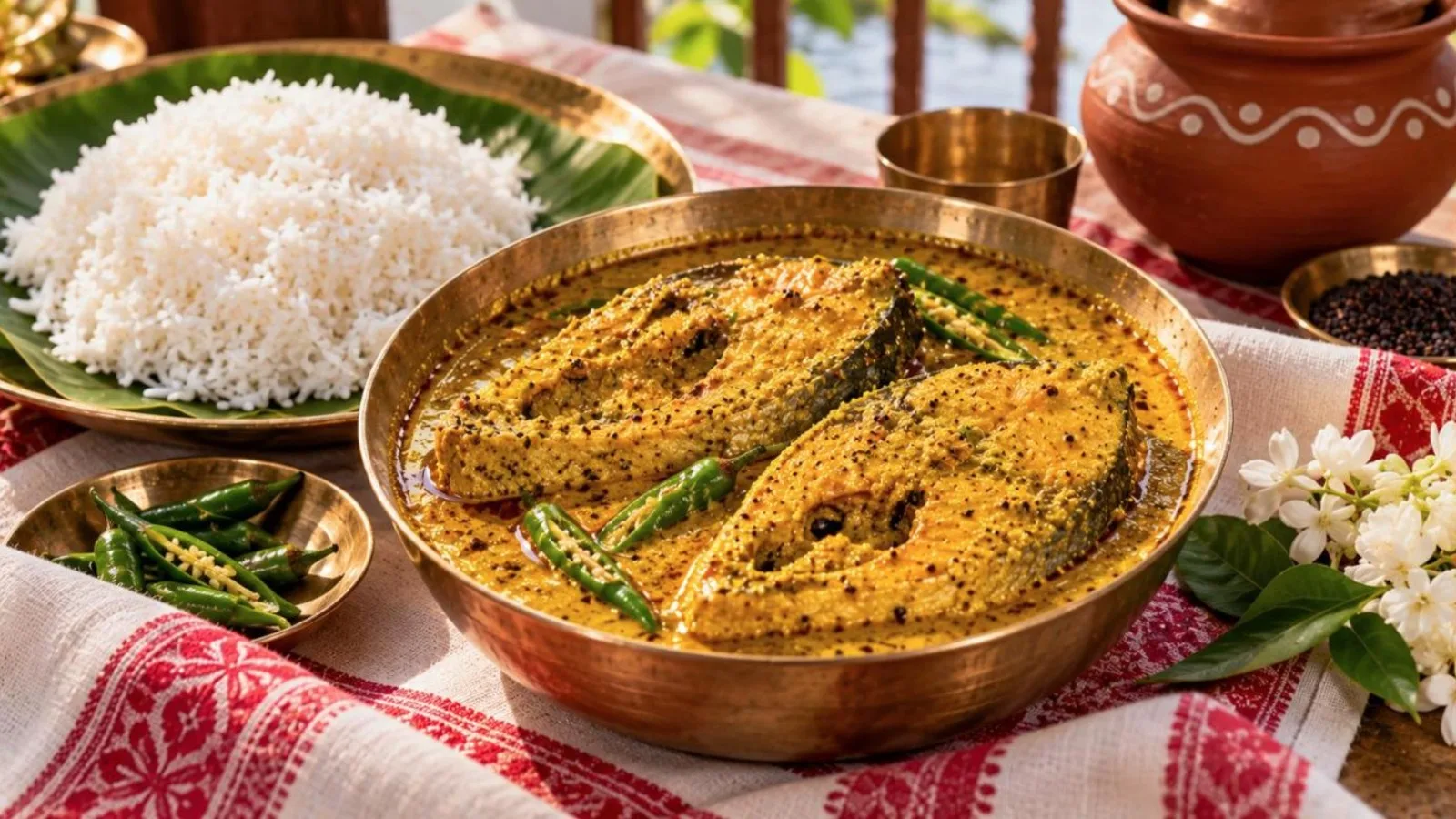
Hilsa swims upriver from the Bay of Bengal to spawn, and its rich, oily flesh is prized during the monsoon season. It is bony, so Bengalis grow up learning to eat it carefully with their fingers. Hilsa from the Padma river in Bangladesh is considered the finest. If hilsa is unavailable or out of season, this recipe also works well with rohu, bhetki or pomfret.
Shorshe ilish recipe (hilsa in mustard sauce)
Serves: 3-4 · Prep: 30 minutes (including soaking) · Cook: 15 minutes
Ingredients
- 6 pieces hilsa (ilish), cut into steaks
- 3 tbsp yellow mustard seeds
- 1 tbsp black mustard seeds
- 3-4 green chillies, plus 3 slit green chillies for cooking
- 1 tsp turmeric powder, divided
- 1/2 tsp nigella seeds (kalonji)
- 4-5 tbsp mustard oil
- Salt to taste
- 1/2 cup water
Method
- Prepare the fish: wash the hilsa gently and rub with 1/2 tsp turmeric and a little salt. Set aside for 10-15 minutes.
- Make the mustard paste: soak both mustard seeds in warm water for 20 minutes. Drain and grind with 2-3 green chillies, a pinch of salt and a little water into a smooth paste. Grinding with salt and green chilli helps prevent bitterness.
- Mix the paste with the remaining turmeric and about 1/2 cup water to make a pourable sauce.
- Cook: heat mustard oil in a pan until it just begins to smoke, then lower the heat. Add nigella seeds and slit green chillies.
- Pour in the mustard sauce and bring to a gentle simmer for 2-3 minutes. Add salt.
- Gently place the fish pieces in a single layer. Cover and cook on low heat for 8-10 minutes, carefully turning once, until the fish is cooked and the sauce thickens.
- Finish with a drizzle of raw mustard oil and a few slit green chillies. Cover and rest for a few minutes before serving.
Steamed variation (bhapa ilish)
For bhapa ilish, coat the fish in the mustard paste with a spoon of mustard oil and green chillies, place in a steel tiffin box, seal and steam in a pressure cooker (without the whistle) or a covered pan of simmering water for about 12-15 minutes.
Tips
- Avoid bitterness: don't over-grind the mustard or boil the sauce hard for too long.
- Hilsa cooks quickly; overcooking makes it dry and breaks the pieces.
- Do not wash hilsa too vigorously; its natural oils carry the flavour.
How to serve
Serve with hot steamed white rice. Many Bengalis like to mix the leftover mustard gravy with rice at the end of the meal.
Other Bengali dishes to try
- Kosha mangsho: slow-cooked, dark and spicy mutton curry, often eaten with luchi.
- Chingri malai curry: prawns in a rich coconut milk gravy.
- Shukto: a mildly bitter mixed-vegetable dish that starts the meal.
- Aloo posto: potatoes cooked with poppy seed paste.
- Mishti doi and rosogolla: Bengal's famous sweets.
Next in Flavours of India: Punjab's winter classic, sarson da saag and makki di roti.