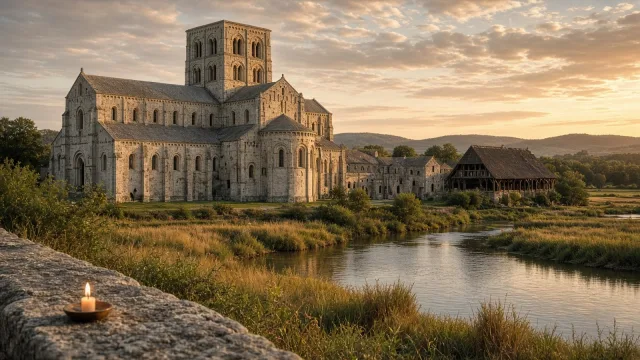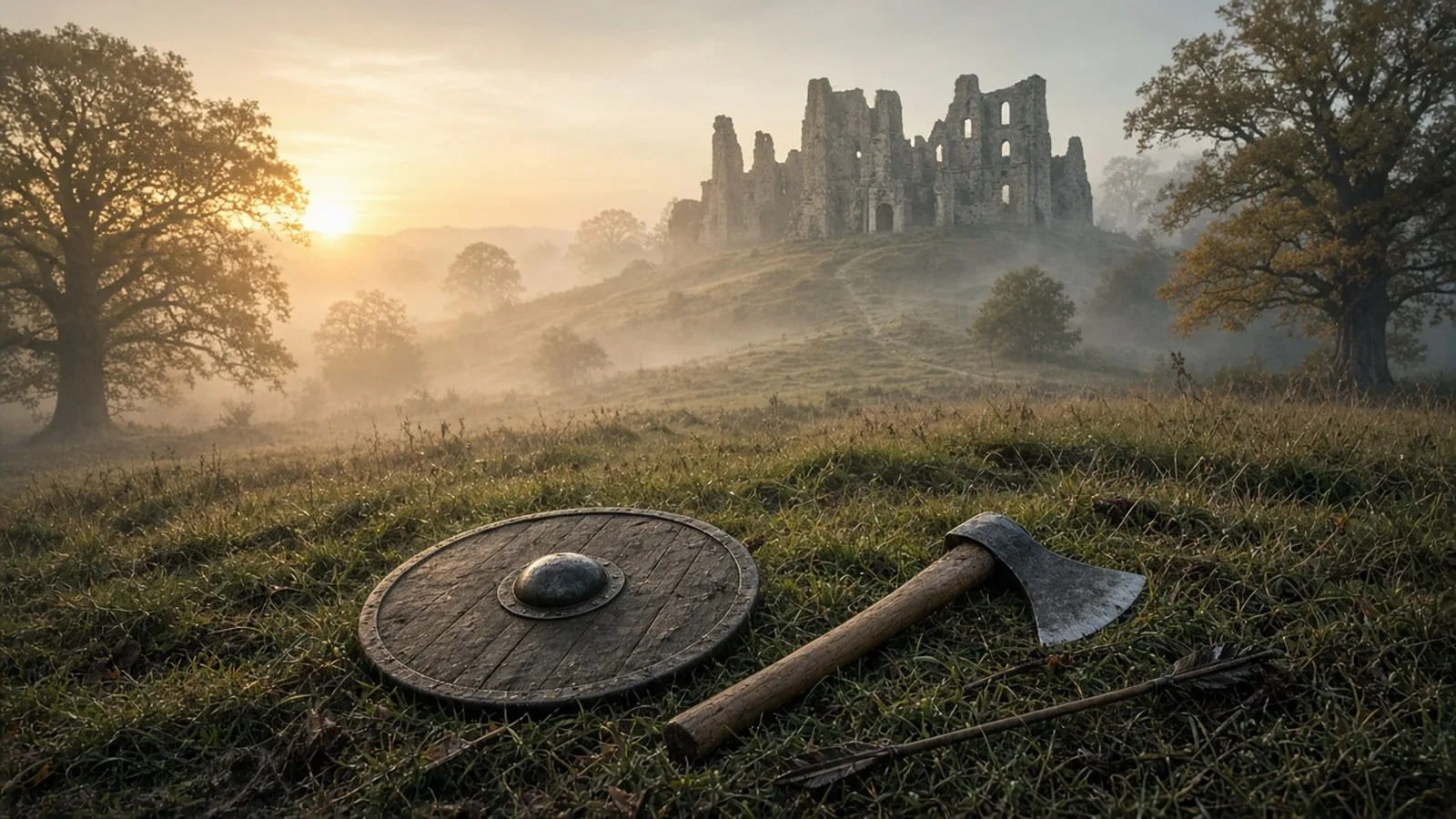
This is Part 8 of England's Royal Dynasties, our daily series on the kings and queens of England and Britain, from the Anglo-Saxon kingdoms to King Charles III.
In Part 7 we followed Edward the Confessor from exile to the throne, through his struggle with the Godwin family to the consecration of Westminster Abbey and his death, childless, on 5 January 1066. This part covers a single year. In 1066 England had three kings, faced two invasions and saw three major battles. By Christmas the last crowned Anglo-Saxon king was dead and a Norman duke wore the crown.
How do we know?
Few years in the Middle Ages are as well recorded as 1066, but the sources rarely agree. The Anglo-Saxon Chronicle survives in several versions; one, version D, gives the longest English account of Hastings, while version A sums up the whole year in two sentences. Norman writers such as William of Poitiers, the duke's own chaplain, wrote to justify the conquest. The Carmen de Hastingae Proelio (Song of the Battle of Hastings), probably written within a year or two, is vivid but poetic.
Then there is the Bayeux Tapestry, a 70-metre embroidery made in the 1070s, probably for a Norman patron, by English embroiderers. It is the most famous picture of the Conquest, but it is not a neutral record, and parts of it were heavily restored in the 19th century. As we will see, that matters.
Harold II: a king chosen in a hurry
Edward was buried in his new abbey on 6 January 1066, and on the same day Harold Godwinson, Earl of Wessex, was crowned. The Royal Family's history says the king's council, the witan, confirmed him, and Harold may well have been the first king crowned in Westminster Abbey. The Chronicle says he succeeded "even as the king had granted it to him, and men also had chosen him". Harold was not of royal blood, but he was Edward's brother-in-law, the richest man in England and an experienced commander. The only male heir of the old line, Edgar Ætheling, was a teenager.
Two foreign rulers believed the crown was theirs. William, Duke of Normandy, claimed that Edward had promised him the throne and that Harold, on a visit to Normandy in 1064, had sworn to support him. The Bayeux Tapestry shows that oath being taken on holy relics. Harald Hardrada, King of Norway, one of the most famous warriors of his age, claimed England through an earlier agreement said to have been made between his predecessor, King Magnus, and Cnut's son Harthacnut.
In late April a "long-haired star" appeared in the sky and shone for a week. It was Halley's Comet, and people took it as an omen. English Heritage notes that the Tapestry places the comet right beside Harold's coronation, though it actually appeared about three months later.
A summer of waiting
The first attack came from inside the family. Harold's exiled brother Tostig raided the south coast and then Lincolnshire, until the northern earls Edwin and Morcar drove him off and he fled to Scotland. Harold, hearing that William was preparing to invade, gathered "so large a force, naval and military, as no king before collected in this land", and kept it on watch along the south coast all summer.
Nothing came: William's fleet had still not sailed. By 8 September, says the Chronicle, the provisions were gone and the men had to be sent home. It was the worst possible moment.
Fulford and Stamford Bridge
Within days Harald Hardrada arrived in the north with about 300 ships. Tostig joined him, and they sailed up the Ouse towards York. On 20 September they defeated Edwin and Morcar at Fulford, just outside the city, and York submitted.
Harold marched north "by day and night". He reached Tadcaster on Sunday 24 September and the next day caught the invaders by surprise at Stamford Bridge, east of York, where they had gone to collect hostages. After a long, hard fight, Hardrada and Tostig were both killed. According to The Royal Family's history, the invaders had come in more than 300 ships, but so many were killed that 25 ships were enough to carry the survivors home. Stamford Bridge is often seen as the end of the Viking Age in England.
The Normans land
Three days later, on 28 September, William landed at Pevensey on the Sussex coast. He quickly built a castle at Hastings. Harold hurried back south, gathered what men he could in London and marched to meet him, perhaps hoping to surprise the Normans as he had surprised the Norwegians.
The Battle of Hastings, 14 October 1066
The armies met about 10 kilometres north-west of Hastings, at the place now called Battle. Each side probably had between 5,000 and 7,000 men. Harold's army, mostly infantry, formed a long shield wall along a ridge, "at the hoary apple tree" as one Chronicle puts it. William's army combined archers, infantry and mounted knights.
According to the Carmen, the first blow was struck by William's minstrel Taillefer, who rode out juggling his sword, and killed an English warrior. Then the Normans attacked uphill again and again. The shield wall held for hours, which made Hastings unusually long for a medieval battle. The Normans finally broke it by pretending to retreat, tempting groups of English soldiers to chase them down the slope, where they were cut down. Late in the day Harold was killed, along with his brothers Gyrth and Leofwine, and the English army collapsed. "The French remained masters of the field," wrote the D chronicler, "even as God granted it to them because of the sins of the people."
Harold had reigned, in the words of Chronicle A, "forty weeks and one day".
Legend vs evidence
The arrow in the eye. Every schoolchild knows Harold was shot in the eye, and even the Royal Family's website repeats it. But as the medievalist Martin Foys has shown, the earliest accounts never mention an arrow. Most simply say Harold died in battle. The Carmen says that William and three knights hacked him to pieces. The arrow appears later: in a poem of around 1100 by Baudri of Bourgueil, then in the 12th-century historians William of Malmesbury, Henry of Huntingdon (who says it "struck him in the eye") and Wace.
What does the Tapestry show? Above the scene are the words Hic Harold rex interfectus est ("Here King Harold is killed"). Beneath them, a standing figure seems to pull an arrow from his face, while another man falls under a Norman horseman's sword. But 18th-century drawings show the standing figure holding a spear, and Foys argues that the arrow was added during 19th-century repairs. English Heritage agrees that the arrow on the Tapestry was added at that time. The falling figure may well be Harold. In short, the arrow is possible but unproven, and the earliest evidence points to a death at the hands of Norman knights.
Harold's body. Early sources say William refused to give Harold's mother his body, even though she offered its weight in gold. Later stories say his mistress, Edith Swan-neck, identified the body, and that he was buried at Waltham Abbey in Essex, which he had refounded. A later legend even claimed he survived the battle and lived as a hermit. The true resting place is unknown.
Where exactly did he fall? William founded Battle Abbey on the battlefield, and its high altar was said to mark the spot where Harold died. In 2016, after new research on the layout of the abbey church, English Heritage moved the memorial stone 6 metres to the east.
Where to see it today
- 1066 Battle of Hastings, Abbey and Battlefield, East Sussex (English Heritage): the ridge, the battlefield walk and the stone marking where Harold fell.
- The Bayeux Tapestry at the British Museum, London: on loan from France and displayed in England for the first time since it was made, from 10 September 2026 to 11 July 2027. Tickets until the end of March 2027 have sold out, so check the museum's site before planning a visit. The Bayeux Tapestry Museum in Normandy is closed for renovation and plans to reopen in 2027.
- Stamford Bridge, East Yorkshire, and Fulford, near York: the sites of the northern battles.
- Pevensey Castle, East Sussex: where William landed, inside the walls of a Roman fort.
- Waltham Abbey, Essex: the traditional site of Harold's grave.
At a glance
| Rulers | Harold II Godwinson, January–October 1066 |
| House | House of Godwin |
| Predecessor | Edward the Confessor |
| Successor | William I (Edgar Ætheling was proclaimed in London but never crowned) |
| Key dates | 5–6 January Edward dies, Harold crowned; April Halley's Comet; 8 September army sent home; 20 September Fulford; 25 September Stamford Bridge; 28 September William lands at Pevensey; 14 October Hastings; 25 December William crowned |
| Legacy | The end of Anglo-Saxon royal rule; the last great Viking invasion defeated; the beginning of Norman England |
| Next | William the Conqueror: castles, conquest and Domesday |
Next in the series
In Part 9 we follow William the Conqueror from his coronation on Christmas Day 1066 through rebellion, the brutal Harrying of the North, a wave of castle-building that began with the Tower of London, and the great survey of 1086, the Domesday Book. Until then, read more about the Vikings, Norway and medieval history.
Sources
- The Royal Family, Harold II (r. Jan–Oct 1066)
- The Anglo-Saxon Chronicle, eleventh-century entries, Avalon Project, Yale Law School
- Alison Hudson, British Library (2016), And always after that it grew much worse
- Martin Foys, History Today (October 2016), King Harold: Shot through the Eye and Who's to Blame?
- English Heritage, 8 things you may not know about 1066
- English Heritage (2016), 1066: New study reveals change to where King Harold fell
- British Museum, The Bayeux Tapestry (10 September 2026 – 11 July 2027)