As of 7:55 AM IST, Saturday 24 October 2026. Police have not named the victim or given his nationality. Details below come from South African police statements reported by Reuters, AP, the BBC, Al Jazeera, GroundUp and Eyewitness News (EWN). Some eyewitness details come from a single source and are flagged as such.
A man believed to be a foreign national was beaten to death by a crowd of about 50 people in central Durban on Thursday morning, 22 October 2026, during an anti-immigration march. By Thursday afternoon, police had taken five people in for questioning. The killing is the most serious incident yet in months of anti-migrant protests across South Africa. The unrest has looted and burned foreign-owned shops, strained relations with several African governments, and driven tens of thousands of migrants to leave the country.
What happened in Durban
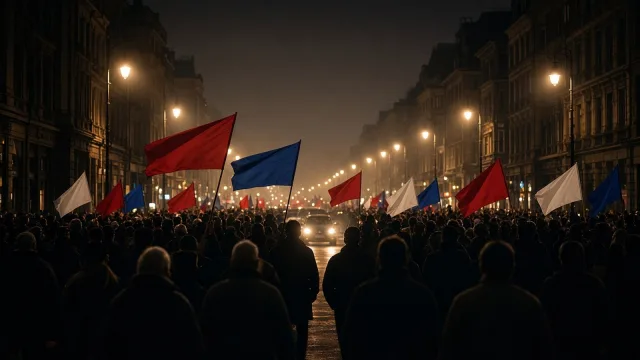
KwaZulu-Natal police spokesperson Colonel Robert Netshiunda said a group was marching along Dr Pixley kaSeme Street in the central business district when two men broke away and approached a man standing at the roadside. About 50 people then assaulted him, and he was declared dead at the scene. Police described him as being in his late 30s or early 40s. A murder case has been opened.
Police have not released the victim's name or nationality, and said the motive had not been established.
Eyewitness accounts (single-source)
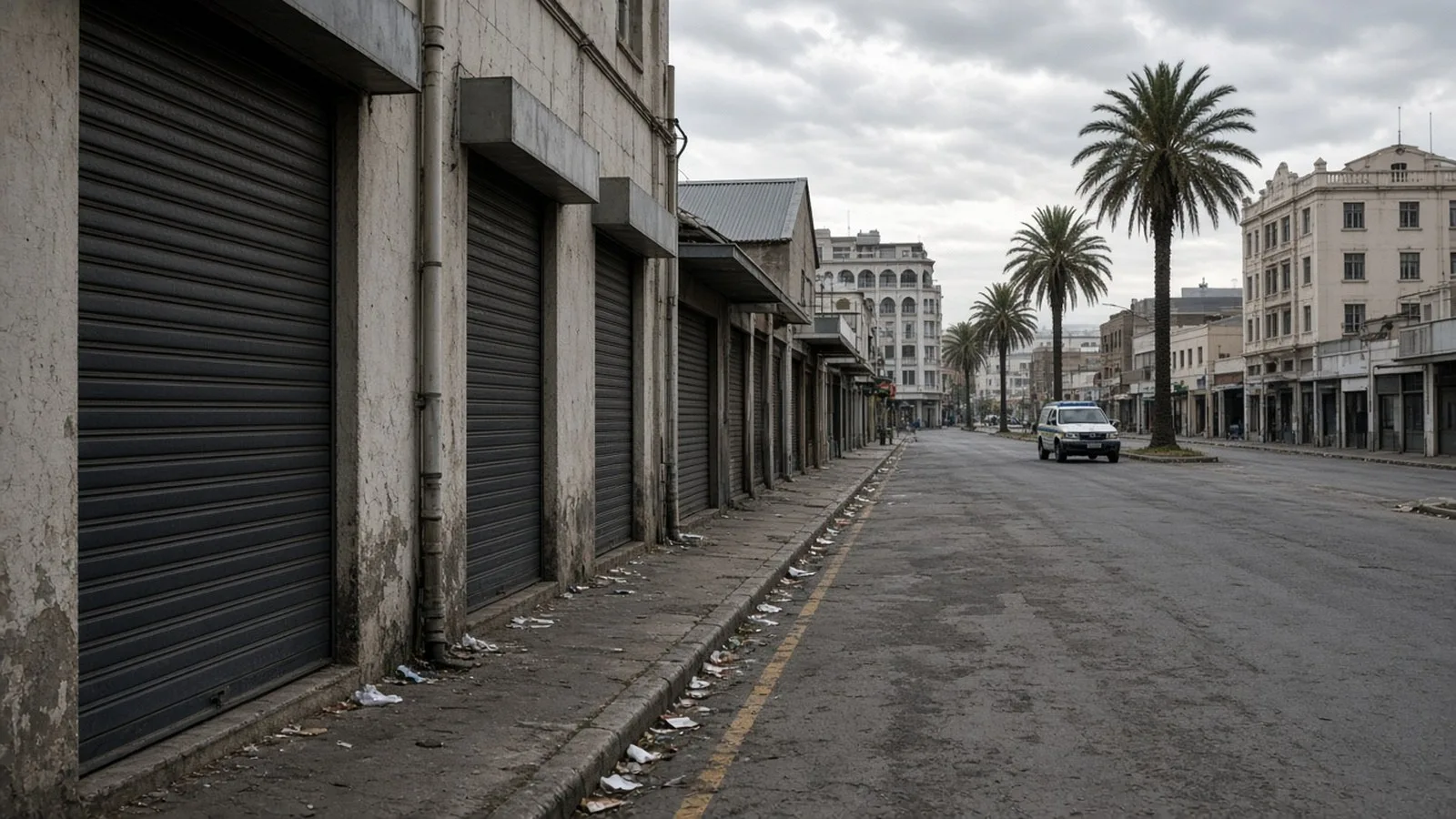
A security guard who asked not to be named told GroundUp that the group was targeting immigrants and that the attack happened at about 7 AM. He said vigilantes had been terrorising the area for weeks. HorizonDesk has not independently corroborated these accounts. GroundUp reporters said almost every shop in the area stayed shut all day for fear of more violence, and that police and soldiers of the South African National Defence Force (SANDF) were visible at the scene.
Five taken in for questioning
EWN reported on 23 October that police picked up five people at a protest on Che Guevara Road on Thursday. Netshiunda said information suggested they could help police with three cases:
- an assault on a foreign national in the Durban CBD on Wednesday, 21 October (GroundUp reported that the victim was a Ugandan man);
- the murder on Thursday morning;
- an assault with intent to cause grievous bodily harm on two foreign nationals by a marching group in Berea, also on Thursday morning.
Police described the five as people who could assist the investigation. As of the latest reports HorizonDesk reviewed, nobody had been publicly charged.
Why tensions are high
The asylum directive row
According to GroundUp, protests in Durban flared again after the Department of Home Affairs issued a directive on 28 September. The directive put into effect a Constitutional Court ruling that asylum seekers cannot be turned away on technicalities before their claims are heard. Home Affairs withdrew the directive on 9 October. Around the same time, marches in Durban and in Soweto, near Johannesburg, turned violent: foreign-owned shops were looted and vehicles were set alight, according to Reuters and the BBC.
A movement with a deadline
One of the groups behind the protests, March and March, had set a 30 June deadline for all undocumented migrants to leave South Africa, the BBC reported. A March and March leader, Jacinta Ngobese-Zuma, told the BBC she rejects the label "xenophobic". HorizonDesk has not seen evidence linking the group to Thursday's killing, and police have not named any organisation.
The economic backdrop
Unemployment affects roughly a third of South Africa's workforce, and poverty and inequality remain deep. Migrants are often blamed for taking jobs, crime and pressure on public services. The BBC noted that researchers say these sweeping claims are not supported by evidence. Government figures put the number of foreign nationals at about 2.4 million in a population of about 62 million.
A wider regional crisis
- Repatriations. Zimbabwe, Nigeria and Ghana have taken steps to bring citizens home, the BBC reported.
- Deaths abroad. Nigeria, Mozambique, Malawi and other countries say some of their citizens have been killed in xenophobic attacks. Ghana confirmed that one of its citizens, Bashiru Isak, was shot dead in Cape Town during demonstrations. South Africa has disputed some of these claims, saying some deaths were linked to crime and that the scale of the violence has been exaggerated.
- An exodus. Al Jazeera reported that tens of thousands of migrants have left South Africa in recent months. The government says many were deported for lacking papers.
President Cyril Ramaphosa has condemned anti-migrant violence, and in an August lecture in Durban said the country was "deeply ashamed" of the treatment of fellow Africans (IOL). He has also acknowledged that weak border controls let undocumented migrants enter and stay. The government has urged protesters to stay peaceful while accepting that immigration reform is needed.
History repeating?
South Africa has struggled with xenophobic violence for nearly two decades. In 2008, more than 60 people were killed in nationwide attacks on foreign nationals. Durban has a long history as a city of migrants, including one of the largest Indian-origin communities outside India, a story we touch on in our explainer on the end of apartheid, Gandhi and Mandela. Many of the borders migrants now cross were drawn during the colonial carve-up of the continent; see the Scramble for Africa.
What it means for foreign nationals in South Africa
- Follow police and embassy advisories, and avoid march routes in Durban's CBD, the Berea area and Che Guevara Road while protests continue.
- Foreign missions have issued safety advice to their citizens in past waves of unrest. Check your country's embassy or high commission for current guidance.
- Be cautious with unverified videos and casualty claims on social media, which can inflame tensions.
What is still unclear
- The victim's identity and nationality.
- Whether any of the five people questioned will be charged.
- Which group, if any, organised Thursday's march.
- Whether Durban's authorities will restrict further marches.
Sources
- Reuters (via StreetInsider): South African police investigate killing of foreign national by crowd
- AP News: migrant killed during South Africa protest (22 Oct 2026)
- BBC News: Durban mob killing and South Africa's anti-migrant protests
- Al Jazeera: Foreign national beaten to death by a mob in South Africa
- GroundUp: Man beaten to death by anti-immigrant vigilantes in Durban
- EWN: 5 people in for questioning over murder of foreign national in Durban
- IOL: Ramaphosa says South Africa is 'ashamed' of attacks on foreign nationals