
As of about 9:00 AM IST, Tuesday 24 November 2026. Based on the companies' announcement and reporting by Reuters, Business Insider and Stocktwits/Yahoo Finance.
CrowdStrike has agreed to buy Zscaler in an all-stock deal that values the cloud security company at about $43.9 billion, the largest cybersecurity acquisition on record, according to Reuters. The deal, announced on Monday 23 November alongside quarterly results from both companies, would combine CrowdStrike's protection for laptops, servers and cloud workloads with Zscaler's technology for securing how employees, applications and, increasingly, AI agents connect to each other over the internet.
Investors gave it a mixed welcome. Zscaler shares closed 17.7% higher at $229.24, Business Insider reported, still well below the offer's implied value of $260.41 a share. CrowdStrike fell nearly 9% to $208.97 after dropping as much as 12% during the session. That gap says a lot about how the market sees the risks: dilution for CrowdStrike holders, a long wait to close and the chance of antitrust scrutiny.
The deal terms
Under the agreement, which both boards approved unanimously, Zscaler shareholders will receive 1.135 CrowdStrike shares for each Zscaler share they own. Based on CrowdStrike's closing price on Friday 20 November, that works out at about $260.41 a share, a premium of roughly 34% to Zscaler's last close, the companies said. Reuters put the equity value at about $42.46 billion.
When the deal closes, CrowdStrike shareholders will own about 84.1% of the combined company and Zscaler shareholders about 15.9%. The companies expect to complete the transaction in the second half of CrowdStrike's fiscal year 2028, which Reuters described as the second half of calendar 2027. It still needs approval from Zscaler shareholders and regulators. Zscaler would owe a $1.4 billion break-up fee if it walked away in certain circumstances, including to accept a rival bid, Reuters reported.
CrowdStrike chief executive George Kurtz will lead the combined group. Zscaler founder Jay Chaudhry will stay on to run the Zscaler business and join CrowdStrike's board. Until the deal closes, the two companies will keep operating separately.
Why CrowdStrike wants Zscaler
CrowdStrike built its business on endpoint security: software installed on computers and servers that spots and stops attacks on the device itself. Zscaler pioneered a cloud-delivered approach to network security, known as Security Service Edge (SSE) and, in its broader form, SASE. Instead of sending traffic back through a corporate data centre and firewall, Zscaler's "Zero Trust Exchange" sits between users and the applications they reach, checking every connection.
The deal takes CrowdStrike into network security, which it calls cybersecurity's largest single market segment. In the announcement Kurtz framed it in terms of AI. "The network used to connect people to places. Now it connects agents to data," he said, adding that CrowdStrike was building "cybersecurity's operating system: a single control plane to deploy AI, control AI, and enable any agentic application to run safely."
Chaudhry said AI agents "are rapidly becoming the new weakest link" and called the deal "the natural evolution" of the two companies' long partnership. They already share more than 2,000 customers and 16 product integrations, according to the release.
The numbers behind the pitch
The companies say the combined group would start with more than $10 billion in annual recurring revenue (ARR), including about $3.9 billion from Zscaler. CrowdStrike says the deal would expand its total addressable market by more than $185 billion by 2029. It also points to about 8,000 Zscaler customers that do not yet buy from CrowdStrike, which Reuters said include Unilever and United Airlines.
CrowdStrike is promising about $1 billion in annual revenue synergies within 30 months of closing, mostly from cross-selling, and about $500 million in annual cost savings within 18 to 24 months, mainly from data-centre infrastructure, vendors and operations. It says the deal will add to free cash flow per share straight away, even before any synergies.
Both companies also reported strong quarters. CrowdStrike's fiscal third-quarter revenue rose 28% to $1.58 billion, ahead of the $1.53 billion analysts expected, and it guided fourth-quarter revenue to $1.638 billion to $1.644 billion. Zscaler's first-quarter revenue rose 20% to $949.3 million, also above forecasts, Reuters reported.
How investors and analysts reacted
CrowdStrike's fall reflects the cost to its shareholders, who are giving up about a sixth of the company. JPMorgan said the deal would dilute CrowdStrike's growth rate and free cash flow margins, according to a note cited by TheFly and reported by Stocktwits, even though the bank raised its price target to $240 and kept an Overweight rating. Barclays lifted its target to $265 after the results.
Others focused on the strategy. Dan Ives of Yorkville Ives called it "the clearest signal yet that cybersecurity is consolidating into a handful of platforms," Business Insider reported. Oppenheimer's Ittai Kidron said combining device and network data could let suspicious activity on a laptop automatically restrict that user's access and data movement, a joined-up response that neither company offers today.
The deal lifted the rest of the sector. Okta rose 7.7%, SentinelOne 6.9%, Cloudflare 5.8%, Fortinet 5.2% and Palo Alto Networks 2.9%, according to Business Insider. Investors are betting on more consolidation: Oppenheimer said the deal could push Fortinet and Check Point to speed up acquisitions and named Netskope and SentinelOne as possible targets.
The antitrust question
The gap between Zscaler's share price and the offer value suggests investors see some risk that the deal is delayed or blocked. "Antitrust scrutiny is certainly possible given the size of the transaction and the importance of both companies, but it would be premature to assume that regulators will necessarily try to block it," Axel Rudolph of IG Group told Reuters. He said the key question would be how much regulators think the two businesses overlap and whether customers end up with fewer real alternatives.
On paper, the overlap is limited: CrowdStrike is strongest on endpoints and Zscaler on network access. The deal would, however, create a much larger rival to Palo Alto Networks, which already sells both kinds of product. Regulators in the US, Europe and elsewhere are likely to look at bundling as well as market share, especially as the combined group plans to sell everything on a single "Falcon Flex" contract.
What it means for customers
For corporate security teams the pitch is fewer vendors, one data layer and one contract. Many organisations are tired of running dozens of tools that do not share information, and attackers often exploit the gaps between them. Recent incidents such as the breach at a vendor serving JPMorgan, Visa and Mastercard and the Nginx2Root web server flaws show how quickly a weakness in one layer can spread.
There are trade-offs. Integration of this size takes years, and customers who rely on Zscaler alongside a rival endpoint product, such as Microsoft's or SentinelOne's, will want assurances that their existing setups keep working. Concentration also carries its own risk: CrowdStrike's faulty update in July 2024, which crashed millions of Windows computers worldwide, is still a reminder of what can go wrong when one supplier sits deep inside so many systems.
What to watch next
The next milestones are the regulatory filings, Zscaler's shareholder vote and any sign of a rival bidder, though the $1.4 billion break-up fee makes that less likely. Watch too whether other security companies respond with deals of their own, and how quickly CrowdStrike can show real cross-selling. As AI agents take on more work, from booking travel to reading what is on your screen, controlling what those agents can reach is becoming a central security problem. CrowdStrike has just made a $44 billion bet that it can own that problem.
Sources
- CrowdStrike: CrowdStrike to Acquire Zscaler, Bringing Network Security and Zero Trust to the Falcon Platform
- Reuters (via Investing.com): CrowdStrike snaps up Zscaler in $44 billion deal as cyber threats mount
- Business Insider: Zscaler stock leads cybersecurity rally after inking $44 billion mega-deal with CrowdStrike
- Stocktwits (via Yahoo Finance): CrowdStrike's Zscaler acquisition could broaden security platform, says JPMorgan
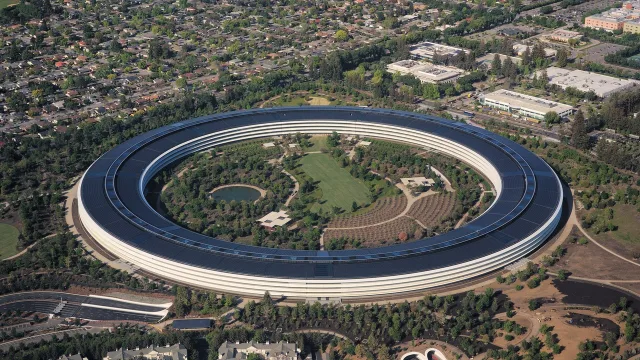
Featured image: 150 Mathilda Place, Sunnyvale, California, CrowdStrike's former headquarters and now its Silicon Valley office (19 October 2024, file photo), Coolcaesar, CC BY 4.0, via Wikimedia Commons (cropped).