Chhath Puja is one of the most demanding and deeply devotional festivals in India. Dedicated to Surya, the Sun God, and Chhathi Maiya, it is celebrated mainly in Bihar, Jharkhand, eastern Uttar Pradesh and Nepal's Terai region, and by people from these regions living across India and abroad. It begins a few days after Diwali, on the sixth day (Shashthi) of the bright half of the Hindu month of Kartik.
Chhath Puja 2026 dates
| Day | Ritual | Date |
|---|---|---|
| Day 1 | Nahay Khay | Friday, 13 November 2026 |
| Day 2 | Kharna (Lohanda) | Saturday, 14 November 2026 |
| Day 3 | Sandhya Arghya (evening offering) | Sunday, 15 November 2026 |
| Day 4 | Usha Arghya (morning offering) and Parana | Monday, 16 November 2026 |
What happens on each day
Day 1: Nahay Khay
"Nahay Khay" means "bathe and eat". Devotees, called vratis, take a holy dip in a river or pond, clean the house thoroughly and eat a single simple, pure vegetarian meal. Traditionally this is rice, chana dal and lauki (bottle gourd) cooked without onion or garlic.
Day 2: Kharna
The vratis fast through the day without water. In the evening, after offering prayers, they break the fast with kheer made with jaggery, along with rotis and fruit. This prasad is shared with family and neighbours. After Kharna begins the toughest part: a fast of about 36 hours without food or water.
Day 3: Sandhya Arghya
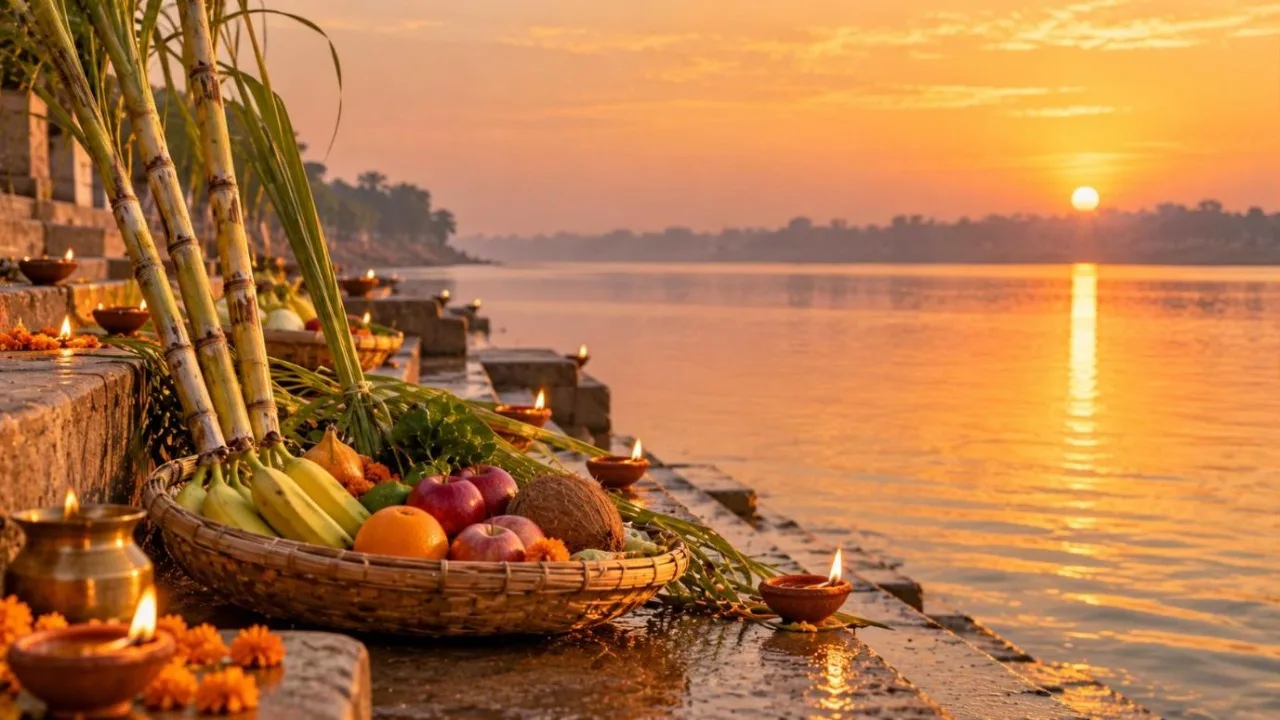
In the evening, families walk to the riverbank or a water body carrying bamboo baskets (soop and daura) filled with thekua, fruits, sugarcane, coconut and other offerings. Standing in the water, devotees offer arghya to the setting sun while folk songs of Chhath fill the air. Ghats glow with diyas, making it one of the most beautiful sights of the festive season.
Day 4: Usha Arghya and Parana
Before dawn, devotees return to the ghats and offer arghya to the rising sun. They pray for the well-being of their families and children. After the offering, the vratis break their long fast, a ritual called parana, with prasad and ginger or water.
The significance of Chhath
- Worship of nature: Chhath honours the sun, the source of life and energy, and water. There are no idols; devotees pray directly to nature.
- Gratitude and wishes: people thank the Sun God for prosperity and pray for the health, long life and happiness of their families.
- Purity and discipline: strict cleanliness, simple food and the long fast are central to the festival.
- Community spirit: neighbours clean ghats together, share prasad and help each other with preparations.
History and legends
Chhath is believed to be one of the oldest Hindu festivals. Popular legends link it to Karna, the son of Surya in the Mahabharata, who is said to have offered prayers to the sun while standing in water. Another story says Draupadi and the Pandavas observed the fast to regain their lost kingdom. In the Ramayana tradition, Sita is believed to have worshipped the Sun God after returning to Ayodhya.
Traditional prasad
- Thekua: a crisp sweet made of wheat flour, jaggery and ghee, the signature prasad of Chhath
- Kheer with jaggery on Kharna
- Seasonal fruits such as banana, sugarcane, coconut, citrus and water chestnut
Travel tip
Trains and flights to Bihar and eastern Uttar Pradesh fill up very quickly around Diwali and Chhath. If you are travelling home, book as early as possible and keep flexible dates.
Arghya timings depend on local sunrise and sunset, so check a local panchang for exact times in your city.