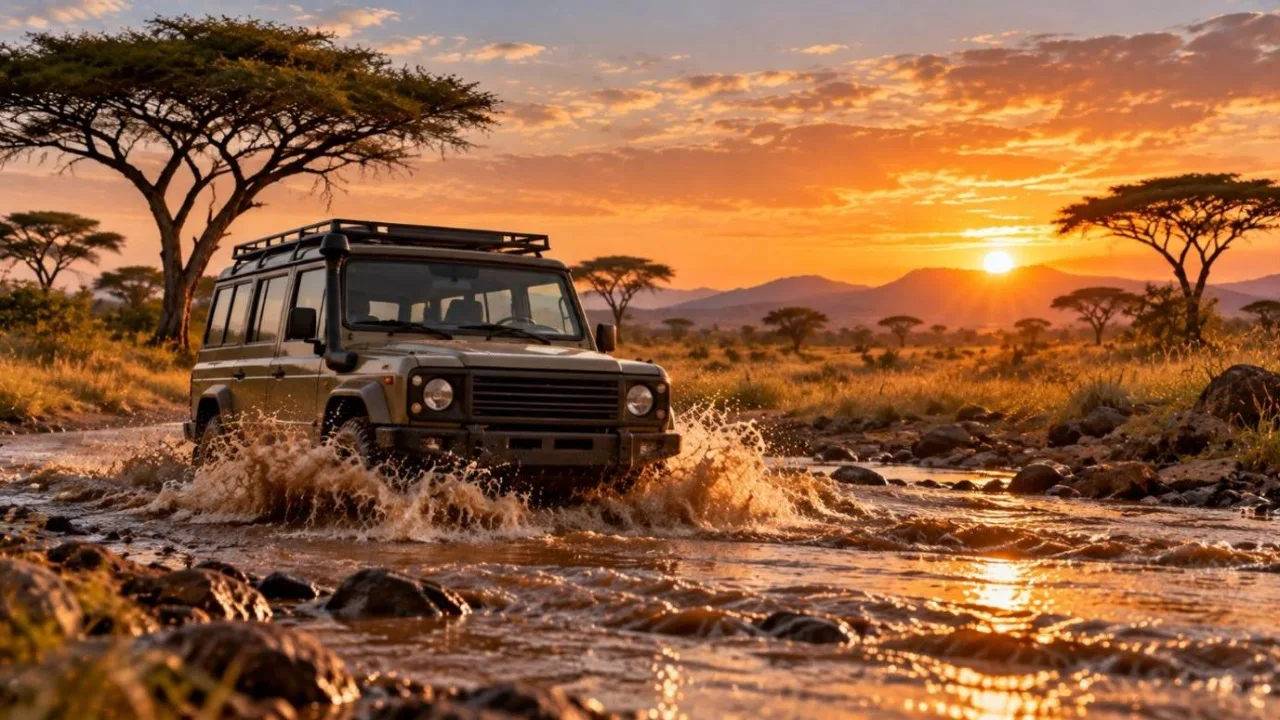
Long before SUVs became fashionable family cars, the original Land Rover showed what a true go-anywhere vehicle could do. Its utilitarian design, later sold as the Defender, carried farmers, soldiers, explorers and aid workers across the toughest terrain on Earth.
Quick facts
| Launched | 1948 Amsterdam Motor Show |
|---|---|
| Maker | Rover Company, UK (now Jaguar Land Rover) |
| Original body | Aluminium alloy panels |
| Defender name | From 1990 |
| Classic production ended | January 2016, after about 2 million vehicles |
The story
After the Second World War, Britain faced severe steel shortages, and car companies were encouraged to build products for export. Rover's chief designer Maurice Wilks, inspired by the American wartime Jeep he used on his farm, imagined a simple utility vehicle. According to company history, the first shape was sketched in the sand at Red Wharf Bay in Anglesey, Wales.
To get around the steel shortage, the body was made from aluminium alloy, which also made it light and rust-resistant. Early models were even painted in surplus aircraft cockpit green.
Built to work
- Four-wheel drive for mud, sand, snow and rocks.
- Ladder chassis that could take heavy loads and rough treatment.
- Simple mechanics that could be repaired in remote places.
- Power take-off options so farmers could run machinery from the engine.
Around the world
Land Rovers became the default vehicle for expeditions across Africa, Asia and Australia, for armies and police forces, for wildlife reserves and for humanitarian work. Over the decades the Series I, II and III evolved into the Ninety and One Ten models, renamed Defender in 1990.
Why it changed the world
- Access: it brought motor transport to places without proper roads.
- A new category: its success led directly to the Range Rover in 1970, which pioneered the idea of a luxurious off-roader and paved the way for modern SUVs.
- Design icon: its boxy, honest shape became instantly recognisable worldwide.
Legacy
Production of the classic Defender ended in January 2016 after roughly 68 years of the basic design. A completely new Defender launched in 2020, keeping the name and spirit but with modern technology and comfort.
Cars That Changed the World: the full series
- Part 1: Ford Model T
- Part 2: Volkswagen Beetle
- Part 3: The Original Mini
- Part 4: Porsche 911
- Part 5: Toyota Corolla
- Part 6: Land Rover and Defender (you are here)
- Part 7: Ford Mustang
- Part 8: Toyota Prius
- Part 9: Tesla Model S
- Part 10: Ferrari F40
Figures such as production numbers, prices and specifications are commonly cited historical values and may vary slightly between sources.