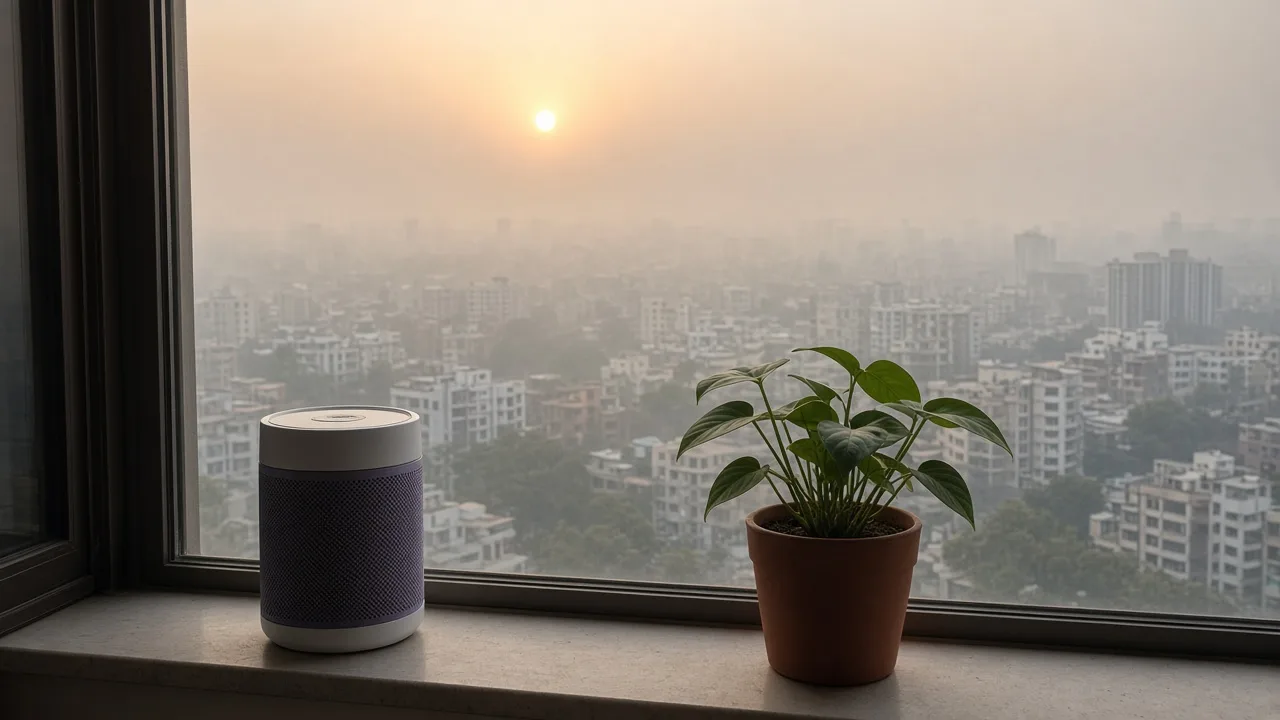
As the monsoon retreats and the weather cools, air quality in many Indian cities, especially across the north, tends to worsen. Smoke, dust, vehicle exhaust and still winter air can push pollution to levels that affect everyone's health, not just people with asthma. Here is how to read the air quality index, who is most at risk and what you can realistically do to reduce your exposure.
Why air pollution matters for health
The World Health Organization describes outdoor air pollution as a major environmental health problem in countries of every income level. It estimates that ambient air pollution caused 4.2 million premature deaths worldwide in 2019, mainly through exposure to fine particulate matter, and that the combined effects of outdoor and household air pollution are associated with 6.7 million premature deaths a year.
The damage is not only to the lungs. WHO estimates that about 68% of outdoor air pollution-related premature deaths in 2019 were due to ischaemic heart disease and stroke, 14% to chronic obstructive pulmonary disease (COPD), 14% to acute lower respiratory infections and 4% to lung cancer. The greatest burden falls on WHO's South-East Asia and Western Pacific regions.
How to read India's AQI
India's National Air Quality Index, run by the Central Pollution Control Board (CPCB), turns complex pollution data into a single number and colour. The categories and their possible health impacts are:
- Good (0–50): minimal impact.
- Satisfactory (51–100): minor breathing discomfort for sensitive people.
- Moderate (101–200): breathing discomfort for people with lung disease such as asthma, and discomfort for people with heart disease, children and older adults.
- Poor (201–300): breathing discomfort for most people on prolonged exposure.
- Very poor (301–400): respiratory illness on prolonged exposure.
- Severe (401–500): affects healthy people and seriously impacts those with existing diseases, even during light physical activity.
Check the AQI for your area on the CPCB website or a reliable app before planning outdoor activities. Readings can vary a lot between neighbourhoods and through the day.
Who is most at risk
India's National Centre for Disease Control (NCDC), in its health advisory under the National Programme on Climate Change and Human Health, identifies groups at higher risk:
- children, particularly those under five, and older adults
- pregnant women
- people with existing lung, heart or cerebrovascular conditions
- outdoor workers, such as traffic police, construction workers, street vendors and auto-rickshaw drivers
People from low-income households with poor nutrition are also more vulnerable, according to the ministry's updated advisory.
Symptoms to watch for
High pollution can cause coughing, throat irritation, watery or itchy eyes, breathlessness and wheezing, and can trigger asthma attacks. People with heart or lung disease may notice their usual symptoms getting worse. Seek medical help promptly if you or someone in your family has trouble breathing, chest pain or tightness, or symptoms that keep getting worse.
Practical ways to reduce exposure
Based on NCDC's advisory and general good practice:
- Limit outdoor exertion on bad days. Avoid strenuous outdoor activity and stay indoors as much as possible when the AQI is high. Move morning walks or runs indoors, or reschedule them.
- Use the right mask, if you use one. NCDC says disposable N95 or N99 masks can help if they fit properly over the nose and mouth and are used as instructed, particularly for short periods of exposure. Paper masks, handkerchiefs, scarves and cloth masks are not effective. For days when the AQI is above 200, the advisory suggests considering a close-fitting N95 or N99 mask.
- Think carefully about air purifiers. If you use one, follow the manufacturer's guidance, replace filters as instructed and get advice on the right size for the room. NCDC warns against purifiers that work by generating ozone, as they increase indoor pollution.
- Use recirculation mode in cars and air conditioners to avoid drawing in outside air.
- Do not add to indoor pollution. Avoid burning wood, coal, incense or mosquito coils indoors, and never smoke inside the house.
- Keep medicines handy. People with asthma, COPD or heart disease should follow their doctor's instructions, keep prescribed medicines available and seek advice early if symptoms worsen.
- Take extra care during festivals. NCDC advises staying indoors and wearing an N95 or N99 mask to reduce exposure to smoke from firecrackers, and seeing a doctor if breathing difficulty develops.
Help from the health system
The Health Ministry has asked states to set up chest clinics in government health facilities, such as community health centres, district hospitals and medical colleges in cities under the National Clean Air Programme. These clinics are meant to screen, diagnose and treat respiratory and heart conditions made worse by pollution. Ask at your nearest government hospital if one operates near you.
The bigger picture
WHO stresses that most sources of outdoor pollution are beyond the control of individuals and need action on transport, energy, industry, waste and agriculture. Personal precautions can lower your exposure, but they are a stopgap, not a solution.
FAQ
Are cloth masks useful against air pollution? No. NCDC says paper masks, handkerchiefs, scarves and cloth are not effective. Well-fitted N95 or N99 masks are recommended if you choose to use a mask.
Should I stop exercising in winter? Not necessarily. Stay active, but move exercise indoors or to times and places with better air on high-pollution days.
Is indoor air always safer? Not always. Indoor air can be polluted by cooking smoke, incense, smoking and outdoor air seeping in. Keep indoor sources to a minimum.
When should I see a doctor? If you have breathlessness, chest pain, wheezing or worsening symptoms of an existing condition.
Sources
- WHO fact sheet: Ambient (outdoor) air quality and health
- CPCB: National Clean Air Programme report, AQI categories and health impacts (PDF)
- CPCB: About the National Air Quality Index (PDF)
- NCDC: Health Advisory on Air Pollution under NPCCHH (PDF)
- NCDC: Guidance note on chest clinics for air pollution-related illnesses (PDF)
- Hindustan Times: Centre issues updated advisory to states, UTs for tackling air pollution-related diseases