Potholes, speed breakers and uneven roads take a toll on any car. Over time, wheels can drift out of alignment, lose balance and suspension parts can wear out. These problems affect comfort, safety and tyre life, but they often develop gradually, so many drivers do not notice until tyres are badly worn.
Wheel alignment explained
Alignment refers to the angles at which the wheels sit relative to each other and to the car. The key settings are camber, toe and caster. When these are correct, tyres meet the road evenly and the car tracks straight. A hard knock against a pothole or kerb can shift these angles.
Signs of poor alignment
- The car pulls to one side on a straight, level road.
- The steering wheel is off-centre when driving straight.
- Tyres wear unevenly, especially on the inner or outer edges.
- Steering feels loose or less responsive.
Wheel balancing explained
Balancing ensures that the weight of each wheel and tyre is evenly distributed around its axis. Small weights are attached to the rim to correct imbalances. An unbalanced wheel wobbles as it spins, which you feel as vibration.
Signs of poor balancing
- Vibration in the steering wheel, seat or floor, typically at certain speeds.
- Uneven, patchy tyre wear known as cupping.
- Increased road noise.
Balancing is usually done when new tyres are fitted, when tyres are rotated or repaired, or if vibration appears.
Alignment vs balancing
They are often done together, but they solve different problems. Alignment fixes the direction the wheels point; balancing fixes vibration from uneven weight. A pull to one side usually suggests alignment; vibration usually suggests balancing.
Suspension: more than comfort
The suspension, including shock absorbers, struts, springs, bushes and ball joints, keeps the tyres in contact with the road and controls body movement. Worn components reduce grip, lengthen braking distances and make the car less stable in emergencies.
Signs of suspension wear
- Excessive bouncing after bumps or speed breakers.
- Nose diving under braking or the rear squatting under acceleration.
- Body roll that feels greater than usual in corners.
- Clunking or knocking noises over uneven roads.
- Oil leaks on shock absorbers.
- Uneven tyre wear combined with poor ride quality.
- The car sitting lower at one corner.
How often to check
Many manufacturers and tyre makers suggest checking alignment periodically and whenever you replace tyres, after a significant impact, or if you notice any of the signs above. Follow the recommendations in your owner's manual and ask your mechanic to inspect suspension components at each service.
Habits that help
- Slow down for potholes and speed breakers rather than braking hard over them.
- Avoid hitting kerbs while parking.
- Keep tyres at the correct pressure.
- Rotate tyres as recommended to even out wear.
- Avoid regularly overloading the car.
Tyres and suspension work together
New tyres on a car with worn suspension or poor alignment can wear out surprisingly quickly. When replacing tyres, ask the workshop to inspect suspension components and check alignment at the same time. Fixing everything together protects your investment in new tyres and restores the car's original handling.
What to expect at the workshop
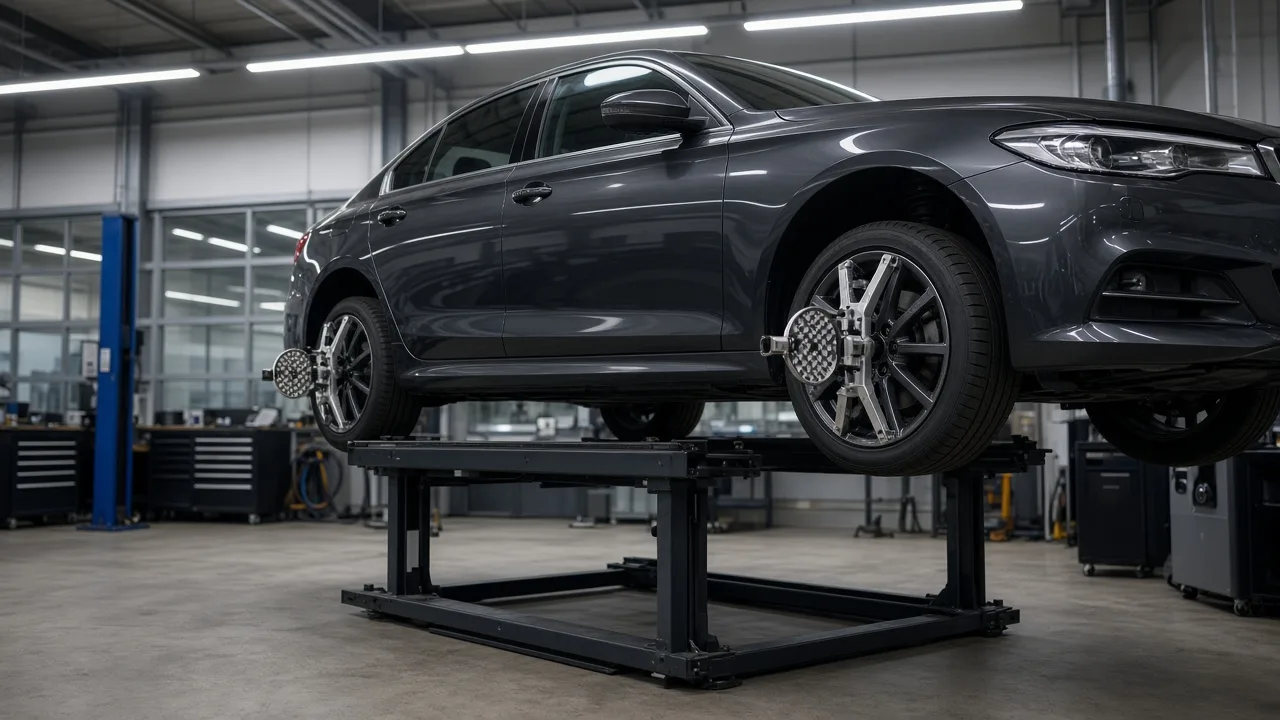
A typical alignment involves mounting sensors on each wheel and adjusting the angles to the manufacturer's specifications, then printing a before-and-after report. Ask for that report. For suspension concerns, a mechanic will usually inspect the car on a lift, check for play in joints and bushes and look for leaking shock absorbers before recommending any replacement.
Wrapping up
Alignment keeps your car tracking straight, balancing keeps it smooth and a healthy suspension keeps it stable and safe. Watch for pulling, vibration, unusual noises and uneven tyre wear, and get them checked promptly. Addressing small issues early protects your tyres and your safety.