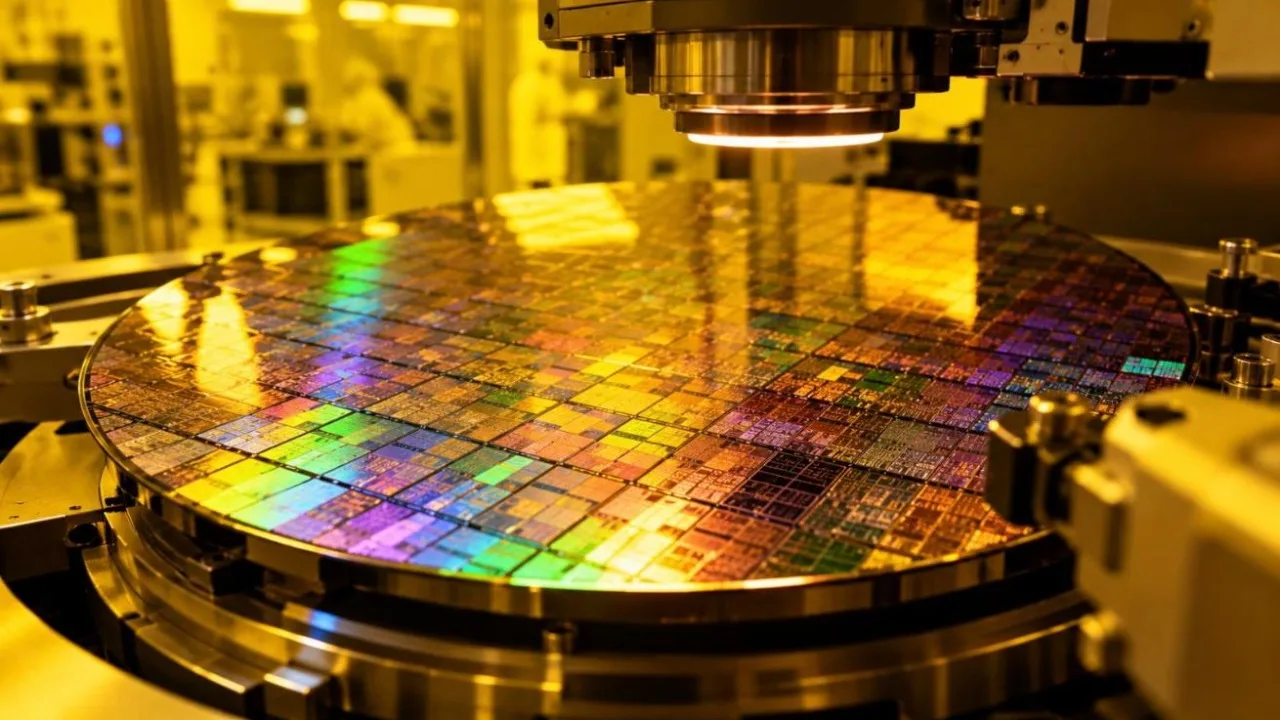
In a week when worries about an AI bubble shook stock markets, the company at the centre of the AI chip boom delivered another blowout quarter. On Thursday, 15 October 2026, Taiwan Semiconductor Manufacturing Co. (TSMC), the world's largest contract chipmaker and the manufacturer behind chips for Nvidia and Apple, reported a record third-quarter profit, raised its growth forecast for 2026, and said demand for AI chips still far exceeds what it can produce. It also added a note of caution: it is being "prudent" in planning for 2027.
The headline numbers
| Measure (Q3 2026) | Result |
|---|---|
| Net profit | NT$763.1 billion (about US$23.6 billion), up about 69% year on year |
| Analyst estimate (LSEG SmartEstimate) | NT$746.3 billion |
| Revenue | About NT$1.49 trillion; US$46.7 billion, up about 41% in dollar terms |
| Gross margin | 66.4% |
| Operating margin | 58.7% |
| Net margin | 51.1% |
It was TSMC's sixth consecutive quarter of record profit, and it beat market forecasts. A net margin above 50% is extraordinary for a manufacturer: more than half of every dollar of revenue became profit.
Where the money comes from
High-performance computing, the category that includes the AI accelerators used in data centres, made up 68% of revenue. Smartphones, once TSMC's core business, contributed 21%. The most advanced chips dominate: 3-nanometre technology accounted for 33% of wafer revenue and the newest 2-nanometre chips already 8%.
Chairman and CEO C.C. Wei said AI demand, increasingly driven by "agentic" AI systems that carry out tasks on their own, still far outstrips TSMC's capacity, with no sign of the trend slowing.
A higher outlook for 2026
- Full-year growth: TSMC now expects 2026 revenue to grow about 44% in US dollar terms, up from its previous forecast of "more than 40%".
- Fourth quarter: revenue guidance of US$52.3–54.3 billion, compared with about US$33.7 billion a year earlier.
- Margins: gross margin is expected to dip slightly in the fourth quarter, and capacity expansion will reduce 2026 gross margin by about 2 percentage points.
- Spending: the 2026 capital budget, around US$60 billion and up, was left unchanged. CFO Wendell Huang said spending in 2026–2028 will be "significantly higher" than in the previous three years.
The cautious note on 2027
The quote that caught investors' attention was Wei's: "We are being prudent in our business planning going into 2027." He explained that consumer and price-sensitive markets are under pressure from rising component prices and economic uncertainty. In other words, AI remains booming, but phones, PCs and other consumer electronics may not be.
Expanding in America
TSMC said construction of its second factory in Arizona is complete and mass production is now expected in the third quarter of 2027, ahead of schedule. Wei said the company is "working very hard to increase our capacity in the U.S." It is considering further US sites, including Texas, though no decisions on location or timing have been made. Asked about a possible tie-up with Elon Musk's Terafab initiative, Wei said any such factory would have to be operated by TSMC.
Why it matters beyond TSMC
TSMC's results are watched as a barometer for the entire AI industry, because almost every advanced AI chip, whoever designs it, is made in its factories. The timing made this report especially important. The week of 12–16 October saw a sharp global sell-off in AI and chip stocks over concerns about debt-funded data centre spending and rising interest rates; on our site, see Wall Street's AI sell-off. By 17 October the Philadelphia Semiconductor Index had suffered its longest losing streak since 2008. Barclays commentary on 16 October suggested the best of the AI trade might be over.
TSMC's numbers offer a counterpoint: actual orders for AI chips remain enormous, and customers are still competing for capacity. A day earlier, Dutch equipment maker ASML said customers were already looking to place orders for 2029–2030. The debate is less about current demand than about whether today's spending can keep growing, and whether the companies borrowing to build data centres can pay for them.
What to watch next
- Fourth-quarter results, expected in mid-January, will be judged against the US$52.3–54.3 billion guidance.
- 2027 guidance: any sign that caution is spreading from consumer electronics to AI.
- US expansion: decisions on new sites, including Texas.
- Big Tech spending plans in upcoming earnings from cloud providers, the main buyers of AI chips.