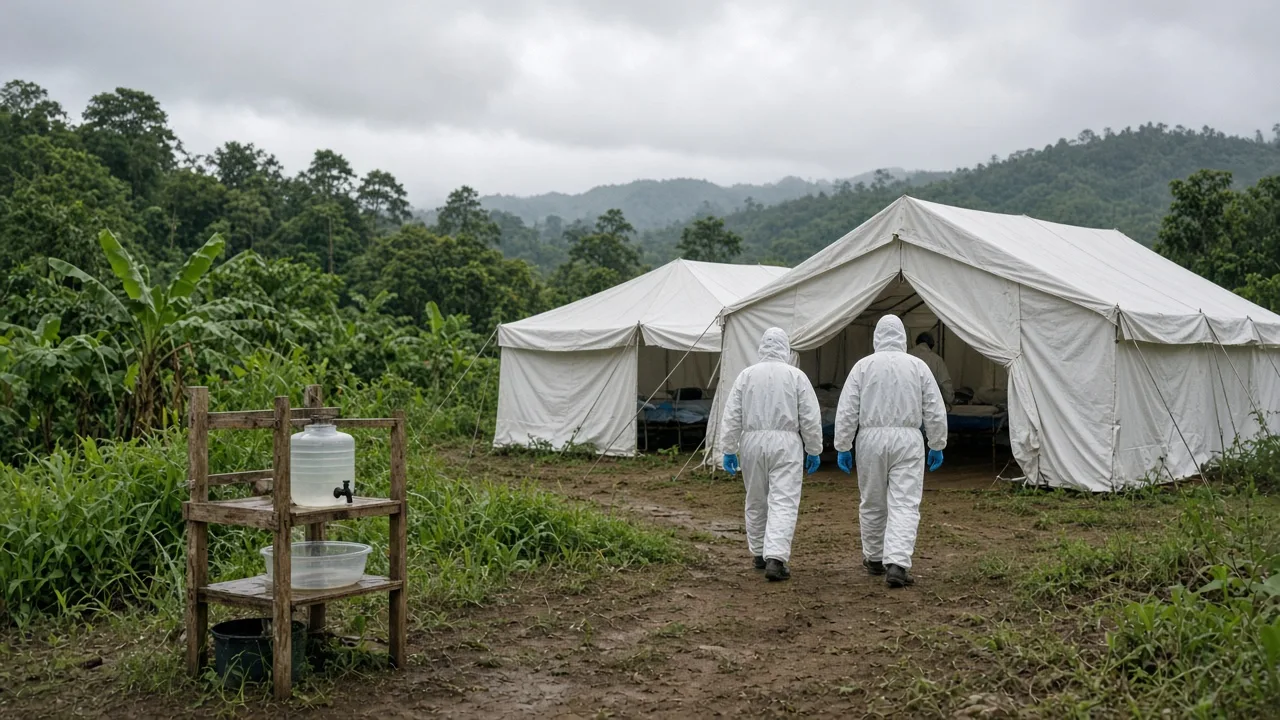
Two pieces of news from the World Health Organization this month show both the reality and the ambition of global health security. One is a large, ongoing outbreak of a form of Ebola disease in the Democratic Republic of the Congo. The other is a new WHO strategy that aims to make sure every country can detect emerging health threats within 24 hours by 2030.
Here's what is happening, how the disease spreads and what it means for people around the world.
The outbreak in numbers
The outbreak is caused by Bundibugyo virus, one of the viruses that cause Ebola disease. According to WHO's latest Disease Outbreak News, as of 6 October 2026:
- The Democratic Republic of the Congo had recorded 8,728 confirmed cases and 4,205 confirmed deaths, a crude case fatality ratio of 48.2%.
- Cases had been reported in 64 health zones across seven of the country's 26 provinces, concentrated in the east.
- Ituri province is the epicentre, with 6,480 confirmed cases, followed by North Kivu with 1,755.
- Over the previous seven days, an average of 72 new cases a day were reported.
WHO says the picture is mixed. In some areas there are clear signs the epidemic is slowing; in others it's still growing.
Cases beyond the Congo
On 5 October, WHO was told of a laboratory-confirmed imported case in Kenya, in a patient who had travelled from the DRC through Uganda. The patient died the same day, and contact tracing began in Kenya and Uganda. Separately, the Netherlands reported on 1 October the medical evacuation of a healthcare worker who tested positive in the DRC and is being treated there.
Why so many deaths happen outside clinics
WHO highlights a worrying pattern. Since its previous update, 264 of 372 reported deaths happened in communities rather than treatment centres. That points to delays in identifying illness and getting people to care. Contact tracing is also under strain: WHO reported that 80.4% of contacts were being followed up in the latest period, below the 85% target.
Fast detection and early care save lives. When people die at home, the chance of further spread rises, through caregiving and funeral practices.
How Ebola disease spreads
Ebola disease spreads through direct contact with the blood or other bodily fluids of someone who is ill or has died from it, or with contaminated materials such as bedding. It isn't spread through the air like flu. People are generally not infectious before symptoms appear. Early symptoms such as fever, fatigue and muscle pain can look like many other illnesses, which is one reason early testing matters.
What travellers and the public should know
- The risk to most people outside affected areas is very low. Spread requires close contact with someone who is sick.
- If you're travelling to the region, follow official travel health advice, avoid contact with sick people and with bodily fluids, and practise careful hand hygiene.
- Watch for symptoms after travel. If you develop a fever within 21 days of returning from an affected area, call a health service before visiting so they can prepare.
- Rely on official sources. WHO and national public health agencies publish regular updates. Be wary of rumours on social media.
WHO's goal: detect threats within 24 hours
On 12 October, during the World Health Summit in Berlin, WHO launched a new five-year strategy for its Hub for Pandemic and Epidemic Intelligence. Its goal is a world where every country can detect and understand emerging health threats within 24 hours of their appearance by 2030.
The Hub brings together several initiatives:
- Epidemic Intelligence from Open Sources, which scans public information daily for signals of health threats and is used by more than 125 countries.
- The International Pathogen Surveillance Network, which strengthens genomic sequencing so new pathogens can be identified and understood quickly.
- The Collaboratory, connecting more than 2,000 modelling and data experts who can be mobilised when threats emerge.
- The Collaborative Surveillance Initiative, working in more than 83 countries on detection systems using a One Health approach that links human, animal and environmental health.
- A new digital programme to help countries share and analyse data securely and adopt AI responsibly.
How you can help, wherever you are
Individuals far from an outbreak can still play a part. Share information only from trusted sources, since misinformation can fuel fear and stigma that discourage sick people from seeking care. Support reputable humanitarian and medical organisations working in affected areas if you're able to. And keep up good everyday habits, including handwashing and staying home when unwell, which help limit the spread of many infections, not just Ebola.
Why speed matters
The Congo outbreak shows why WHO is focused on speed. Every day an outbreak goes unnoticed gives it more room to grow, and makes it more costly and harder to contain. Early detection lets health workers isolate cases, trace contacts and protect communities before a local cluster becomes a regional crisis.
The takeaway
The Bundibugyo outbreak is a serious, ongoing emergency for communities in eastern DR Congo, with occasional cases travelling further afield. For most people elsewhere the direct risk is very low, but the outbreak is a reminder that health threats cross borders. WHO's 24-hour detection goal is ambitious; reaching it will take sustained investment and cooperation, and it could make the difference between a contained cluster and a global emergency.
Note: This article is for general information. For travel or medical advice, consult official public health guidance and a healthcare professional.