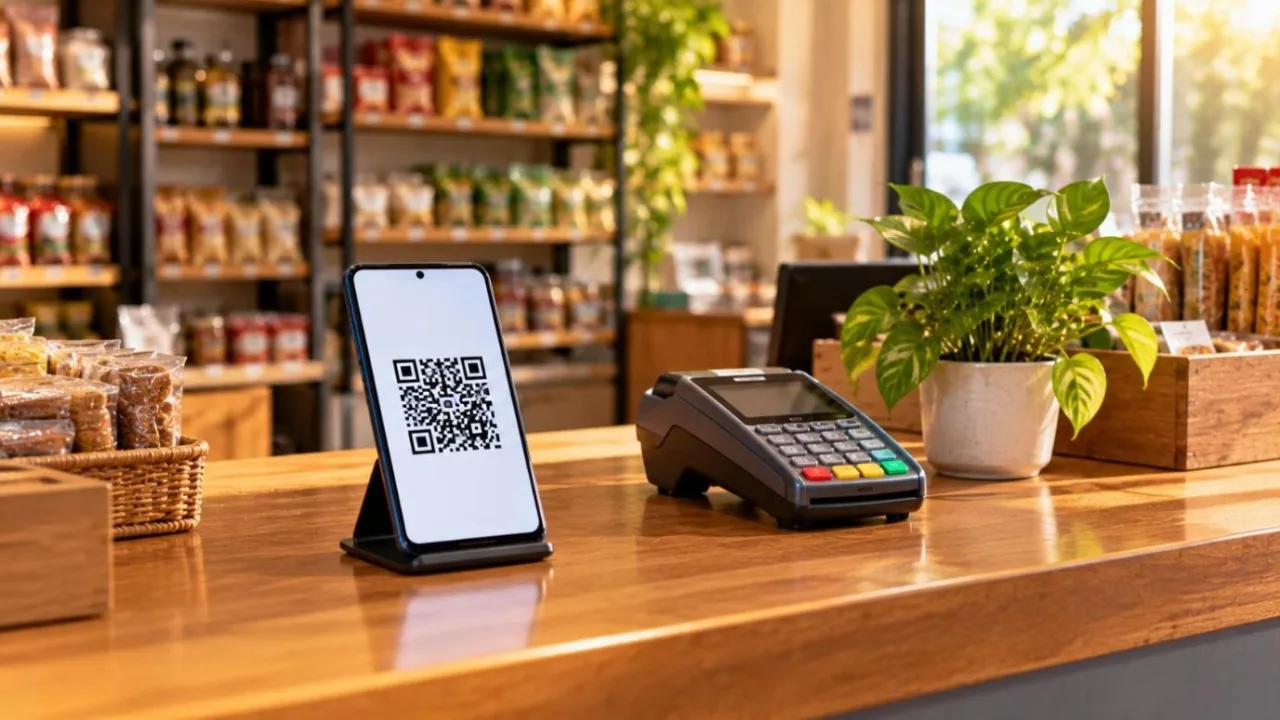
Every new business needs a smooth way to receive and make payments. Getting this right early makes accounting easier, builds credibility and helps you get loans later.
Why a separate business account matters
- Keeps personal and business money apart, making bookkeeping and tax filing simpler.
- Gives customers and suppliers confidence when payments go to a business name.
- Builds a banking track record that lenders look at when you apply for credit.
Current account or savings account?
| Feature | Current account | Savings account |
|---|---|---|
| Designed for | Business transactions | Personal savings |
| Transaction limits | High or unlimited | Can attract scrutiny if used heavily for business |
| Interest | Usually none | Earns interest |
| Overdraft | Often available | Generally not |
| Minimum balance | Often higher | Lower |
Freelancers and very small proprietors sometimes start with a separate savings account, but a current account is the better choice once regular business transactions begin.
Documents usually needed
- Proprietorship: PAN and Aadhaar of the owner, plus two proofs of business such as Udyam certificate, GST certificate or Shop and Establishment registration.
- Partnership or LLP: partnership deed or LLP agreement, firm PAN, registration certificate and partners' KYC.
- Company: certificate of incorporation, company PAN, board resolution and directors' KYC.
Accepting payments
UPI business QR
Most banks and payment apps offer a merchant UPI QR code linked to your business account, often with a "soundbox" that announces each payment. It is the cheapest and most popular way to accept money in India. Keep an eye on bank and government announcements about merchant charges (MDR) on UPI, as policy in this area has been under review.
Card machines (POS)
Useful if customers pay by debit or credit cards. Expect a rental or setup fee and a percentage charge on card transactions, especially credit cards.
Payment gateways for online sales
If you sell through a website or app, a payment gateway lets customers pay by UPI, cards, net banking and wallets. Compare setup fees, transaction charges, settlement time and support before choosing.
Payment links and invoices
Service businesses can send payment links on WhatsApp or email, which are easy to track and reconcile.
Smart cash flow habits
- Pay yourself a fixed monthly amount instead of withdrawing randomly.
- Set aside money for GST and income tax as you earn.
- Reconcile bank statements with your books every week.
- Keep a cash buffer of at least two to three months of fixed expenses.
- Enable alerts and two-factor authentication on banking apps.
In Part 6, we look at how to price your products and services.
Start a Small Business in India: the full series
- Part 1: Choosing Your Business Structure
- Part 2: Registrations and Licences Checklist
- Part 3: Udyam (MSME) Registration
- Part 4: GST Registration and Composition Scheme
- Part 5: Bank Account and Digital Payments (you are here)
- Part 6: How to Price Your Products and Services
- Part 7: Invoicing and Bookkeeping
- Part 8: Getting Your First Customers
- Part 9: Funding and Government Loan Schemes
- Part 10: Taxes and Compliance Calendar
Disclaimer: This article is for general information only and is not legal, tax or financial advice. Rules, limits and fees change from time to time, so please check official government portals and consult a chartered accountant or company secretary for your specific situation.