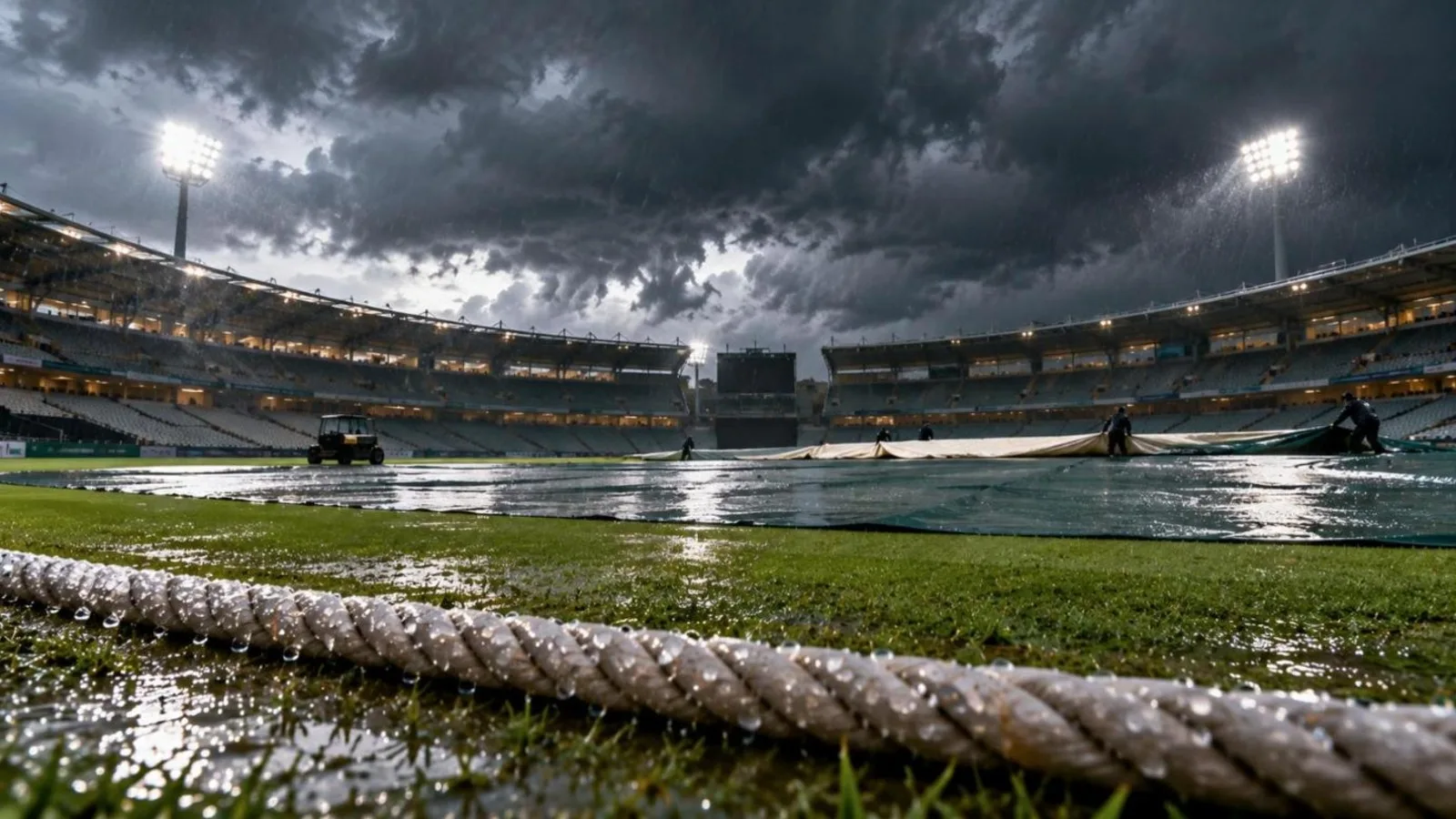
This is Part 4 of Sports Explained, our 12-part series of simple guides to the rules of the sports Indians love. New here? Start with Part 1: Cricket Formats, or read the previous part, Part 3: LBW and DRS.
Rain is part of cricket, especially in India's monsoon months. When overs are lost in a limited-overs match, umpires use the Duckworth-Lewis-Stern (DLS) method to set a fair target.
A short history
Before DLS, rain rules produced absurd results. At the 1992 World Cup, South Africa needed 22 runs from 13 balls in the semi-final; after a short rain break, the scoreboard showed they needed 22 runs from one ball. Statisticians Frank Duckworth and Tony Lewis devised a fairer system, later updated by Steven Stern.
The key idea: resources
A batting team has two resources: overs remaining and wickets in hand. With 50 overs and 10 wickets, a team has 100 percent of its resources. Losing overs or wickets reduces that percentage, and the method uses detailed tables built from match data to calculate exactly how much.
Wickets matter as much as overs. Ten overs left with nine wickets down is worth far less than ten overs left with all ten wickets in hand.
A simple illustration
Imagine Team A scores 250 in a full 50 overs. Before Team B starts, rain reduces their innings so they only have about 90 percent of the resources Team A had.
- Par score: 250 × 90% = 225.
- Target to win: 226.
This is a simplified example; real calculations use official software and more precise figures.
Par score during a match
If rain stops play during the chase and the match cannot resume, the par score decides the result. If the chasing team is ahead of par for the overs and wickets used, it wins. That is why TV graphics show "DLS par" during rain delays.
Minimum overs
A result can only be declared if each side has faced a minimum number of overs: usually 20 overs in an ODI and 5 overs in a T20.
Why DLS is fair, mostly
DLS is not perfect, especially in high-scoring T20s, but it is far fairer than earlier methods and is used in international and most franchise cricket.
Learn about the formats it applies to in Part 1: Cricket Formats.
Rules are explained as they stand in October 2026. Governing bodies update their rules regularly, so check the latest official regulations for any competition.
Next in the series: Part 5: How the IPL Works.