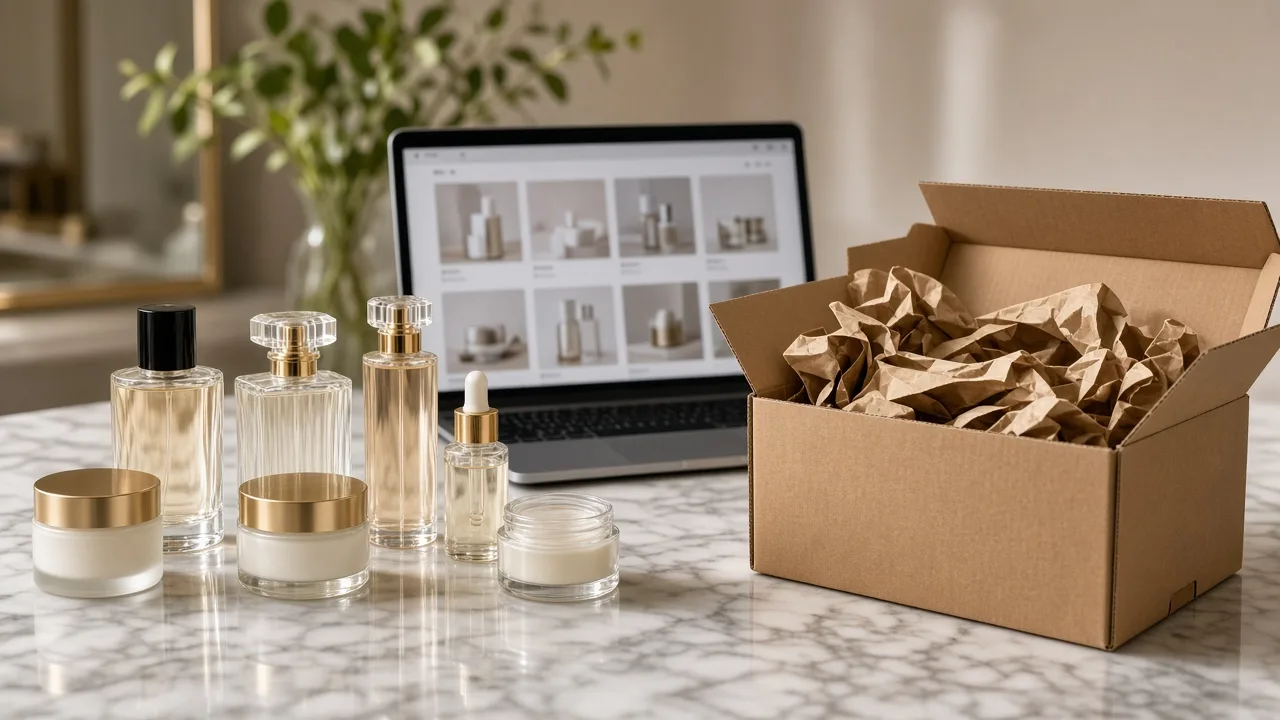
A French subsidiary of Japanese beauty group Shiseido has taken online retailer Shein to court in France, accusing the platform of selling its perfumes and cosmetics outside the brand's authorised distribution network. The company is seeking more than €2.6 million in damages, and the case could become an important test of how luxury beauty brands control where their products are sold online.
The Marseille Commercial Court heard arguments from both sides on Tuesday, 13 October 2026, and postponed its ruling until 26 January 2027, according to Premium Beauty News, which reported the case with AFP.
Here is what the dispute is about and why it matters to anyone who buys beauty products online.
Who is suing, and why
The claimant is Beauté Prestige Internationale (BPI), Shiseido's French subsidiary. BPI distributes several Shiseido Group brands and holds exclusive fragrance licences for Issey Miyake, Narciso Rodriguez and Zadig & Voltaire.
Like much of the prestige perfume and cosmetics industry, BPI sells only through retailers it has selected under what are called selective distribution agreements. These contracts limit which shops can sell a brand and how. According to the court filings described by Premium Beauty News, they are meant to "preserve, for the consumer, the luxury image associated with the products and brands."
BPI alleges that Shein enabled its products to be resold, either directly or through third-party sellers, by sellers who are not part of that network.
What BPI is asking for
BPI is seeking:
- More than €2.1 million in damages for harm to its reputation
- €500,000 for commercial losses
That adds up to more than €2.6 million.
The two sides' arguments
BPI: "Shein's business model is unacceptable"
BPI's lawyer, François Ponthieu, accused Shein of profiting from the investment BPI has made in its brands and their image. "Shein's business model is unacceptable. We demand respect for the rules, not cut-throat competition," he said, as reported by Premium Beauty News.
BPI says it documented 37 listings of its products on Shein's French website, sold either by the platform directly or by third-party sellers.
Shein: a "hosting platform"
Lawyers for Shein disputed that figure, putting the number of listings at 11, of which only one was a direct sale by Shein. They noted that Shein lists around 250,000 products.
Isabelle Leroux, representing two Shein companies based in Ireland, said: "BPI appears unable to enforce the integrity of its distribution network." She also challenged the terms of BPI's distribution agreements and asked the court to dismiss the case.
Shein argues that it is a "hosting service provider," a legal status that, it says, means it is not required to monitor what third-party sellers list on its marketplace. BPI disputes this and argues that Shein "plays an active role" in promoting its partners' products.
Why this case matters for the beauty industry
Selective distribution is a cornerstone of the high-end beauty business in France and across Europe. Brands use it to control pricing, presentation and customer experience, and to keep products out of discount channels that could weaken their luxury image.
Online marketplaces make that control much harder. A product can pass through several resellers before turning up on a platform far from any authorised counter. Premium Beauty News says the case "could prove an important test of the enforceability of selective distribution agreements" in the age of online marketplaces.
The outcome could influence how far platforms are expected to police third-party listings of branded goods, and how much responsibility falls on brands to protect their own networks.
The case also comes as the beauty industry is reshaping itself through deals, such as Galderma's agreement to buy ZO Skin Health, a brand built on doctor-dispensed distribution, another tightly controlled sales model.
Shein's growing legal pressure in France
Shein, recently listed on the Hong Kong Stock Exchange, sells low-priced goods in more than 150 countries and says it has 273 million customers worldwide, including 23 million in France. It has faced a growing number of regulatory challenges in France and Europe.
According to Premium Beauty News:
- In March, a French court rejected the government's request to block the Shein marketplace over illegal products, which were then removed from sale.
- In early July, French courts temporarily barred Shein from selling products bearing Lacoste's crocodile logo.
- This summer, French consumer group Que Choisir Ensemble highlighted non-compliant sunscreens being sold on Chinese platforms, including Shein and Temu.
What it means for shoppers
For consumers, the case is a reminder that where you buy beauty products matters.
Authenticity: Products sold outside a brand's authorised network are not necessarily fake, but it can be harder to verify where they came from, how old they are and how they were stored.
Storage and safety: Perfume, skincare and especially sunscreen can degrade if kept in heat or past their expiry. If you buy from a marketplace, check the seller, the batch code and the expiry date. Our guide to choosing and using sunscreen in India explains what to look for on the label.
Trending ingredients: Viral skincare ingredients are often the first to be copied or resold through unofficial channels. If you are tempted by a buzzy product, such as the PDRN skincare trend, buy from the brand or an authorised retailer where possible.
Price: A much lower price than at authorised stores can be a warning sign. It may reflect old stock, grey-market imports or counterfeits.
What happens next
The Marseille Commercial Court is due to deliver its ruling on 26 January 2027. Until then, the claims on both sides remain allegations. Whatever the outcome, the decision is likely to be closely watched by prestige beauty brands, online marketplaces and regulators across Europe.
Sources
- Premium Beauty News (with AFP): Shiseido takes Shein to court in EUR 2.6 million distribution dispute (15 October 2026)
- Global Cosmetics News: Shiseido files €2.6 million lawsuit against Shein over unauthorised cosmetics sales
- Le Figaro: Une société de cosmétiques assigne Shein pour concurrence déloyale (13 October 2026)