Where Paella Valenciana Comes From
Paella comes from Valencia, on Spain's eastern coast, where rice has been grown in the wetlands around the Albufera lagoon for centuries. The word paella refers to the wide, shallow pan the dish is cooked in. The original version was a countryside meal cooked over an open wood fire and made with whatever farmworkers had nearby: rice, chicken, rabbit, beans and sometimes snails.
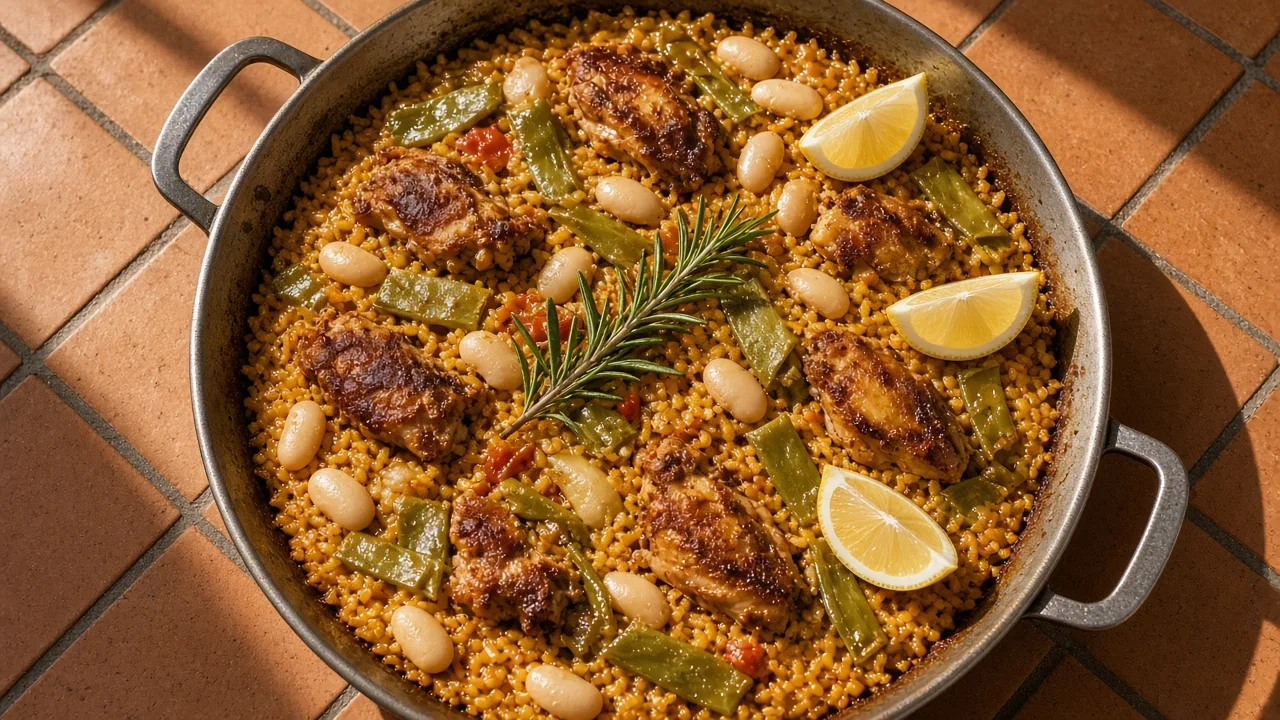
Valencians have strong opinions about what belongs in a true paella Valenciana, and chorizo is definitely not on the list. Seafood paella is a separate, also popular dish. The version below follows the traditional approach, using chicken and optional rabbit, two types of beans, saffron and a sprig of rosemary. The rice is not stirred once the stock goes in, which lets a thin, caramelised crust called socarrat form on the bottom.
Serves: 4–6 | Prep: 20 minutes | Cook: 50 minutes
Ingredients
- 4 tbsp (60 ml) extra virgin olive oil
- 600 g (1.3 lb) chicken thighs and drumsticks, cut into pieces on the bone
- 400 g (14 oz) rabbit pieces (optional, or use extra chicken)
- 200 g (7 oz) flat green beans, cut into 4 cm (1½ in) pieces
- 150 g (5 oz) cooked large white butter beans (garrofó or lima beans)
- 2 ripe tomatoes, grated, skins discarded
- 1 tsp sweet smoked or unsmoked paprika
- A large pinch of saffron threads, about 0.3 g
- 1.5 litres (6 cups) hot water or light chicken stock
- 400 g (2 cups) short-grain paella rice such as bomba or Calasparra
- 1 sprig fresh rosemary
- Salt, to taste
- Lemon wedges, to serve
Method
- Set a paella pan about 38–40 cm (15–16 in) across over medium-high heat and add the olive oil. Season the chicken and rabbit with salt and brown them slowly on all sides for about 15 minutes until golden.
- Push the meat to the edges of the pan, add the green beans to the centre and fry for 3–4 minutes.
- Add the grated tomato to the middle and cook until it darkens and thickens, about 5 minutes. Stir in the paprika for a few seconds, taking care not to let it burn.
- Pour in the hot water or stock, add the butter beans and crumble in the saffron. Simmer for 15–20 minutes to build flavour. Taste and season well; the liquid should taste slightly salty.
- Sprinkle the rice evenly across the pan in a cross shape, then spread it out with a spoon so it lies flat in an even layer. From this point on, do not stir.
- Cook on high heat for 10 minutes, then reduce to medium-low for 8–10 minutes more, until the rice has absorbed the liquid. Lay the rosemary on top for the final few minutes.
- For the socarrat, raise the heat for the final 1–2 minutes. Listen for a gentle crackling and a toasty smell, but stop before it smells burnt.
- Take the pan off the heat, cover with a clean cloth and rest for 5 minutes before serving.
Tips for Success
- Bomba rice absorbs a lot of liquid while staying firm. If you use another short-grain rice, you may need slightly less stock.
- Keep the heat even. On a small hob, rotate the pan every few minutes so the edges cook as well as the centre.
- A thin layer of rice, no more than 1–2 cm (½–¾ in) deep, is essential. Use a wide pan rather than a deep one.
- If the rice is still firm but the liquid is gone, sprinkle a little hot water over the drier areas and cook a few minutes longer.
Variations
For paella de marisco, use fish stock and add prawns, mussels and squid. Arroz negro uses squid ink for a striking black rice. Mixed paella, which combines meat and seafood, is common in tourist areas and is fine at home, though Valencians may not call it traditional.
A vegetable paella with artichokes, red peppers, peas and mushrooms is a lovely vegetarian alternative.
How to Serve
In Valencia paella is often eaten straight from the pan, with each person working towards the centre from their own section. Serve it with lemon wedges and a simple salad of tomato, onion and olives.
A chilled Spanish white wine or rosé suits it well, and paella is traditionally a lunchtime dish rather than an evening one.