As of about 9:45 AM IST (04:15 GMT), Friday 6 November 2026. Details come from OpenAI’s 5 November announcement and contemporaneous reporting by The Verge and others.
OpenAI said it will stop using non-disclosure agreements with public officials on future data-centre projects it owns and operates, except for narrow protections covering security information, trade secrets or competitively sensitive details. The pledge is part of a broader “National Community Compact” and a Compute Campus Policy Blueprint published as opposition to large AI campuses featured in this week’s US midterm campaigns.
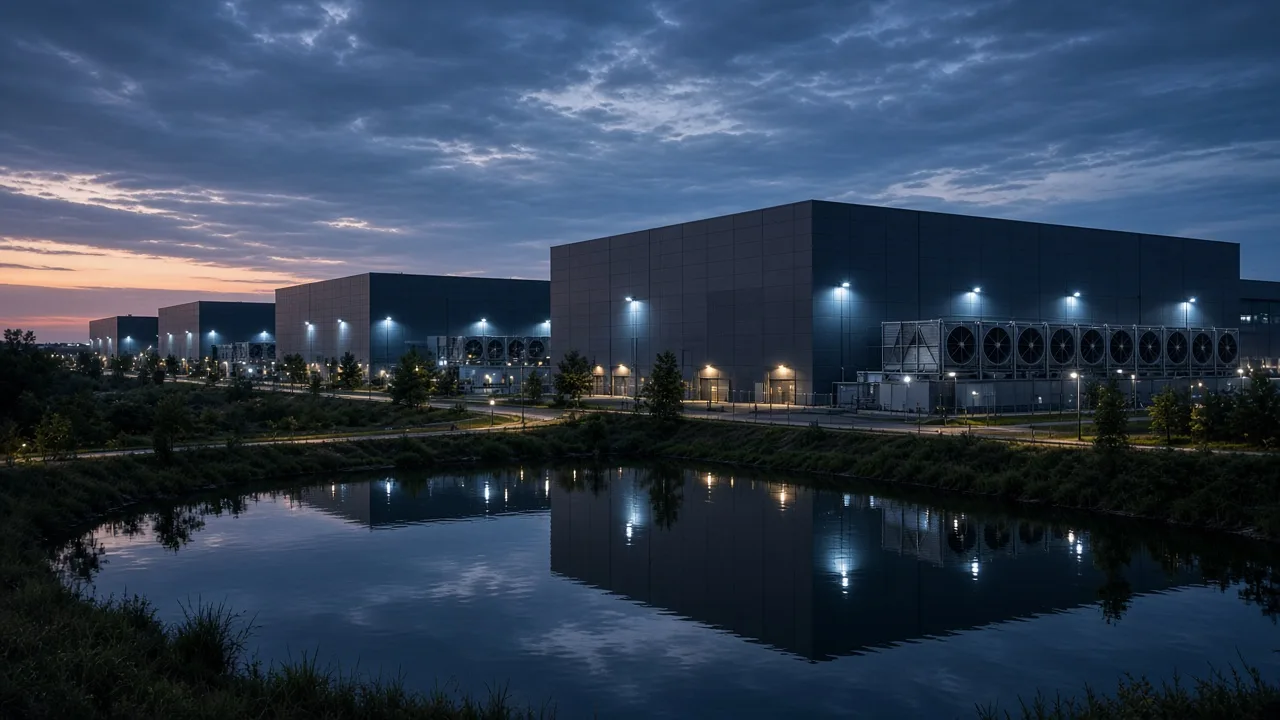
The company is rebranding the facilities as “compute campuses” and framing the announcement as a response to residents who want a say over power costs, water use, noise and local jobs.
What OpenAI committed to
Every future campus OpenAI owns and operates is supposed to carry a local compact that, the company said, will:
- Pay its own way on energy: cover the full cost of electricity and the infrastructure needed to serve the site, with financial assurances before major spending so other ratepayers are protected if a project is delayed, cut or cancelled.
- Protect local resources: develop a water plan, prioritise closed-loop or low-water cooling, and publish site-level water and electricity use plus construction plans and independent noise studies.
- Drop broad NDAs with officials: allow only narrow confidentiality for security, trade secrets or proprietary information.
- Create local opportunity: publish expected jobs, work with unions and training providers, report annually on hiring and apprenticeships, and fund community priorities residents help select.
Why NDAs became a flashpoint
Many data-centre deals have used NDAs that limited what local officials could tell constituents about negotiations, The Verge reported. Amazon said in October it would no longer use NDAs with government agencies on data-centre projects. OpenAI’s move follows that industry shift and comes days after Democratic gains in Congress and key governorships fuelled investor fears of tighter scrutiny of AI infrastructure.
Georgia and Ohio examples
OpenAI said earlier Stargate community work in Georgia and Ohio already covered energy costs, water, local investment and accountability. In Effingham County, Georgia, residents helped shape a $4.8 million grant for free school meals for all 14,000 students in the county. In Pike County, Ohio, childcare was identified as a priority, leading to a joint $6 million commitment from OpenAI and SB Energy, according to the company.
At the planned Effingham County campus, OpenAI said its agreement with Georgia Power lets the utility cut power delivered to the site by up to 1,000 megawatts during periods of high demand—an example of the “flex” arrangements the blueprint wants utilities to encourage.
The policy blueprint
Beyond voluntary company pledges, OpenAI published a blueprint asking federal, state and local policymakers to set clearer rules. It argues that state utility commissions should require large electricity customers to cover the grid costs they create and to protect other customers if a project falls through. It also calls for public reporting on water, energy, noise and hiring; narrow limits on NDAs for public officials; transparent tax-incentive terms with clawbacks; and earlier sharing of purchasing plans so local suppliers can compete.
Congress, the blueprint says, can help by speeding transmission upgrades and restoring or expanding tax incentives for clean electricity.
Market and political backdrop
The announcement arrives as Wall Street prices a possible slowdown in AI build-out. Chip and “neocloud” shares sold off sharply after the midterms on concerns that local opposition and new regulation could raise costs or delay campuses. Meta has separately warned that election backlash against data centres could make AI expansion harder, TechCrunch reported.
OpenAI’s message is that communities that host campuses should influence how they are built and should not subsidise them through higher household power bills. Whether voluntary compacts calm opposition—or whether lawmakers write the blueprint into statute—will be tested project by project.
What is still unclear
- How the NDA policy applies to partners that build or own campuses OpenAI does not operate itself.
- How “narrow” security and trade-secret exceptions will be defined in practice.
- Whether state commissions adopt the cost-allocation rules OpenAI is promoting.
Related on HorizonDesk
- AMD’s record quarter driven by data-centre chips
- Gartner flags AI infrastructure write-down risk
- OpenAI merges ChatGPT chat and work budgets
- US midterms 2026 results: Democrats win Congress
- Amazon Q3 and the AWS build-out