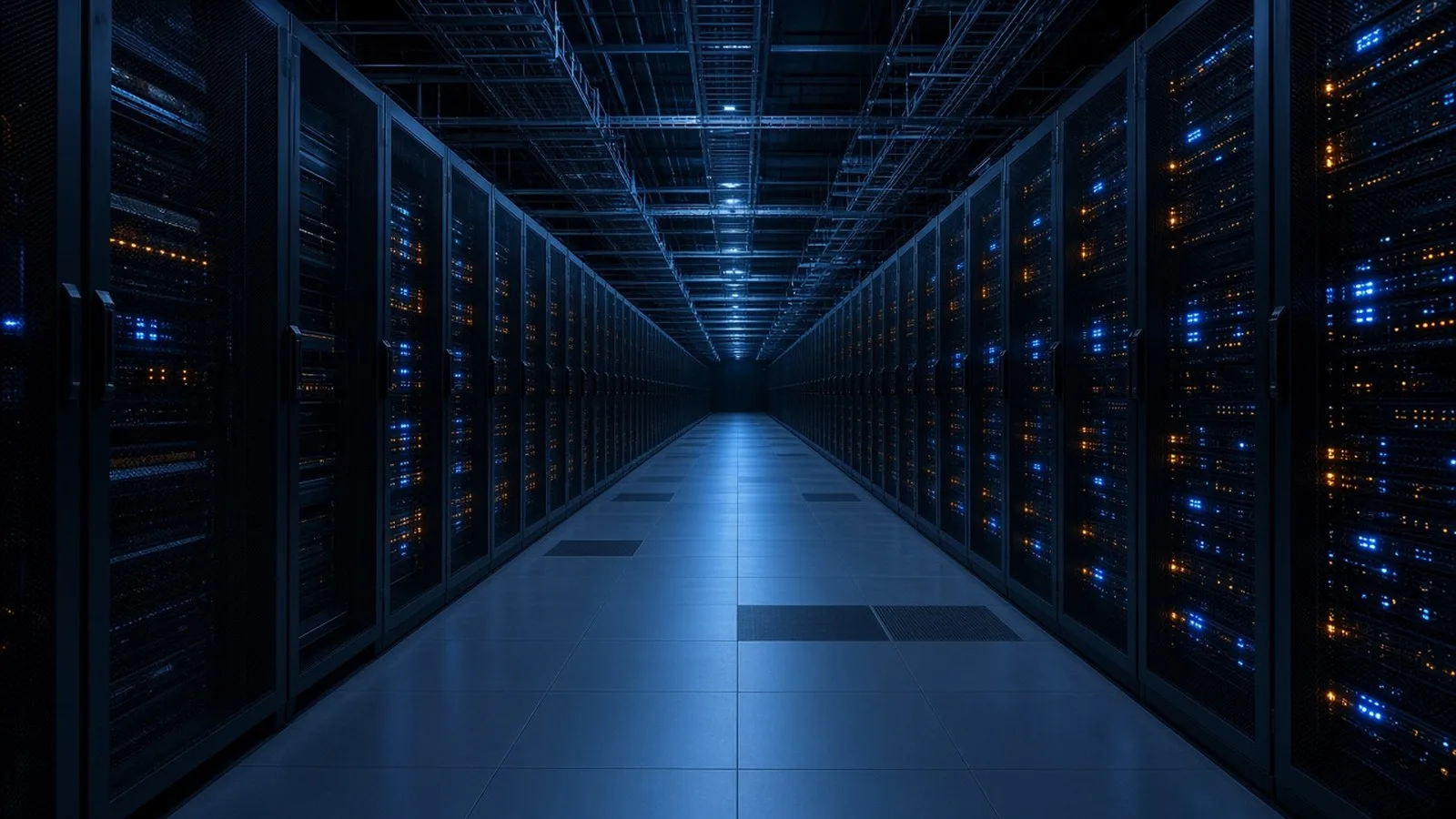
The world's biggest technology companies are spending at a pace never seen before to build data centres for artificial intelligence. Research firm Gartner now says much of that money may never earn the returns investors expect. In a report published on 14 October 2026, Gartner warned that more than $3.5 trillion of AI infrastructure spending could be exposed to impairment, meaning accounting write-downs, by the end of 2030 if AI providers keep spending at their current pace.
The warning spread quickly. Bloomberg reported it on 15 October under the headline "AI Race Puts $3.5 Trillion at Write-Down Risk", and Indian outlets including BusinessLine carried it on 16 October, as global AI and chip stocks were already selling off. Here is what Gartner found, why it matters and who is most at risk.
What Gartner is warning about
The core of the argument is a gap between spending and revenue. According to Gartner's press release:
- AI providers are expected to spend nearly $1 trillion on AI infrastructure in 2026.
- They are forecast to invest a further $6 trillion between 2027 and 2030.
- To cover that spending, financing costs and a 12% return on invested capital, AI data centre owners would need to generate a cumulative $8.5 trillion in revenue through 2030.
- But Gartner forecasts that enterprise and consumer AI revenue attributable to AI data centres will reach no more than $3.6 trillion over that period, less than half of what is needed.
"Our research indicates that enterprise and consumer AI revenue will be insufficient to support profitable returns on all planned AI capital expenditures during this period," said Will Sommer, Senior Director Analyst at Gartner, in the release.
Why the revenue may not reach data centre owners
Part of the problem is who captures the money. Gartner says most AI-native providers run "asset-light" business models, renting computing power rather than owning it, and predicts that less than half of AI revenue will be earned by providers that own significant AI infrastructure. In other words, the companies selling AI apps and services may do well while the companies that paid for the buildings and chips struggle to earn back their outlay.
Gartner adds that failing to earn a sustainable return on "rapidly depreciating assets" would "almost certainly necessitate write-downs". If spending continues on its current path, it estimates more than $4 trillion in asset value could be exposed to write-down risk through 2032, and it does not expect the 12% return to be achieved until the end of 2032 at the earliest.
Neoclouds face the biggest squeeze
The firm singles out "neoclouds", the newer companies that sprang up specifically to rent out AI computing power. Gartner predicts that by 2030, cost pressure and the lack of a differentiating business model will force more than 80% of neocloud providers to cease independent operations.
That does not necessarily mean collapse. Speaking to TechTarget, Sommer said ceasing independent operations "may include acquisition, it may include partnerships, or it may include outright failure", adding: "Not every single company that disappears is going to fail."
Gartner contrasts neoclouds with hyperscalers such as Amazon, Microsoft and Google, which it says have "massive and highly diversified revenue sources that could plausibly sustain AI investments for years". Neoclouds, by contrast, must soon earn returns on AI-optimised cloud services. Gartner estimates that spending on AI-optimised infrastructure-as-a-service will grow from $66 billion in 2027 to $174 billion in 2030, but says that growth "will be too low for most AI compute providers to recover their AI investments before the current generation of AI semiconductors is replaced".
The chip replacement problem
That last point is central. AI chips lose value quickly as newer, faster models arrive. Sommer told Fierce Network that the average lifespan of chips inside data centres is expected to be five to six years, which means an expensive refresh cycle could arrive at roughly the same time revenue might finally begin catching up with costs.
He also stressed that weak demand is not the issue. "The problem isn't that demand is low," Sommer told Fierce Network, pointing instead to intense price competition. "Enterprises are having a really hard time getting value out of this stuff and consumers are relatively unwilling to pay for it."
The spending boom in context
Gartner is not the only voice raising doubts. Fierce Network noted that Amazon, Alphabet and Microsoft collectively spent nearly $250 billion in the first half of 2026, and all have said they expect spending to accelerate. Analysts have increasingly questioned the gap between spending and revenue on recent earnings calls.
Investors have been watching AI revenue closely, from Anthropic's $16.8 billion quarter to the broader debate over how private AI lab revenue moves Wall Street. Big tech is also trying to cut costs with its own chips, as we explored in our piece on Microsoft's Maia 300 chip.
Markets are already reacting
The report landed during a rough week for AI-linked stocks. A Bloomberg report carried by Business Standard said an MSCI gauge of global chip stocks fell 7.4% this week amid worries about slowing revenue growth, AI infrastructure financing and possible rate hikes. India's IT services stocks moved the other way, rising more than 10% for the week as some investors rotated out of expensive AI hardware names and into cheaper software and services companies. It is not possible to say how much of that move is directly due to Gartner's report, but it fits the same concern.
Who could be affected
- Neocloud providers that rent out GPU capacity face the greatest consolidation risk, according to Gartner.
- Hyperscalers are better cushioned but, as Sommer told TechTarget, "not immune" to write-downs on huge infrastructure investments.
- Lenders and investors who have financed data centre construction could feel the impact if asset values fall.
- Business customers may need to check the financial strength of smaller AI cloud suppliers. Sommer told TechTarget that "for the first time in really a generation, the math is starting to move toward 'build' and away from 'buy' or 'partner'" for some enterprise AI workloads.
Fierce Network reported that Sommer expects sovereign-aligned providers, backed by national compute initiatives in Europe, the Middle East and Asia, to make up many of the neoclouds that survive as independent companies past 2030.
A forecast, not a certainty
Gartner's figures are projections built on assumptions, including a 12% hurdle rate for returns and its own forecasts of AI revenue. The firm frames the $3.5 trillion as spending that "could be exposed" to impairment if current plans continue, not as a guaranteed loss. Companies could slow spending, AI revenue could grow faster than expected, or chips could stay useful for longer. Still, the analysis adds weight to a growing question in boardrooms and markets: who will actually pay for the AI buildout?
What it means for you
- For investors: Funds heavily weighted towards AI chipmakers and data centre operators carry concentration risk. Our article on the IMF's AI bubble warning explains how to check your exposure.
- For businesses buying AI services: Ask smaller cloud providers how they are financed, avoid over-long lock-in contracts, and have a plan if a supplier is acquired or shuts down.
- For everyday users: Intense competition is keeping AI prices low for now. If the industry consolidates, prices and free tiers could change.
- For India: The rotation from AI hardware to IT services shows that Indian software firms can benefit when AI hype cools, though analysts remain divided on how long that lasts.
Sources
- Gartner: Over $3.5 trillion of AI infrastructure spending could be exposed to impairment by the end of 2030 (14 October 2026)
- Bloomberg: AI race puts $3.5 trillion at write-down risk, Gartner warns (15 October 2026)
- Fierce Network: Gartner warns AI data center capex is 'unsustainable' (15 October 2026)
- TechTarget: Gartner forecasts massive AI infrastructure write-downs (14 October 2026)
- BusinessLine: Over $3.5 trillion of AI infrastructure spending may be exposed to impairment by 2030 (16 October 2026)
- Business Standard/Bloomberg: Indian software stocks set to outperform AI peers (16 October 2026)