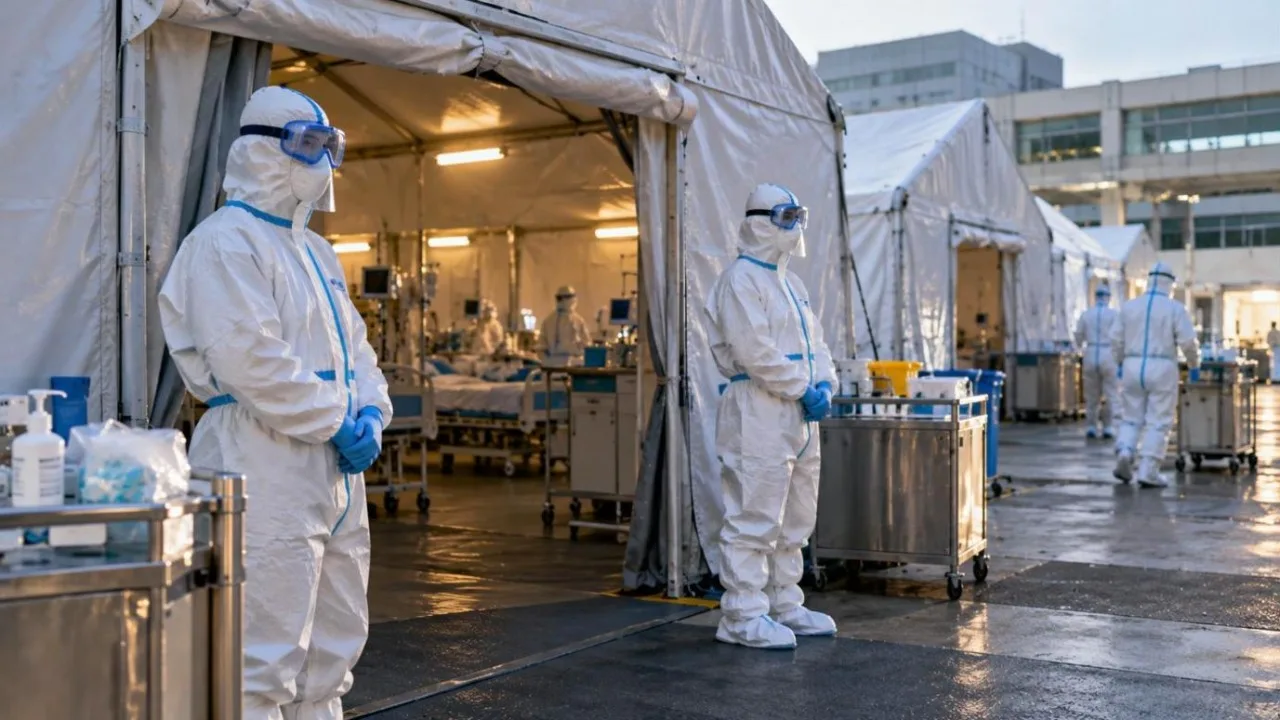
Nigeria has confirmed its first case of Ebola in the current outbreak, in a woman who arrived in the capital, Abuja, on an international flight from Uganda. Coordinating Health Minister Muhammad Ali Pate announced the case on Tuesday, 20 October 2026, after laboratory tests, and said the patient was in isolation and receiving treatment.
"We are doing everything possible to contain this case," Pate said, according to Al Jazeera.
What we know about the case
- The patient is a woman who flew into Abuja from Uganda. Ugandan officials say she only transited through Uganda on a business trip to the Democratic Republic of the Congo (DRC).
- Her symptoms began on 7 October. She was admitted to a private hospital in Abuja on 11 October and treated there for several days before Ebola was diagnosed.
- Health officials are tracing 44 close contacts, including health workers, other patients, caregivers and people she travelled with.
- The Nigeria Centre for Disease Control (NCDC) confirmed the Bundibugyo strain, the same strain behind the DRC outbreak. "We did three levels of tests, but all molecular. The strain was Bundibugyo," said NCDC lab director Olajumoke Babatunde.
The NCDC has activated its incident management system with the World Health Organization (WHO). The WHO does not recommend travel or trade restrictions.
A record outbreak
The outbreak began in the DRC in May. Congolese authorities had reported 9,455 confirmed cases and 4,561 deaths as of 19 October, according to reports citing official figures. The European Centre for Disease Prevention and Control (ECDC) describes it as the second-largest Ebola epidemic on record, and Africa CDC chief Jean Kaseya has called it the most geographically extensive Bundibugyo outbreak in history.
The Bundibugyo strain is particularly worrying because, unlike the more common Zaire strain, there is no licensed vaccine or specific treatment for it, according to Al Jazeera. Care relies on supportive treatment such as fluids and managing symptoms.
Kenya confirms ninth case
Kenya confirmed its ninth case on 20 October: a 24-year-old man who was already in quarantine. "All nine cases belong to one cluster," said Health Director-General Patrick Amoth. Of 135 contacts, 134 are in quarantine and could go home from 25 October if they stay well through the 21-day monitoring period. Read our earlier report on Kenya's Ebola cases.
Lessons from 2014
Nigeria has faced Ebola before. In 2014, a traveller brought the virus to Lagos, and the country contained the outbreak through rapid contact tracing. Femi Gbajabiamila, chief of staff to President Bola Tinubu, said Nigeria set up an Ebola taskforce in June to avoid repeating the chaotic early response of 2014.
The fact that the patient was treated in a private hospital for several days before diagnosis is a key concern, because health workers are among those most at risk. Ebola spreads through direct contact with the blood or body fluids of a sick person, not through the air.
What happens next
The 44 contacts will be monitored for 21 days, the maximum incubation period. The WHO said it was supporting Nigeria's response. Any new cases among health workers or contacts would signal whether the virus has started spreading locally.