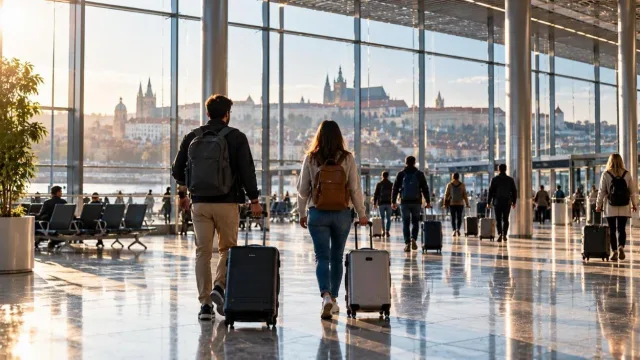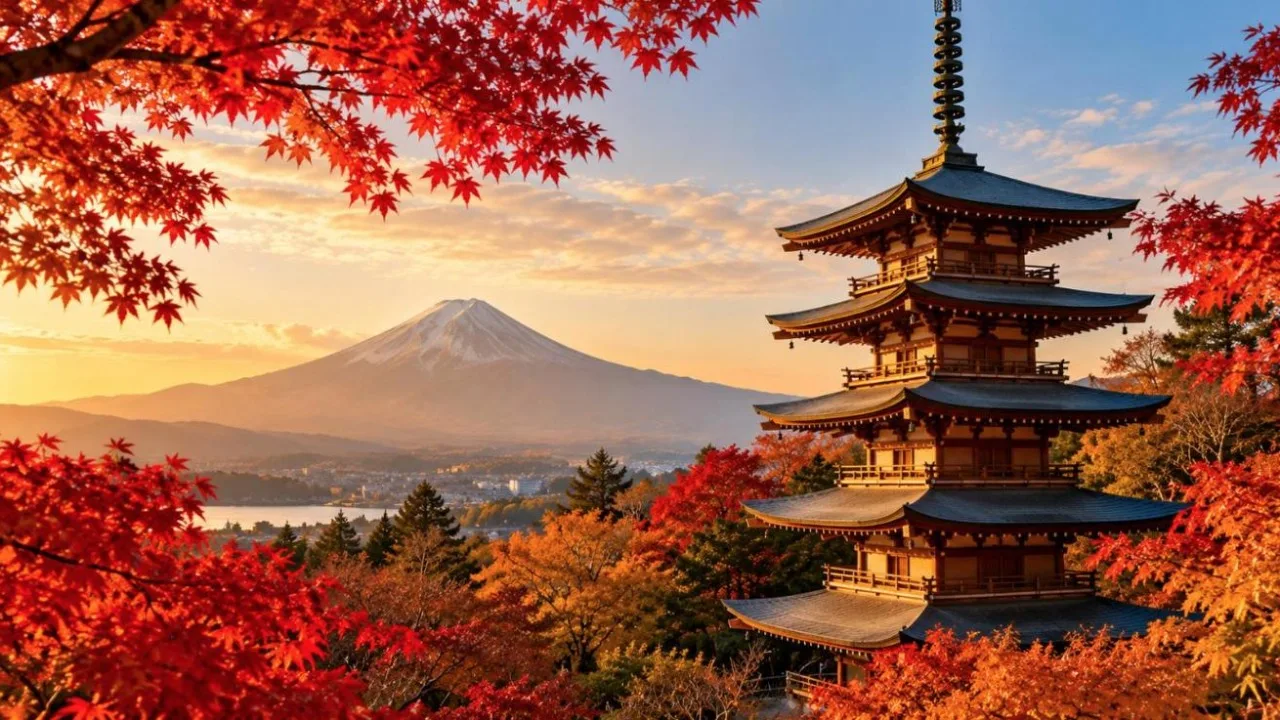
Japan welcomed a record 42.7 million international visitors in 2025, and the government has responded with a wave of changes. In 2026 alone, visa fees rose for the first time in decades, the departure tax tripled, Kyoto sharply increased its hotel tax, the Japan Rail Pass got more expensive, and from 1 November 2026 tax-free shopping works in a completely different way.
This guide gathers all of it in one place, as of late October 2026: who needs a visa, what JESTA is, how the new tax-free refund system works, the taxes and fees you will pay, crowd-control rules at famous sites, and what a trip costs at today's exchange rates. Always check the official sources linked at the end before you travel.
Contents
- 2026 changes at a glance
- Do you need a visa?
- JESTA: Japan's coming travel authorisation
- Visit Japan Web
- Tax-free shopping: the new refund system
- Departure tax
- Hotel and accommodation taxes
- Mount Fuji, Himeji, Kyoto and other crowd rules
- Japan Rail Pass and IC cards
- How much a trip costs
- Money, phones, safety and tipping
- When to go
- Checklist
- FAQ
2026 changes at a glance
| Change | Detail | From |
|---|---|---|
| Visa fees | Single entry ¥3,000 → ¥15,000; multiple entry ¥6,000 → ¥30,000 (Indian passport holders still pay Rs 500) | 1 July 2026 |
| Departure tax | International Tourist Tax ¥1,000 → ¥3,000 | Departures from 1 July 2026 |
| Kyoto hotel tax | Up to ¥10,000 per person per night for the most expensive rooms | 1 March 2026 |
| Hokkaido hotel tax | New prefecture-wide tax of ¥100–¥500 per night | 1 April 2026 |
| Himeji Castle | Adult entry ¥2,500 for non-residents (Himeji residents ¥1,000) | March 2026 |
| Japan Rail Pass | 7-day ordinary pass ¥50,000 → ¥53,000 | 1 October 2026 |
| Tax-free shopping | Pay tax at the till, get it refunded when you leave | 1 November 2026 |
| JESTA | Law passed; launch targeted for fiscal 2028 | Not yet in operation |
Do you need a visa?
Japan has visa exemption arrangements with 74 countries and regions, according to the Ministry of Foreign Affairs (MOFA). Most visa-free visitors can stay up to 90 days for tourism. There are some exceptions:
- Indonesia and Thailand: 15 days (Indonesian travellers need a registered ePassport).
- Brunei and Qatar: 30 days.
- The UK, Ireland, Germany, Austria, Switzerland, Liechtenstein and Mexico: up to 6 months, but you must apply to immigration in Japan before your first 90 days end.
Visa-free visitors cannot work in Japan, and you should carry proof of onward travel.
The JAPAN eVISA
For travellers who do need a visa, Japan offers an online eVISA for single-entry tourist stays of up to 90 days in some countries. Eligibility depends on where you live, not your nationality. According to MOFA (May 2026):
| How to apply | Residents of |
|---|---|
| Directly online | Australia, Brazil, Cambodia, Canada, Saudi Arabia, South Africa, Taiwan, the UK and the US (for nationalities that need a visa) |
| Through an accredited travel agency | China, Hong Kong, India, Indonesia, Macau, Mongolia, the Philippines and Vietnam (package tours), Singapore, South Korea and the UAE |
At the airline counter and on arrival you must show the visa issuance notice on your phone screen. MOFA says screenshots, PDFs and printouts are not accepted, so make sure you can open it offline.
Visa fees after 1 July 2026
Japan raised its visa fees on 1 July 2026 for the first time in roughly half a century: a single-entry visa rose from ¥3,000 to ¥15,000 and a multiple-entry visa from ¥6,000 to ¥30,000. Indian passport holders are an exception. According to Business Today, citing the Embassy of Japan, Indian nationals still pay a concessional Rs 500 for single or multiple entry, plus the visa centre's service charge. Indian visitor numbers are rising fast: 315,100 Indians visited Japan in 2025, up 35% on the year, according to the Japan National Tourism Organization (JNTO).
JESTA: Japan's coming travel authorisation
JESTA (Japan Electronic System for Travel Authorization) will be Japan's version of the US ESTA or Europe's ETIAS: an online pre-approval for visitors who don't need a visa. Japan's parliament passed the enabling law on 29 May 2026. The government has said JESTA must start by 31 March 2029 at the latest, and officials are targeting the 2028 fiscal year. The fee has not been set yet.
You do not need JESTA for a trip today. Ignore any website that offers to sell you one.
Visit Japan Web
Visit Japan Web is a free, optional website run by Japan's Digital Agency. You enter your details before you fly and receive QR codes for immigration and customs, which makes arrival faster. One account can register up to 10 travellers, each with their own QR code. Complete it at least six hours before landing.
At Haneda, Narita and Kansai airports, a single kiosk reads your QR code and passport together. From 1 November 2026, Visit Japan Web can also be used for tax-free refund procedures at major airports, including Narita, Haneda, Kansai, Chubu, Fukuoka, New Chitose and Naha.
Tax-free shopping: the new refund system
Until 31 October 2026, foreign tourists could show their passport in a shop and pay without Japan's 10% consumption tax. From 1 November 2026, that instant exemption ends with no transition period. Japan switches to a refund system, according to JNTO.
| Old system (to 31 Oct 2026) | New system (from 1 Nov 2026) | |
|---|---|---|
| At the till | Tax removed on the spot | You pay the full price including tax, and show your passport |
| Minimum spend | ¥5,000 per shop per day (general goods and consumables counted separately) | ¥5,000 before tax per shop per day, with general goods and consumables counted together |
| Consumables cap | ¥500,000 | Abolished; purchases must be for personal use and fit in your luggage |
| Packaging | Consumables sealed in special bags | No sealed bags; but items used in Japan are not refunded |
| Time to take goods out of Japan | 30 days | 90 days from purchase |
| Getting the money | Not needed | Refund after customs checks the goods when you leave |
How to get your refund
- Pay the full price and show your passport. The shop records the purchase electronically.
- Keep the goods unused, and keep them accessible: customs may want to see them.
- When you leave Japan, before check-in or security, have the purchases confirmed at a tax-free terminal or customs counter, or through Visit Japan Web where available.
- The shop or its refund agent pays you back. Methods vary by shop: cash at the airport, a refund to your card, a bank transfer or an app.
Items worth ¥1,000,000 or more must have identifying details such as a serial number recorded. Gold and platinum bullion are not eligible. Refund timing and any handling fees vary between shops, so ask before you buy if a big refund matters to you.
Tip: leave extra time at the airport on departure day, especially in the first months of the new system.
Departure tax
Japan's International Tourist Tax, charged to everyone leaving the country by air or sea, rose from ¥1,000 to ¥3,000 for departures from 1 July 2026, according to JNTO. It is normally included in your airline or cruise ticket, so you don't pay it separately, but it explains why fares rose slightly.
Hotel and accommodation taxes
Many Japanese cities charge a per-person, per-night accommodation tax based on the room rate. It is usually collected at the hotel. Kyoto's increase in March 2026 is the most dramatic.
Kyoto City (from 1 March 2026)
| Room rate per person per night | Before | From 1 March 2026 |
|---|---|---|
| Under ¥6,000 | ¥200 | ¥200 |
| ¥6,000–¥19,999 | ¥200 | ¥400 |
| ¥20,000–¥49,999 | ¥500 | ¥1,000 |
| ¥50,000–¥99,999 | ¥1,000 | ¥4,000 |
| ¥100,000 and over | ¥1,000 | ¥10,000 |
Other places
| Place | Rate per person per night | Notes |
|---|---|---|
| Tokyo | Nothing under ¥10,000; ¥100 for ¥10,000–14,999; ¥200 for ¥15,000+ | A switch to 3% (rooms under ¥13,000 exempt) has been approved from April 2027, according to Unseen Japan |
| Osaka Prefecture | Nothing under ¥5,000; ¥200–¥500 above that | Rates revised September 2025 |
| Fukuoka City | ¥200 under ¥20,000; ¥500 above | City and prefecture combined |
| Hokkaido (prefecture-wide) | ¥100 under ¥20,000; ¥200 up to ¥49,999; ¥500 above | New from 1 April 2026; some towns such as Sapporo add their own tax |
| Kutchan (Niseko area) | 3% including prefectural tax | From 1 April 2026 |
| Hiroshima Prefecture | ¥200 | From 1 April 2026 |
| Nagano Prefecture | ¥300 (¥200 for the first 3 years); nothing under ¥6,000 | From 1 June 2026 |
Okinawa plans a 2% tax (capped at ¥2,000) from February 2027, and other areas are preparing their own. Several of these figures come from aggregator sites, so check your hotel's confirmation for the exact amount.
Mount Fuji, Himeji, Kyoto and other crowd rules
- Mount Fuji (Yoshida Trail, Yamanashi side): in the 2026 season (1 July to 10 September), climbers paid a ¥4,000 fee, with a cap of 4,000 climbers a day (not counting those staying in mountain huts). The gate closed from 2pm to 3am. The trails on the Shizuoka side also charged ¥4,000 and required online registration in 2025. Check the official Fujisan Climb site before the 2027 season.
- Himeji Castle: from March 2026, adults aged 18 and over pay ¥2,500, up from ¥1,000. Himeji residents still pay ¥1,000, and under-18s enter free.
- Kyoto's Gion district: since April 2024, tourists have been barred from the private alleys of Gion South, with a ¥10,000 fine. Hanamikoji Street itself remains open.
- Miyajima: a ¥100 visitor tax per visit (or ¥500 for a year) applies since October 2023.
- More dual pricing may follow: Kyoto has proposed charging non-residents more for Nijo Castle (¥2,000 versus ¥1,000) and city buses (¥360 versus ¥200), with the ordinance due before the city assembly in November 2026. This is a proposal, not yet law.
Japan Rail Pass and IC cards
The nationwide Japan Rail Pass rose in price again on 1 October 2026, according to JNTO.
| Pass (adult) | Before 1 Oct 2026 | From 1 Oct 2026 |
|---|---|---|
| Ordinary, 7 days | ¥50,000 | ¥53,000 |
| Ordinary, 14 days | ¥80,000 | ¥84,000 |
| Ordinary, 21 days | ¥100,000 | ¥105,000 |
| Green (first class), 7 days | ¥70,000 | ¥74,000 |
| Green, 14 days | ¥110,000 | ¥116,000 |
| Green, 21 days | ¥140,000 | ¥147,000 |
Children pay roughly half. With a one-way bullet train ticket from Tokyo to Osaka costing about ¥14,000, a 7-day pass pays off only if you make several long journeys, such as Tokyo–Kyoto–Hiroshima and back. For a simple Tokyo–Kyoto–Osaka trip, individual tickets or regional passes are often cheaper.
For local trains, subways, buses and convenience stores, use an IC card. Standard Suica and PASMO cards went back on sale in March 2025. The Welcome Suica tourist card is sold at Haneda, Narita and major JR stations, and the Welcome Suica Mobile app (launched March 2025) can be set up on your phone before you arrive.
How much a trip costs
The weak yen keeps Japan relatively affordable. Around 21 October 2026, $1 bought about ¥158, €1 about ¥177, £1 about ¥211, and ¥1 cost roughly ₹0.60, according to Trading Economics.
| Item | Budget | Mid-range | Comfort |
|---|---|---|---|
| Food per day | ¥3,000–4,000 | ¥5,000–8,000 | ¥10,000–15,000+ |
| Bed per night | ¥3,000–5,500 (hostel or capsule) | ¥6,000–9,000 (business hotel) | ¥20,000–50,000+ (ryokan or 4-star) |
| Tokyo–Osaka bullet train, one way | About ¥14,000 | About ¥14,000 | About ¥14,000 |
These are typical figures from the travel site Watabi, not official numbers. Remember to add accommodation tax (especially in Kyoto), and possible dual-priced entry fees at some attractions.
Worked example: a mid-range traveller spending ¥7,500 a day on food, ¥8,000 a night on a business hotel and about ¥3,000 a day on local transport and sights would spend roughly ¥18,500 a day, or about $117, £88 or ₹11,100 at October 2026 rates, before long-distance trains and shopping.
Visitor numbers
After a record 42.7 million visitors and ¥9.5 trillion in spending in 2025, arrivals in 2026 have dipped slightly: 27.6 million from January to August, down 2.7% on 2025, according to JNTO data reported by Travel Voice. The fall is mainly due to a sharp drop in visitors from China after Beijing issued a travel warning against Japan. For travellers from elsewhere, popular spots remain busy, especially in spring and autumn.
Money, phones, safety and tipping
- Cash and cards: cards are widely accepted in hotels, larger shops and train ticket machines, but carry cash for temples, shrines, food stalls and some taxis. ATMs at 7-Eleven, Lawson and Japan Post accept foreign cards.
- Mobile data: an eSIM is usually the simplest option for individuals; pocket Wi-Fi makes more sense for groups. Set up the eSIM before you leave home.
- Tipping: it is not customary in Japan and may be politely refused.
- Earthquake and weather alerts: install the free Safety Tips app from the Japan Tourism Agency. It sends push alerts for earthquake early warnings, tsunami, volcanic eruptions, severe weather and heatstroke in English and other languages.
- Travel insurance: medical care for visitors is paid privately, so insurance is strongly advised.
When to go
Cherry blossom season runs from late March in Tokyo, Osaka and Fukuoka to late April in Sapporo. In 2026, Tokyo's first blooms were forecast for 19 March, earlier than the average of 24 March.
Autumn leaves peak in late November and early December in Tokyo, Kyoto and Osaka. The 2026 forecast from Japan Meteorological Corporation put Kyoto's red maples at their best around 11 December and Tokyo's around 29 November. Sapporo peaks in early November.
Both seasons are the busiest and most expensive. Late May and the weeks between the summer heat and the autumn-leaf peak often offer a better balance of weather, crowds and prices.
Checklist
- Check whether you are visa-free, need an eVISA or need a standard visa, and how long you can stay.
- Make sure you can open your eVISA notice on your phone offline, if you have one.
- Complete Visit Japan Web at least 6 hours before landing.
- Book Kyoto hotels with the new accommodation tax in mind.
- Decide whether a JR Pass actually saves money for your route.
- Set up an eSIM and Welcome Suica (or plan to buy an IC card on arrival).
- Install the Safety Tips app.
- For tax-free shopping from November 2026: keep purchases unused and in your luggage, and allow extra time for the refund on departure.
- If climbing Mount Fuji, register and pay on the official site.
FAQ
Do I need JESTA to visit Japan in 2026?
No. The law has been passed, but JESTA is not expected to start before fiscal 2028. Visa-free visitors currently need only a valid passport.
How long can I stay in Japan without a visa?
Usually 90 days, though it is 15 or 30 days for a few countries and up to 6 months for some European countries and Mexico, with an extension application.
Can Indians get a Japan eVISA?
Yes. Residents of India can apply for a single-entry tourist eVISA through an accredited travel agency. Indian passport holders pay a concessional Rs 500 visa fee plus service charges.
How does tax-free shopping work from November 2026?
You pay the full price including tax, then claim the tax back when you leave Japan, after customs confirms the goods. The minimum is ¥5,000 before tax per shop per day.
Do I have to pay the ¥3,000 departure tax at the airport?
Usually not. It is normally included in your flight or cruise ticket.
Is the Japan Rail Pass still worth it?
Only for itineraries with several long bullet-train journeys. Compare the cost of individual tickets for your route before buying.
Why is my Kyoto hotel bill higher than the booking price?
Kyoto's accommodation tax, raised in March 2026, is often charged at the hotel and can reach ¥10,000 per person per night for luxury rooms.
Information checked in October 2026. Rules, fees and exchange rates change; always confirm with official sources before you travel.
Sources
- MOFA: Exemption of visas (short-term stay)
- MOFA: JAPAN eVISA
- Business Traveller: Japan visa fee increase 2026
- Business Today: Japan raised visa fees but Indians still pay Rs 500
- VisasNews: Japan’s parliament passes law paving the way for JESTA
- JNTO: Everything you need to know about Japan’s new tax-free shopping system
- JNTO: Changes are coming to Japan’s tax-free shopping
- JNTO: Japan’s International Tourist Tax is increasing
- Kyoto City Tourism Association: Accommodation tax change
- Watabi: Japan accommodation tax guide
- Unseen Japan: Tokyo accommodation tax increase
- Fujisan Climb (official): 2026 Yoshida Trail rules
- Himeji Castle (official site)
- The Nation / Jiji: Kyoto dual pricing proposal
- JNTO: Japan Rail Pass price increases 2026
- JNTO: Visitor arrivals, December 2025
- Travel Voice: International arrivals in Japan, August 2026
- Watabi: Japan trip cost and budget
- Nippon.com: 2026 autumn leaves forecast
- JNTO: Cherry blossom forecast