As of about 8:30 AM IST, Sunday 15 November 2026. Based on Tesla's announcement on X and its published order terms as reported by Reuters, TechCrunch, The Verge and Engadget.
Tesla has started letting a small number of people buy its Cybercab, the two-seat robotaxi with no steering wheel and no pedals, for their own personal use. The company's Robotaxi account on X said on Friday, 13 November, that "select customers" were being invited to purchase the vehicle. The order page lists a price of $29,990 before taxes, with an estimated delivery date of December 2026.
The headline price matches the "under $30,000" figure Elon Musk promised when he first showed the Cybercab in October 2024. The fine print is a different matter. Buyers must also pay a mandatory $299-a-month "Autonomy Subscription", the car will only drive inside Tesla's existing robotaxi zones, and the vehicle still faces an open question from U.S. safety regulators. For anyone following the shift to autonomous cars, this is the first real test of whether a driverless car can be sold to households, rather than run by a fleet operator.
What Tesla is actually offering
According to screenshots of the order page and invitation email that Tesla posted, buyers pay a $1,000 non-refundable deposit to place an order, The Verge reported. The invitation warns that "initial availability is limited." Technology reviewer Marques Brownlee, who posted details from the order page, said buyers "must accept delivery" in one of a handful of Texas cities, TechCrunch reported.
Tesla has not said how invited buyers are chosen or how many Cybercabs are set aside for private sale rather than for its own robotaxi fleet. The Verge, citing the crowd-sourced Robotaxi Tracker, said Tesla had 278 Cybercabs in operation, about 40% of its robotaxi fleet. Tesla began offering Cybercab rides in Austin in September.
The subscription changes the price math
The $299 monthly fee is the part of the offer that matters most for ownership costs. Unlike a regular Tesla, where cancelling the Full Self-Driving subscription simply returns the car to manual driving, the Cybercab has no manual fallback for public roads. If the subscription lapses, the car cannot be used on the road. Tesla says the fee covers autonomous driving, maintenance and towing, but not insurance.
The Verge calculated that over a typical five-year ownership period the fee adds $17,940, taking the baseline cost to roughly $47,600 before taxes, charging and insurance. That is more than a new Model 3 or Model Y, which can be driven anywhere. Anyone used to comparing cars on sticker price alone should treat the Cybercab more like a lease plus a service contract. Our five-year total cost of ownership breakdown explains why running costs, not purchase price, usually decide which car is cheaper.
Musk himself said the fee was too high. Replying to Brownlee, he wrote that it "should match the cost of Tesla [Full Self-Driving] and connectivity for other models, which is more like ~$115/month," TechCrunch and Reuters reported. The Verge noted that Tesla's FSD subscription for its other cars costs $99 a month.
A car you own but cannot fully use as you like
The terms published with the order page are unusually restrictive for a car that the customer pays for. The Verge reported that they prohibit commercial use. Owners cannot put the car on ride-hailing or delivery apps, or on Tesla's own robotaxi network, to earn back the monthly fee. Tesla AI chief Ashok Elluswamy has floated the second quarter of 2027 as a possible target for letting customer cars join the network, according to The Verge, but that is not a commitment in the current terms.
The Verge also reported that Tesla only has to give 30 days' notice before raising the subscription price, and that owners who keep using the service are treated as accepting updated terms. There is no partial refund for the rest of a month if a subscription is cancelled or suspended. For buyers, the practical effect is that the running cost of the car is set by Tesla, not by the market.
It only works inside the robotaxi map
Elluswamy said on X that the Cybercab would work "unsupervised inside all the same geo locations as @robotaxi, just serving the owners' needs." Tesla's robotaxi service started in Austin in June 2025, expanded to Dallas and Houston in April 2026 and launched in Miami in July 2026, Reuters reported. Engadget listed current service areas in parts of Austin, Dallas, Fort Worth, Houston and San Antonio in Texas, and Miami, Orlando and Tampa in Florida.
That means a privately owned Cybercab cannot leave the geofence for a weekend trip or a drive to another city. Musk said the vehicle "will be available nationwide, as we receive regulatory approval." For now, though, it is a city car tied to a map that Tesla controls. That is a different proposition from an electric car charged at home; see our guide to setting up home EV charging for how that usually works.
The regulatory question is still open
The bigger uncertainty is legal. U.S. Federal Motor Vehicle Safety Standards were written for cars with steering wheels, pedals and mirrors. After the Cybercab entered commercial robotaxi service, the National Highway Traffic Safety Administration opened an audit query into how Tesla self-certified the vehicle, noting that it lacks "permanently attached, conventional manual controls," Engadget reported.
The Verge reported that Tesla sent its legal justification to NHTSA in October and asked for the entire response to be kept confidential. NHTSA has not announced a ruling. That means Tesla is taking deposits from private buyers before the federal regulator has said whether its self-certification holds up. If NHTSA requires changes, delivery dates or the terms of sale could move.
Insurance and liability have not been explained
Because the Autonomy Subscription excludes insurance, owners will need their own policies. Tesla has not explained how personal-auto insurers should price a car that has no human driver, or how responsibility would be split between the owner and Tesla if the car causes a crash while driving itself, The Verge reported. These questions are simpler in fleet robotaxi programmes, where one company owns, operates and insures the cars. Selling the same car to individuals spreads that risk across thousands of separate policies.
Why Tesla is doing this now
Tesla has bet heavily on autonomy as its next growth story. It recently said it would stop building the Cybertruck at its Texas plant and use the space for more Cybercab production, TechCrunch noted. Lars Moravy, Tesla's vice president of vehicle engineering, said last month that the company aimed to start selling Cybercabs to the public by the end of this year, Reuters reported. A small, invitation-only launch lets Tesla hit that timeline and see real demand without committing to large volumes.
For rivals and regulators, the significance is that a driverless car is now being offered to consumers as a product, not just as a ride. If the model works, the subscription becomes a recurring revenue stream that looks more like software than car sales. If it stalls on regulation or cost, it will show how far personal autonomous cars still are from replacing the ordinary decision between buying a new or used car.
What to watch next
There are three things to watch. The first is whether Tesla actually cuts the subscription towards the roughly $115 a month Musk suggested. The second is whether NHTSA rules on the self-certification audit before the first deliveries, which are estimated for December. The third is whether Tesla expands where owners can take delivery and drive beyond its Texas launch cities. Until those are settled, the Cybercab is less a $30,000 car than a $30,000 entry ticket to a service Tesla can change.
Sources
- Reuters, via Investing.com: Tesla invites select customers to buy Cybercab for personal use
- TechCrunch: Tesla opens Cybercab pre-orders 'for personal use,' with geo restrictions and a $299 monthly fee
- The Verge: Tesla is inviting some people to buy a Cybercab 'for personal use' — but read the fine print
- Engadget: Tesla starts taking Cybercab orders for personal use
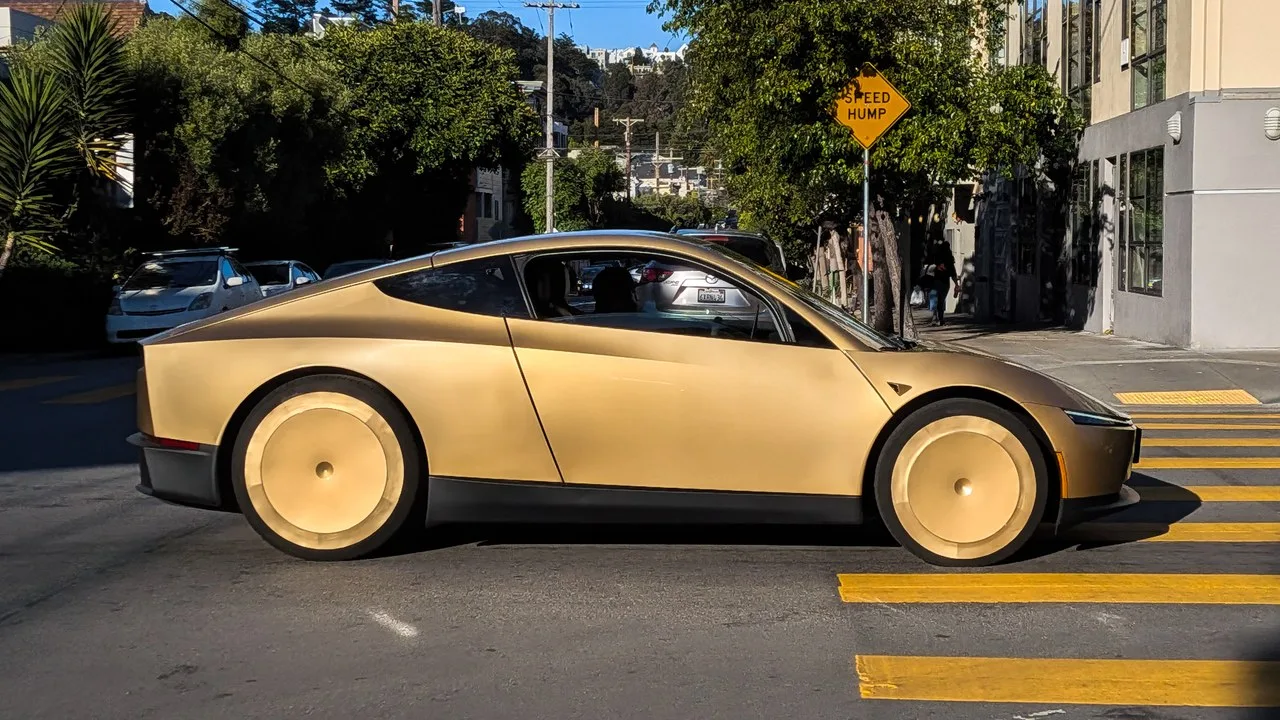
Featured image: A Tesla Cybercab on Harrison Street in San Francisco, 12 June 2026, 9yz, CC BY 4.0, via Wikimedia Commons (cropped).