As of about 9:00 AM IST, Sunday 29 November 2026. Based on the State Council readout carried by Xinhua and reporting by Reuters, CNBC, Bloomberg and the South China Morning Post. Chinese markets reopen on Monday 30 November. This article is for information only and is not financial advice.
China's stock market had its best day in more than two years on Friday after the country's cabinet did something it had never done before: it named the "national team" of state-backed investors in an official readout and told it to play a bigger role in steadying the market. A gauge of Chinese chip stocks jumped 17.6%, its largest one-day gain on record.
The rally came a day after the blue-chip CSI 300 index hit its lowest level since the US-China tariff escalation of spring 2025. Investors now have the weekend to decide whether Beijing has drawn a line under a five-month slide or simply bought a short reprieve. Here is what was announced, how markets reacted and what the pledge can and cannot do.
What the State Council said
A State Council executive meeting chaired by Premier Li Qiang on Friday stressed that the capital market is vital to the wider economy and called for stronger counter-cyclical adjustment, according to Xinhua. The meeting pledged to improve market-stabilising mechanisms, make full use of existing policies and consider new measures.
The specifics drew the most attention. The readout called for state-backed funds to play a greater role in steadying the market and for the "quasi-stabilisation fund" function of Central Huijin Investment to be optimised to provide sufficient liquidity. It also urged listed companies to pay more dividends and buy back more shares, promised better policies to steer insurance money, corporate annuities and social security funds into stocks, vowed to strengthen defences against "imported risks" and, CNBC reported, promised a crackdown on financial fraud.
The timing was as important as the words. Such readouts usually appear after the market closes; this one was published around 1 p.m. local time, in the middle of the trading day. CNBC quoted Shanghai-based venture capitalist and economist Bob Chen as saying the explicit reference to the "national team" was a first for a State Council meeting. Reuters said state media also described it as the first use of the term in a State Council press release.
How markets reacted
The response was immediate. The Shanghai Composite closed 3.73% higher at 3,606.49, back above 3,600, while the Shenzhen Component jumped 7.24%, the start-up focused ChiNext board 11.61% and the STAR Composite 14.21%, Xinhua reported. Reuters said the CSI 300 gained 4.2% and the Shanghai Composite 3.7%, both their biggest daily gains since the October 2024 stimulus rally.
Technology led the way. The CSI Semiconductor index of 40 chip stocks rose 17.6%, beating its previous record of nearly 17% set in late 2024, CNBC reported, citing Wind Information. Chipmakers such as SMIC, Cambricon and memory maker CXMT were among the leaders, and Xinhua said shares linked to high-bandwidth memory and co-packaged optics also posted strong gains, while banks lagged. In Hong Kong the Hang Seng rose 2.1% and the Hang Seng Tech index more than 6%. Turnover across the Shanghai, Shenzhen and Beijing exchanges was 52% higher than the day before, according to a Shanghai fund manager quoted by CNBC.
Why markets needed help
Chinese stocks have been sliding since July on worries about weak consumer demand, the long property downturn and the risk that trade tensions hit exports, the economy's one bright spot, Reuters reported. The CSI 300 had fallen about 20% since late June, and the tech-heavy STAR 50 and ChiNext indexes had dropped roughly 50% since July before Friday's jump.
The AI trade has been a big part of that. Investors have questioned how Chinese AI developers will make money, and Washington has tightened access to advanced chips, including through overseas data centres, under a rule that took effect on 19 November. The slump in AI shares has been global, as we covered in our report on the Wall Street correction, and Asian markets have been hit especially hard.
Who is the national team?
There is no official line-up. According to Reuters, the nickname covers a loose group of state-backed investors led by Central Huijin, the domestic arm of sovereign wealth fund China Investment Corp. Others include China Securities Finance Corp, China Chengtong Holdings, China Reform Holdings and investment vehicles controlled by the foreign exchange regulator.
The team bought heavily during the 2015 crash and again during weak spells in 2023 and 2024. In 2025, when US tariffs rocked markets, Central Huijin said it was buying and the central bank said it was supporting it. China Investment Corp reported total assets of more than $1.57 trillion in its 2024 annual report, though it is not clear how much of that could go into Chinese shares.
The state has already been active. The South China Morning Post reported last month that national team investors put as much as 170 billion yuan (about $25 billion) into the market in October, mostly through exchange-traded funds, without stopping the decline. Friday's pledge followed weekend support steps by regulators in Taiwan, South Korea and China a week earlier, which we covered in our report on Asia's market support measures.
Signal versus firepower
Analysts welcomed the tone but were cautious about the substance. Hong Hao of Lotus Asset Management told CNBC the readout "effectively institutionalized Central Huijin's role as a state stabilization fund" and said this rally should last longer than earlier "fleeting" bounces: "This time it's for real."
Others were less sure. Reuters noted that the readout gave no details of what would change about the team's role and no figure for how much money it would deploy. The national team is not big enough on its own to change the direction of a market worth almost 95 trillion yuan (about $14 trillion), Reuters said. Winnie Wu of BofA Global Research said the main effect was the signal, but that it does not change tech-sector fundamentals or "solve China's bottlenecks in access to compute or semi production capability". Charu Chanana of Saxo Bank drew a line between "a turning point in policy resolve and a turning point in market fundamentals".
What it means for investors
A clear state backstop can limit how far a market falls and calm panic selling, which is why short-term traders reacted so quickly. But state support has a mixed record in China: the national team's buying in 2015 slowed the crash without producing a lasting recovery, and the October 2024 stimulus rally faded within weeks. Gains driven by policy rather than earnings tend to be fragile.
For foreign investors the pledge also highlights a familiar trade-off. Explicit state support lowers the risk of a disorderly fall, but it makes prices more dependent on policy decisions that are hard to predict. Anyone with exposure to Chinese equities through funds should expect continued volatility rather than a straight line up.
What to watch next
Monday's session will show whether Friday's buying continues once the surprise has faded. Watch for any announcement of fresh ETF purchases by Central Huijin, concrete rules on moving insurance and pension money into stocks, and November's economic data. Beyond China, the path of US chip controls and the expiry of the US-China trade truce on 10 January 2027, flagged by law firm Mayer Brown, remain the biggest outside risks for Chinese tech shares.
Sources
- Xinhua: China's major stock indexes surge, chip shares rally
- Reuters (via Yahoo Finance): China stocks surge most in two years as Beijing vows stronger market support
- Reuters (via Investing.com): What is China's 'national team' and can it stop the stock market slide?
- CNBC: Chinese chip stocks notch biggest ever one-day gains as Beijing signals broader market support
- Bloomberg: China spurs biggest stock gain since 2024 on rare midday vow
- South China Morning Post: China's stock slide can't be reversed by massive state buying, analysts warn
- Mayer Brown: BIS extends chip controls to remote access and tightens license requirements
Disclaimer: This article is for general information only and is not financial, investment or tax advice. Markets can move sharply and you can lose money. Consider your own circumstances and speak to a qualified, regulated adviser before making investment decisions.
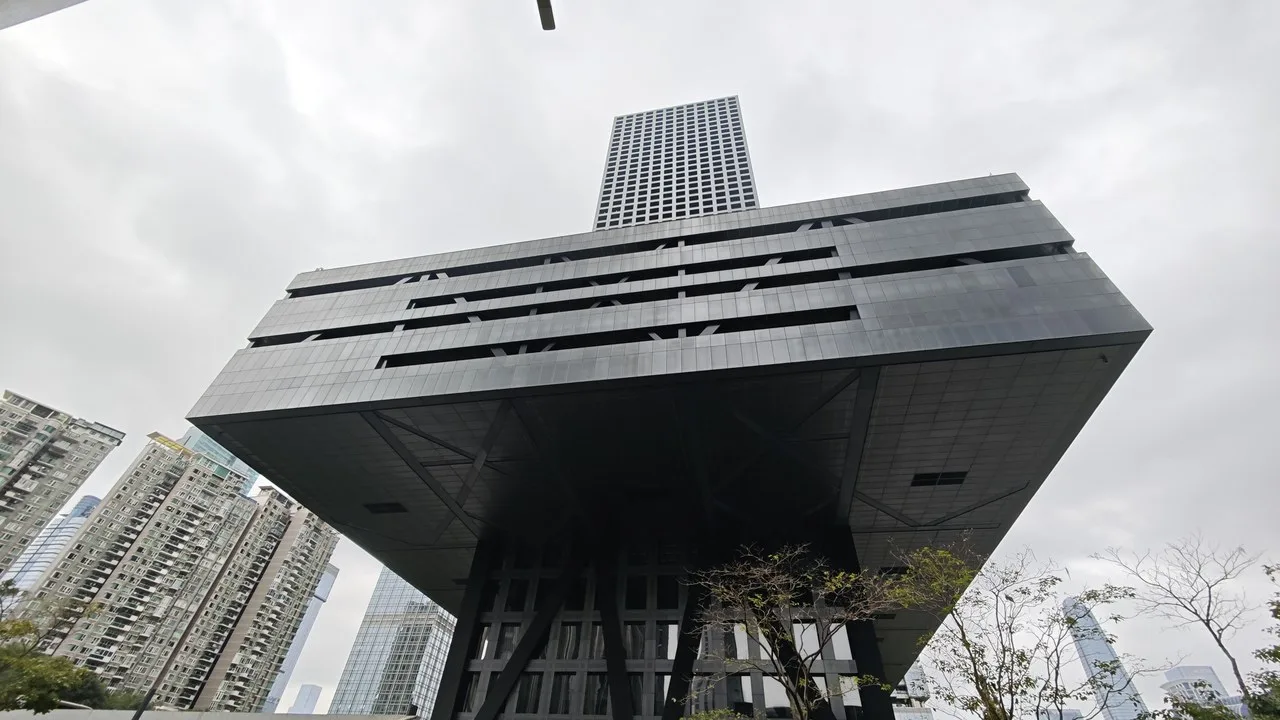
Featured image: The Shenzhen Stock Exchange building in Futian, Shenzhen (March 2026, file photo), Pathfinbird, CC BY-SA 4.0, via Wikimedia Commons (cropped).