As of about 9:00 AM IST, Wednesday 25 November 2026. Based on reporting by CNBC, Investing.com, Reuters (via NBC News) and TIKR (via Yahoo Finance). Credit and stock prices refer to Tuesday 24 November US trading. This article is for information only and is not financial advice.
On Monday, Wall Street cheered Jensen Huang's return as Nvidia's chief executive. On Tuesday, the bond market had second thoughts. The cost of insuring the debt of some of the most heavily borrowed companies in the artificial intelligence boom jumped, bonds issued by the cloud provider CoreWeave sank to record lows, and even giants such as Meta and Amazon saw their credit risk gauges move the wrong way.
The moves were not a crash, but they matter. Much of the AI build-out is now being paid for with borrowed money, and credit investors, who only get their money back rather than sharing in the upside, tend to spot trouble before stock investors do. Here is what happened, why Huang's return cut both ways, and what to watch next.
What happened in credit markets
CoreWeave, which rents out AI computing power and has become the poster child for AI debt worries, took the biggest hit. CNBC reported that the cost of its five-year credit default swaps rose 8.5% to more than 1,200 basis points, and the yield on its 9.75% bond due in 2031 topped 17%. According to Investing.com, citing Trace data, its 9% bond due in 2031 fell as low as 76.4 cents on the dollar and its 9.625% note due in 2032 dropped to 74.9 cents, both record lows, wiping out Monday's gains. CNBC said the company's shares sank 13%.
The pressure spread. Oracle's five-year credit default swap spread rose 7% to 355.68 basis points, CNBC reported. Spreads for Meta Platforms and Amazon, both highly rated, widened by more than 2%, and Nvidia's own rose 3.4%.
A quick guide to credit default swaps
A credit default swap (CDS) works like an insurance policy on a company's debt. The buyer pays a yearly premium, quoted in basis points (hundredths of a percentage point) of the amount insured, and gets paid if the company defaults. A spread of 355 basis points means it costs about $355,000 a year to insure $10 million of Oracle debt for five years. When spreads widen, investors are paying more for protection, a sign that they see more risk. A spread above 1,000 basis points, as with CoreWeave, is usually associated with companies the market sees as distressed.
Why Huang's return cut both ways
CNBC described Huang as one of the AI industry's top financiers, or bankers. Under his leadership Nvidia has invested in, and in some cases guaranteed, deals with "neoclouds" such as CoreWeave so they can buy its chips, a practice critics call circular financing. Nvidia said on its earnings call that it had $118 billion in guarantees backing AI projects as of 25 October.
During Huang's brief absence, chief financial officer Colette Kress said Nvidia would be "rigorously evaluating future investments", which some investors read as a sign that the support might shrink. His return revived expectations that it would continue. Steve Eisman, the investor known from "The Big Short", predicted on CNBC that Huang would "double down on the circular financing". Stifel analyst Ruben Roy was more cautious, writing that, given scrutiny of disclosure around financing and guarantees, he did not expect "a quick reversion to broader customer financing". For credit investors, both outcomes carry risk: more support means more interlinked debt, less support means weaker borrowers on their own.
Oracle: funded, but who pays?
Oracle is a different case from CoreWeave, but the questions rhyme. On 20 November, Oracle said it had secured all the funding it needs for its contract with OpenAI, calling its early-November raise of about $10 billion in stock and $10 billion in bonds its final capital raise of the cycle. Yet its swaps kept widening. According to TIKR, writing on Yahoo Finance, Oracle's total debt reached $169.1 billion at the end of August, and in the fiscal year to May it spent $55.7 billion on capital expenditure against $32.0 billion of operating cash flow. S&P rates Oracle BBB-, one notch above junk.
The deeper issue is the customer. S&P has said OpenAI accounts for about half of Oracle's $664 billion order backlog, so lenders are effectively pricing whether OpenAI can keep paying for the capacity being built for it. TIKR noted that some of Tuesday's swap buying may simply be lenders hedging loans they have already made.
Stocks gave back part of Monday's rally
The equity market told a similar story. Reuters, via NBC News, reported that Nvidia fell 5.9% on Tuesday and a semiconductor index dropped 7.9%, after Monday's rally gave the S&P 500 and Nasdaq their biggest one-day gains since April 2025. The S&P 500 closed 0.5% lower at 7,201.09 and the Nasdaq lost 1.48% to 23,733.54, while the Dow rose 0.85% to 50,018.70 as money rotated into retailers and healthcare. Anthropic shares closed at $81.90, below their $83 IPO price.
What credit investors are saying
Ben Emons of FedWatch Advisors called it a waning of the "Jensen effect", telling CNBC that markets see the government's intervention as "moral suasion" that carries credit and interest-rate risks. Larry Holzenthaler of Catalyst Funds said credit investors "typically don't like that type of drama or uncertainty". Economist David Rosenberg said the debt concerns "have not disappeared" and warned there are "other shoes to drop". Not everyone is gloomy: John Lloyd of Janus Henderson, who owns CoreWeave debt, pointed to strong GPU resale values and compute prices and said the company does not need the high-yield market right now.
Why it matters beyond AI stocks
Stress in AI credit does not stay in one corner of the market. Banks, private credit funds and bond investors have lent heavily to data-centre projects, and the Federal Reserve recently named AI the most-cited risk to financial stability, as we explained in our look at the Fed's Financial Stability Report. Higher borrowing costs also bite at the weaker end: the Nvidia-backed neocloud Nscale has already paused most hiring, as covered in our Nscale report. The backdrop is not helping. Fed funds futures price a 97% chance of a rate rise in December, according to CME Group data cited by Reuters.
What to watch next
Wednesday brings October's PCE inflation data, the Fed's preferred inflation gauge, ahead of a holiday-shortened US week. Huang is expected to appear before three House committees next week, CNBC reported, and Oracle's fiscal second-quarter results in mid-December will show whether its backlog is broadening beyond OpenAI. For a deeper look at the warning signs, our explainer on whether AI is a bubble covers the debt and data-centre risks behind this week's moves, and our report on Huang's reinstatement explains how he returned.
Disclaimer: This article is for general information only and is not financial, investment or tax advice. Bond and stock prices can fall sharply and you can lose money. Consider your own circumstances and speak to a qualified, regulated adviser before making investment decisions.
Sources
- CNBC: AI debt markets shudder as Nvidia's top 'banker' returns
- Investing.com: CoreWeave bonds hit record lows as AI trade concerns return
- NBC News (Reuters): Nasdaq, S&P 500 close lower, giving up some Nvidia-fueled gains
- TIKR (via Yahoo Finance): Oracle's credit swaps blow out again a day after Huang's return lifted Nvidia
- TIKR: Oracle insists it's "fully funded" for OpenAI. Its credit default swaps disagree
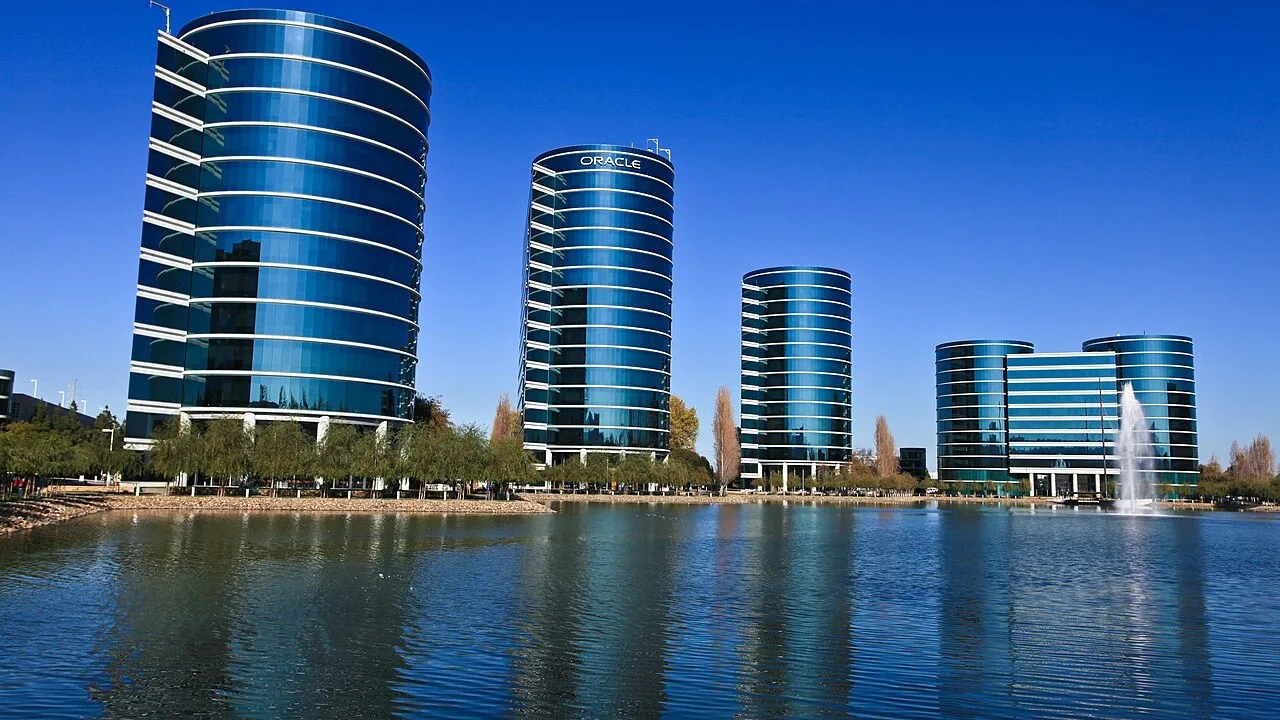
Featured image: Oracle's campus at Redwood Shores, California (17 November 2009, file photo), Hakan Dahlstrom, CC BY 2.0, via Wikimedia Commons (cropped).