Summer temperatures across much of India can place real strain on vehicles. Engines run hotter, batteries weaken, tyres expand and interiors can become dangerously hot. A few simple checks and habits help your car cope with the heat and keep you comfortable on the road.
Keep the cooling system healthy
The cooling system prevents your engine from overheating. Check the coolant level in the reservoir when the engine is cold, and top up with the coolant type recommended in your manual. Never open the radiator cap on a hot engine. Have hoses checked for cracks or leaks, and ensure the radiator is free of dirt and debris.
Watch the temperature gauge. If it climbs towards the red zone, pull over safely, switch off the engine and let it cool before checking anything.
Pay attention to the battery
Heat speeds up chemical reactions inside a battery and can accelerate fluid loss and corrosion. Keep terminals clean and tight, and have the battery tested before summer if it is a few years old. Signs of weakness include slow cranking and dim lights at start-up.
Check tyre pressure more often
Air expands in heat, and hot roads add to the stress on tyres. Check pressure at least every couple of weeks when the tyres are cold, ideally in the morning, using the figures on the door jamb sticker or in the manual. Under-inflated tyres flex more, overheat and wear faster; over-inflated tyres reduce grip.
Maintain the air conditioning
A weak AC is not just uncomfortable; driving in extreme heat can affect concentration. Replace the cabin air filter as scheduled, keep the condenser at the front of the car clean and have the system checked if cooling feels weaker than usual. When getting into a car that has been parked in the sun, open the windows for a minute and run the fan to push hot air out before switching to recirculation.
Park smartly
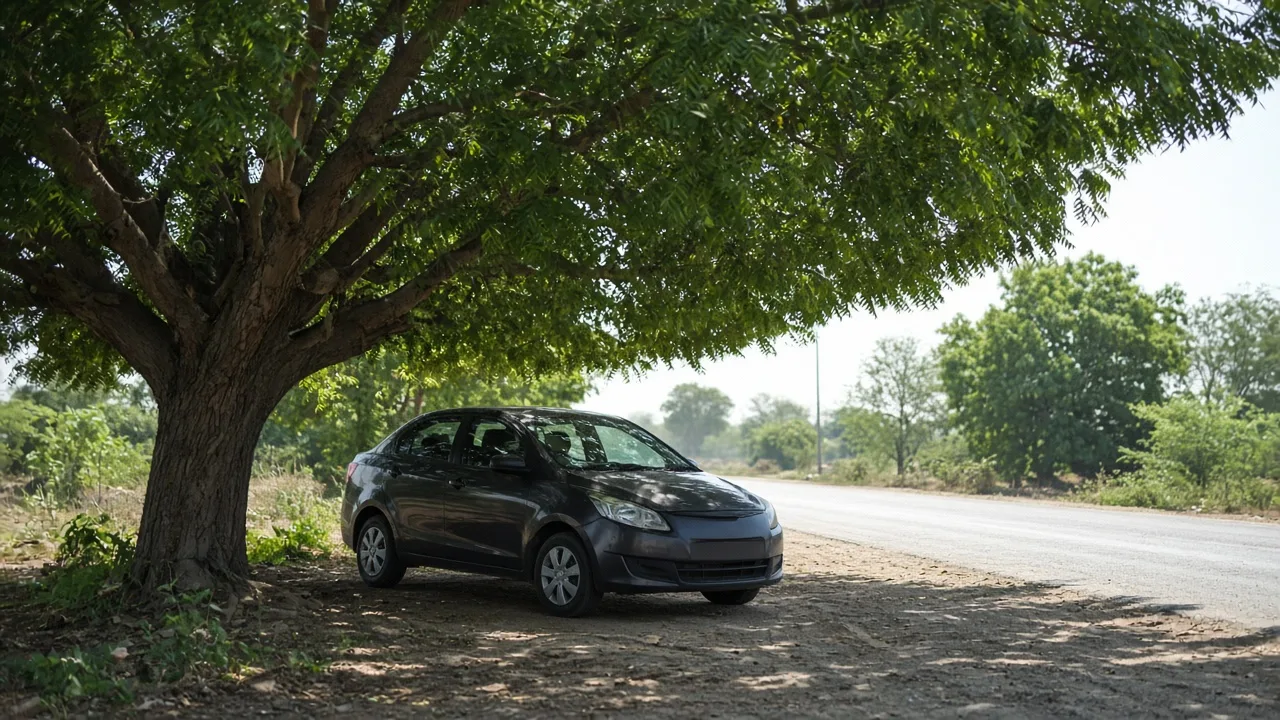
- Choose covered or shaded parking whenever possible.
- Use a windscreen sunshade to reduce cabin temperature.
- Face the car so the windscreen is away from the afternoon sun.
- Consider a breathable car cover for long-term outdoor parking.
Protect the interior
Prolonged sun can fade and crack dashboards and seats. Sunshades, seat covers and a periodic application of suitable interior protectant help. Do not leave items such as aerosol cans, lighters, power banks, phones or medicines in a parked car, as heat can damage them or create hazards.
Never leave children or pets inside
The temperature inside a closed car can rise to dangerous levels very quickly on a hot day, even with windows slightly open. Never leave children, older family members or pets inside a parked car, even for a few minutes.
Fluids, wipers and paint
- Check engine oil level regularly; heat and long drives can increase consumption in older engines.
- Keep the windscreen washer reservoir filled, as dust is common in summer.
- Replace wiper blades that have hardened or cracked in the sun.
- Wash the car regularly to remove dust and bird droppings, which can damage paint in the heat.
Prepare for long summer drives
Carry plenty of drinking water, a basic emergency kit and a charged phone. Plan driving to avoid the hottest hours where possible, and take regular breaks.
Watch for warning signs on the road
On very hot days, pay attention to unusual smells, steam from the bonnet, a rising temperature gauge, weaker AC or warning lights. Stopping early and letting the engine cool is far cheaper than continuing to drive with an overheating engine. Keep a bottle of water and the roadside assistance number in the car.
Wrapping up
Heat tests every part of a car. Keep coolant topped up, test the battery, check tyres when cold, maintain the AC, park in shade, protect the interior and never leave anyone inside a parked car.