Where Feijoada Comes From
Feijoada is often called Brazil's national dish. It is a rich stew of black beans slowly cooked with a range of salted, smoked and fresh pork cuts. A popular story says enslaved Africans created it from the cheaper cuts discarded by plantation owners. Many food historians now question that account, noting that bean and meat stews have a long tradition in Portugal and that the expensive salted meats used in feijoada were not leftovers. What is clear is that feijoada grew from a mix of Portuguese, African and Indigenous Brazilian influences.
In Brazil, feijoada is a social, unhurried meal, especially popular on Wednesdays and Saturdays, when restaurants and families serve it for a long lunch. Traditional versions use parts such as pig's ears, feet and tails. This recipe uses easier-to-find cuts, while still producing the deep, smoky flavour and thick, dark sauce that define the dish.
Serves: 6–8 | Prep: 30 minutes, plus overnight soaking | Cook: 2½–3 hours
Ingredients
Stew
- 500 g (about 2½ cups) dried black beans
- 300 g (10 oz) smoked pork sausage, such as linguiça or kielbasa, sliced
- 300 g (10 oz) smoked bacon or pancetta, in thick pieces
- 500 g (1.1 lb) pork shoulder or pork ribs, in large chunks
- 200 g (7 oz) carne seca (dried salted beef), if available, soaked overnight
- 2 tbsp neutral oil
- 2 onions, chopped
- 6 garlic cloves, crushed
- 4 bay leaves
- Salt and black pepper
Classic sides
- Cooked white rice
- 1 bunch collard greens or kale, very finely shredded and sautéed in garlic and oil
- Farofa: 150 g (1 cup) cassava flour toasted in 2 tbsp butter with a little onion
- 2–3 oranges, peeled and sliced
- Hot sauce or a fresh pepper salsa (molho de pimenta)
Method
- Rinse the beans and soak them in plenty of cold water overnight. If using carne seca, soak it separately, changing the water two or three times.
- Drain the beans, put them in a large pot with fresh water to cover by about 5 cm (2 in), and add the bay leaves. Simmer for about 1 hour.
- Meanwhile, cut the soaked carne seca into chunks and boil it for 10 minutes to remove excess salt, then drain.
- Heat the oil in a large frying pan and brown the bacon, then the sausage and pork shoulder in batches. Transfer them to the bean pot along with the carne seca.
- In the same pan, cook the onions in the fat for 8 minutes until soft and golden. Add the garlic for 1 minute.
- Take a ladle of beans and liquid from the pot, mash it into the onions, then stir the mixture back into the stew. This thickens the sauce.
- Simmer gently, uncovered, for another 1–1½ hours, stirring occasionally and adding water if needed, until the beans are creamy and the meat is very tender.
- Taste and season with salt and pepper. Remove the bay leaves and let the stew rest for 10 minutes before serving.
Tips for Success
- Taste before salting. Smoked and cured meats add a lot of salt, so you may need very little.
- Feijoada improves overnight. If you have time, make it a day ahead and reheat it gently.
- The sauce should be thick and dark. If it is thin, mash more beans against the side of the pot and simmer a little longer.
- A pressure cooker can shorten the bean cooking time to about 30 minutes.
Variations
For a lighter version, use only sausage and pork shoulder. Vegetarian feijoada can be made with smoked tofu, mushrooms, sweet potato and smoked paprika for a smoky depth.
Some regions in Brazil add vegetables such as pumpkin, carrots or cabbage to the pot.
How to Serve
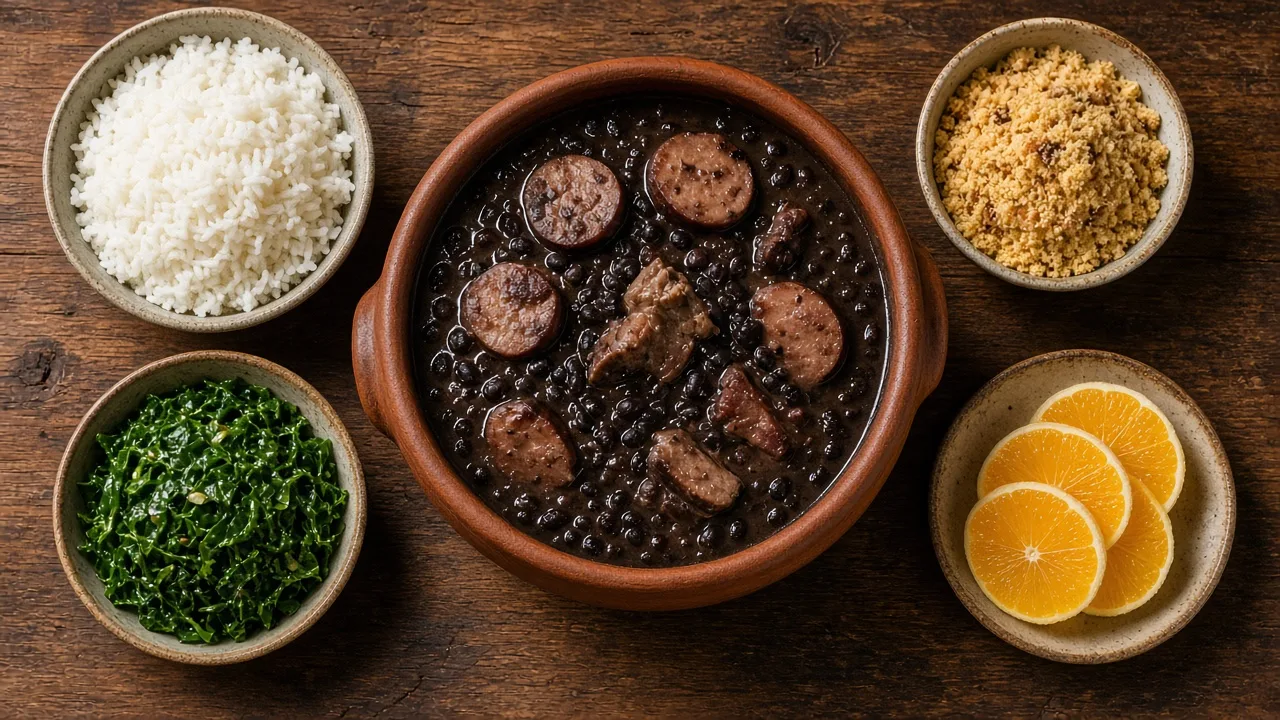
Serve feijoada with white rice, garlic-sautéed collard greens (couve) and farofa sprinkled on top for crunch. Fresh orange slices are traditional and help cut through the richness.
Pork crackling (torresmo) and a caipirinha, Brazil's lime and cachaça cocktail, are the classic accompaniments for a weekend feijoada lunch.
Leftover feijoada keeps for up to four days in the fridge and freezes very well. In Brazil, leftovers are often turned into tutu, a thick bean purée made by mashing the stew with cassava flour, or into a quick soup by thinning it with stock.