Brakes are the most important safety system on your car, yet many drivers give them little thought until something sounds wrong. Understanding how brakes wear and recognising early warning signs helps you fix problems before they become dangerous or expensive.
How car brakes work, briefly
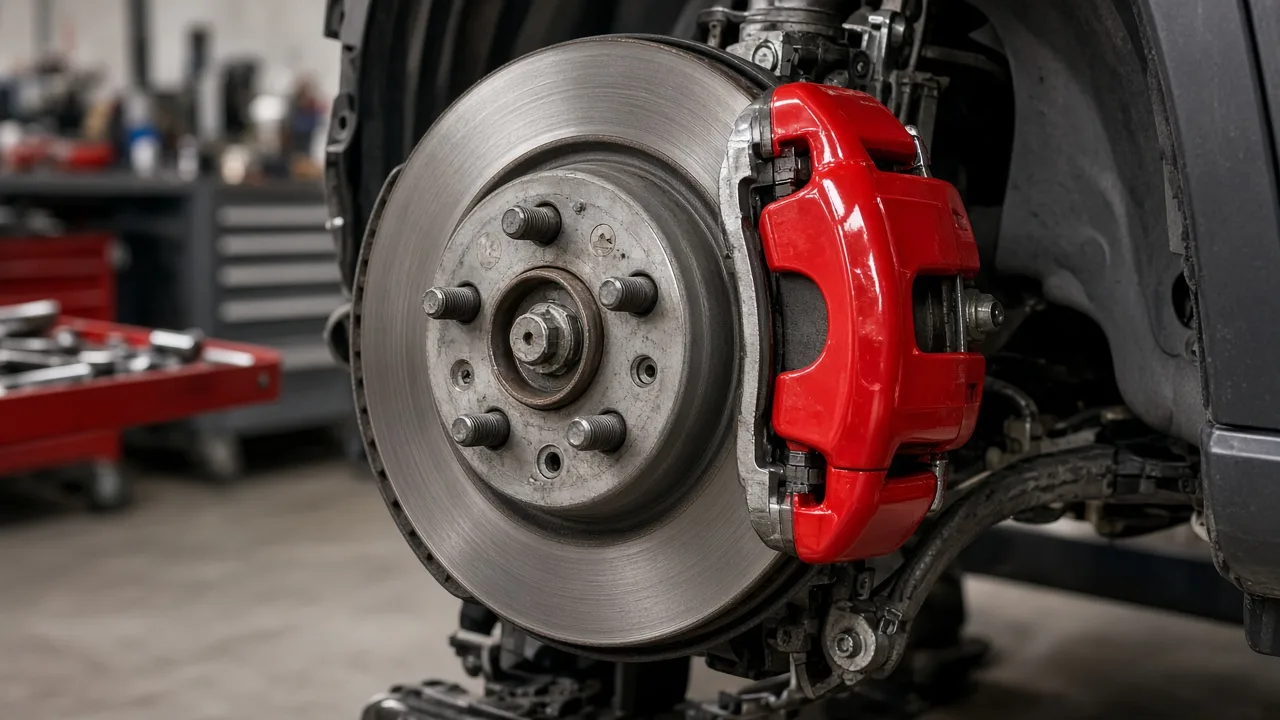
Most cars use disc brakes at the front and either disc or drum brakes at the rear. When you press the pedal, hydraulic brake fluid pushes calliper pistons that squeeze brake pads against a rotating disc. Friction slows the wheel. Over time, the pads and discs wear down, and the fluid absorbs moisture.
Warning signs to watch for
- Squealing or squeaking: many pads have a small metal wear indicator that squeals when pads are getting thin.
- Grinding: a harsh metallic sound may mean the pads are worn through and metal is contacting the disc. Get it checked immediately.
- Soft or spongy pedal: could indicate air or moisture in the fluid, or a leak.
- Pedal sinking towards the floor: a serious sign that needs urgent attention.
- Vibration through the pedal or steering: often caused by uneven or warped discs.
- Car pulling to one side when braking: may indicate a sticking calliper or uneven pad wear.
- Brake warning light: could mean low fluid, worn pads or a system fault. Check the owner's manual.
Brake pads
Pad life varies widely depending on driving style, traffic and terrain. City driving with frequent stop-start traffic and hilly roads wear pads faster than steady highway driving. Have pad thickness checked at each service, and replace pads in pairs on the same axle.
Brake discs
Discs wear more slowly than pads but can develop grooves, uneven thickness or heat damage. A mechanic will measure them against the manufacturer's minimum thickness. Depending on condition, discs may be resurfaced or replaced; many workshops recommend new pads whenever discs are replaced.
Brake fluid
Brake fluid absorbs moisture from the air over time, which lowers its boiling point and can reduce braking performance under heavy use, such as long descents in the hills. Manufacturers recommend replacing it at set intervals, often every couple of years; check your service schedule. Use only the fluid type specified in your manual.
Habits that extend brake life
- Anticipate traffic and ease off the accelerator early instead of braking hard.
- Keep a safe following distance so you can brake gently.
- Use engine braking by selecting a lower gear on long downhill stretches.
- Avoid carrying unnecessary heavy loads.
- Do not rest your foot on the brake pedal while driving.
After driving through water
During the monsoon, driving through waterlogged roads can leave brakes wet and less effective. After crossing water, drive slowly and press the brake pedal gently a few times to dry the pads and discs before you need to stop firmly.
What a brake check involves
A proper inspection includes checking pad and disc thickness, looking for fluid leaks, inspecting brake hoses for cracks, checking fluid level and condition, testing the handbrake and, on cars with ABS, ensuring no system warnings are present.
Handbrake and ABS
Do not forget the parking brake. If it needs to be pulled higher than usual to hold the car, or the car rolls on a slope, it may need adjustment. On cars with ABS, a pulsing pedal during hard braking is normal; it means the system is working. An illuminated ABS warning light, however, means the system may not be working and should be checked soon.
Wrapping up
Listen for squeals and grinding, notice changes in pedal feel, watch for pulling or vibration and never ignore the brake warning light. Regular inspections, timely fluid changes and smooth driving keep your brakes reliable and your family safe.