Where Phở Bò Comes From
Phở is Vietnam's most famous dish and a much-loved breakfast in cities like Hanoi and Ho Chi Minh City. It is generally believed to have emerged in northern Vietnam in the early twentieth century, around the area of Hanoi and Nam Định. Its origins likely combine Vietnamese rice noodle traditions with influences from Chinese and French cooking; the French appetite for beef at the time made bones and cuts more widely available.
After 1954, many people moved from north to south, and phở travelled with them. Southern-style phở tends to be slightly sweeter and is served with a generous plate of fresh herbs and bean sprouts, while northern phở is simpler and focuses on the broth. The secret to both is a clear, deeply savoury beef stock perfumed with charred onion and ginger and gently toasted spices such as star anise, cinnamon and cloves.
Serves: 6 | Prep: 30 minutes | Cook: 4–6 hours
Ingredients
Broth
- 2 kg (4.4 lb) beef bones, ideally a mix of knuckle and marrow bones
- 500 g (1.1 lb) beef brisket or chuck in one piece
- 2 large onions, halved, unpeeled
- 10 cm (4 in) piece of ginger, halved lengthways
- 5 star anise
- 1 cinnamon stick
- 5 cloves
- 1 tbsp coriander seeds
- 1 black cardamom pod (optional)
- 3 tbsp fish sauce
- 20 g (1 tbsp) rock sugar or regular sugar
- 5 litres (5 quarts) water
- Salt
To serve
- 600 g (1.3 lb) dried flat rice noodles (bánh phở)
- 250 g (9 oz) beef sirloin or eye of round, sliced paper thin
- 1 onion, sliced very thinly
- Spring onions and coriander (cilantro), chopped
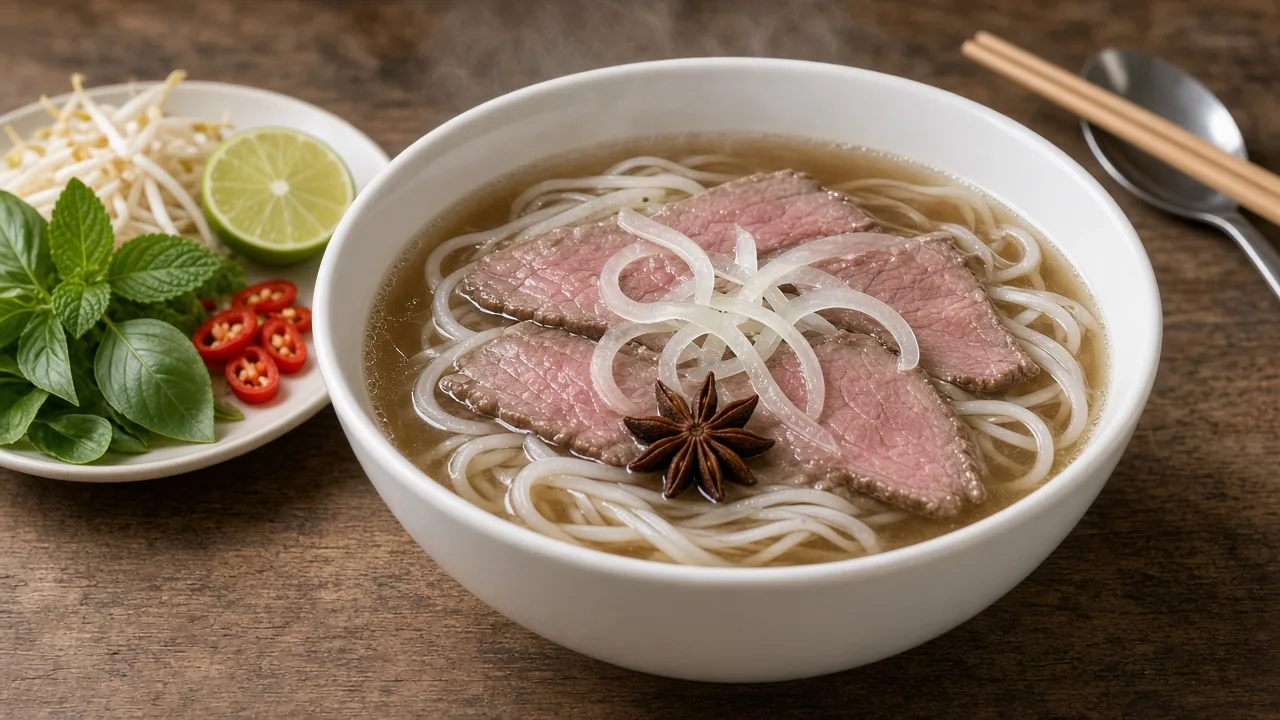
- Bean sprouts, Thai basil, mint, lime wedges, sliced chillies
- Hoisin and chilli sauce (optional)
Method
- Place the bones in a large pot, cover with cold water, bring to the boil and cook vigorously for 10 minutes. Drain, rinse the bones well and clean the pot. This removes impurities and keeps the broth clear.
- Char the onions and ginger directly over a gas flame, under a hot grill or in a dry cast-iron pan until blackened in spots, about 10 minutes. Rinse off the loose charred skin.
- Toast the star anise, cinnamon, cloves, coriander seeds and cardamom in a dry pan for 2 minutes until fragrant, then tie them in a piece of muslin or put them in a spice bag.
- Return the bones to the pot with the brisket and 5 litres of fresh water. Bring to a gentle simmer and skim off any foam.
- Add the charred onion and ginger, fish sauce, sugar and a teaspoon of salt. Simmer very gently. Remove the brisket after about 1½ hours, when tender, and place it in cold water to stop it darkening, then refrigerate.
- Add the spice bag for the last hour of cooking. Simmer the broth for a total of 4–6 hours, then strain it through a fine sieve. Skim off excess fat and season to taste with more fish sauce, sugar and salt.
- Soak the noodles in warm water for 30 minutes, then cook them in boiling water for 30–60 seconds and drain.
- Divide the noodles among large bowls. Top with sliced brisket, raw sirloin slices, onion, spring onions and coriander. Ladle the boiling broth over the top so it cooks the raw beef. Serve with the herb plate on the side.
Tips for Success
- Keep the broth at a lazy simmer, with just a few bubbles. Boiling makes it cloudy and greasy.
- Partly freeze the raw beef for 30 minutes so you can slice it very thinly. Thin slices cook instantly in the hot broth.
- Broth must be piping hot when poured, both to warm the bowl and to cook the beef.
- Make the broth a day ahead. Chill it overnight and the fat will set on top, making it easy to remove.
Variations
Phở gà, chicken phở, is quicker and lighter. Use a whole chicken and chicken bones instead of beef, simmer for about 2 hours, and use the same aromatics with fewer spices. Shred the chicken and serve with the herbs as usual.
A vegetarian version can be made with charred onion, ginger, daikon, carrot, dried shiitake and the same spices, seasoned with soy sauce and served with tofu.
How to Serve
Let everyone season their own bowl at the table with herbs, bean sprouts, lime, chilli and sauces. In Hanoi many people prefer only a squeeze of lime and some chilli, while in the south a generous herb plate is standard.
Phở is traditionally a breakfast dish but works at any time of day. Strong Vietnamese iced coffee with condensed milk is a classic finish.