As of about 8:30 AM IST, Thursday 19 November 2026. Based on Reuters reporting of a letter from UniCredit's chief executive and a statement from Germany's finance minister, reporting by Tagesspiegel and tagesschau, and UniCredit's own regulatory announcements.
Germany has ended its two-year fight against UniCredit's takeover of Commerzbank. In a letter dated 18 November, UniCredit chief executive Andrea Orcel set out a list of binding commitments on Commerzbank's future, and German Finance Minister Lars Klingbeil told Reuters that the two sides had "reached common ground." Berlin now "supports a swift process and an orderly transition of control," he said.
The deal would create a bank with more than €1.3 trillion (about $1.4 trillion) in assets across two of the euro zone's largest economies, Reuters said, making it one of the most significant cross-border European banking deals in years.
What the two sides agreed
The agreement settles the main points of dispute between UniCredit and the government, which owns 13.3% of Commerzbank, a legacy of its bailout during the global financial crisis. According to Reuters, Tagesspiegel and tagesschau:
- Frankfurt stays. Commerzbank will remain a listed company headquartered in Frankfurt, Germany's main demand. After a planned merger with UniCredit's Munich-based German unit HypoVereinsbank (HVB), which Orcel is aiming for in 2028, Frankfurt will be the seat of the combined bank, with a "significant presence" kept in Munich.
- Board seats. Germany has dropped its demand to name two members of Commerzbank's supervisory board. Instead, UniCredit will propose two independent candidates who know the German market and Commerzbank well.
- German voices at the top. UniCredit pledged to put German nationals on its own board of directors.
- Jobs and customers. Klingbeil said UniCredit made "clear commitments" on Germany as a business location, employee rights and dialogue with the works council. Tagesspiegel said the letter also commits to Commerzbank's Mittelstand (mid-sized company) customers and the international services that support exporters.
Tagesspiegel counted eight commitments in Orcel's letter, which Orcel wrote he was "prepared to commit" to as binding principles.
How a hostile approach became a done deal
Orcel caught Commerzbank and the German government off guard in 2024 by quietly building a large stake in the lender. Both tried to stop a takeover, but gave way as UniCredit's holding approached 50%, Reuters said. The news agency describes the approach as a hostile €45 billion bid.
UniCredit's formal exchange offer, published on 5 May 2026, offered 0.485 new UniCredit shares for each Commerzbank share. Its acceptance period ended on 16 June, with an additional period to 3 July, according to UniCredit's filings. Tagesspiegel says UniCredit holds about 49% of Commerzbank as a result. In October, the European Central Bank allowed UniCredit to cross the 30% threshold and raise its stake without an upper limit.
The regulatory path has cleared quickly since then. UniCredit said on 17 November that the European Commission granted merger clearance on 16 November and, a day later, decided not to open an in-depth investigation under the EU's foreign subsidies rules. Reuters said the U.S. Federal Reserve has also approved the deal. A small number of financial-regulatory approvals are still outstanding, UniCredit said. Commerzbank itself changed tone earlier this month, saying it was "convinced" a deal between the two banks could create value, Reuters reported.
Why Berlin gave ground
With regulators on board and UniCredit already close to half the shares, the government had little power left to block the deal. What it could still do was set conditions, and its 13.3% stake gave it leverage. Klingbeil used that to secure promises on headquarters, jobs and lending to the Mittelstand, the backbone of Germany's export economy.
The trade-off is the supervisory board. Giving up the right to nominate two members means Berlin will have no direct seat at the table once UniCredit takes control. The government is relying on written commitments rather than formal influence.
The open question: the government's stake
The biggest unanswered point is what happens to Germany's 13.3%. Orcel's letter says the commitments "set the basis for the disposal of the government's stake," and Tagesspiegel reported that UniCredit would support a sale. Klingbeil's statement, however, made no commitment on whether or when the government will sell.
The answer matters for investors. The government is Commerzbank's second-largest shareholder. A sale, whether to UniCredit or in the market, would determine how quickly UniCredit moves from roughly half the bank to clear majority ownership. Tagesspiegel said UniCredit could raise its stake significantly at the latest when HVB is folded into Commerzbank.
What changes inside Commerzbank
Orcel has said he plans to hold an extraordinary general meeting in early 2027 to re-elect all ten shareholder representatives on Commerzbank's supervisory board, Tagesspiegel reported. That would allow him to replace the management board led by chief executive Bettina Orlopp, who fought the takeover for a long time.
Cost cuts are likely to follow. Orcel has called Commerzbank's international network unnecessarily large and has promised savings worth billions of euros, according to Tagesspiegel. That sits awkwardly with his new pledge to protect the international services used by exporters. How the two promises are reconciled will be the first real test of the agreement. Tagesspiegel noted that what the Mittelstand pledge means in practice is still unclear.
Why it matters beyond Germany
European policymakers have long said the continent's banks are too small and too nationally divided to compete with U.S. giants. Yet governments often resist foreign takeovers of their own lenders. Berlin's decision to accept a deal in exchange for written commitments, rather than block it, could become a template for other cross-border bank mergers in Europe.
It also comes at a time when regulators are watching financial risks closely. In the U.S., the Federal Reserve's latest Financial Stability Report flagged the debt piling up behind AI data centres, and hot inflation data has kept a rate rise in view. Against that backdrop, European supervisors approved the creation of a much larger cross-border lender, a sign of how far official attitudes to bank consolidation in Europe have shifted.
What to watch next
The next steps are the remaining regulatory approvals, the extraordinary general meeting expected in early 2027, any decision by Berlin on its stake, and the details of UniCredit's cost plan. The merger with HVB in 2028 would complete the project. For Commerzbank's customers, day-to-day banking is unlikely to change soon. The bigger changes, in branch networks, international services and lending, will come over the next two years.
Sources
- Reuters (via Investing.com): UniCredit and Germany reach broad agreement on Commerzbank takeover
- Tagesspiegel: Bund stoppt Widerstand gegen UniCredit-Übernahme der Commerzbank (German)
- tagesschau: Bundesregierung und UniCredit einigen sich (German)
- UniCredit: Announcement regarding the fulfilment of offer conditions, 17 November 2026 (PDF)
- UniCredit: UniCredit receives ECB approval to acquire control of Commerzbank
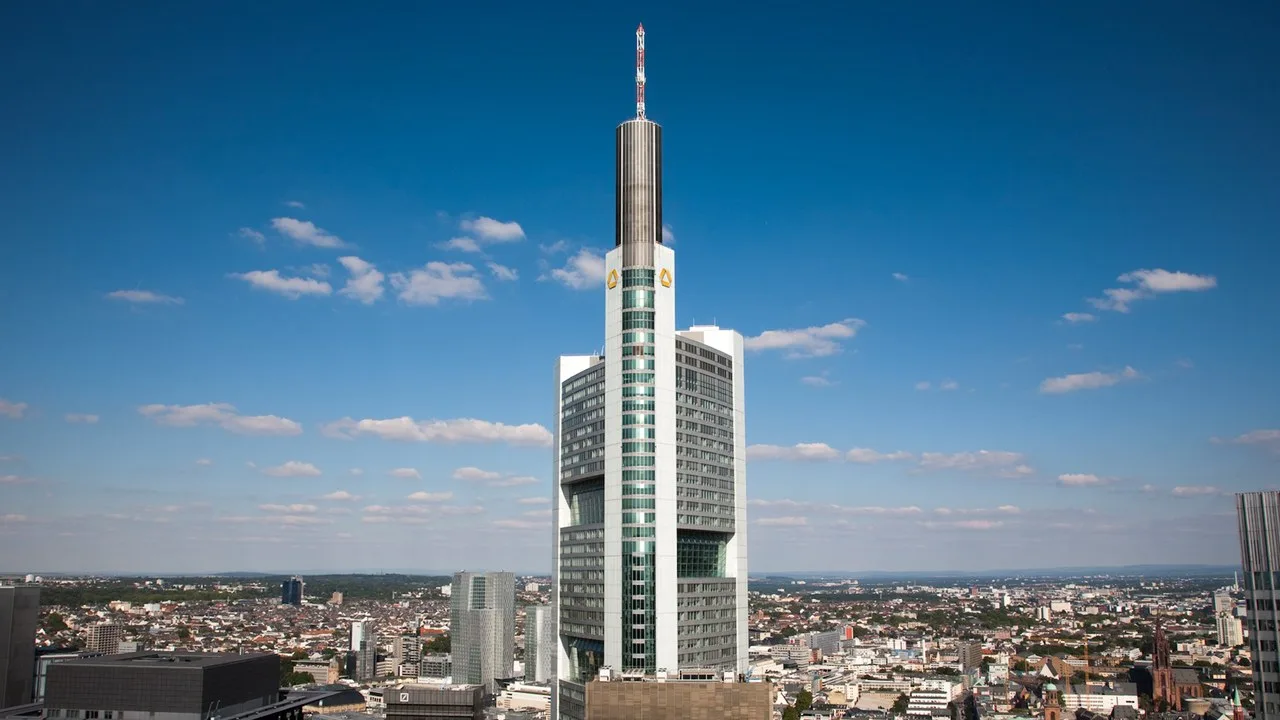
Featured image: The Commerzbank Tower in Frankfurt am Main, Germany, 6 September 2010 (file photo), Commerzbank AG, CC BY-SA 3.0 DE, via Wikimedia Commons (cropped).