Where Thai Green Curry Comes From
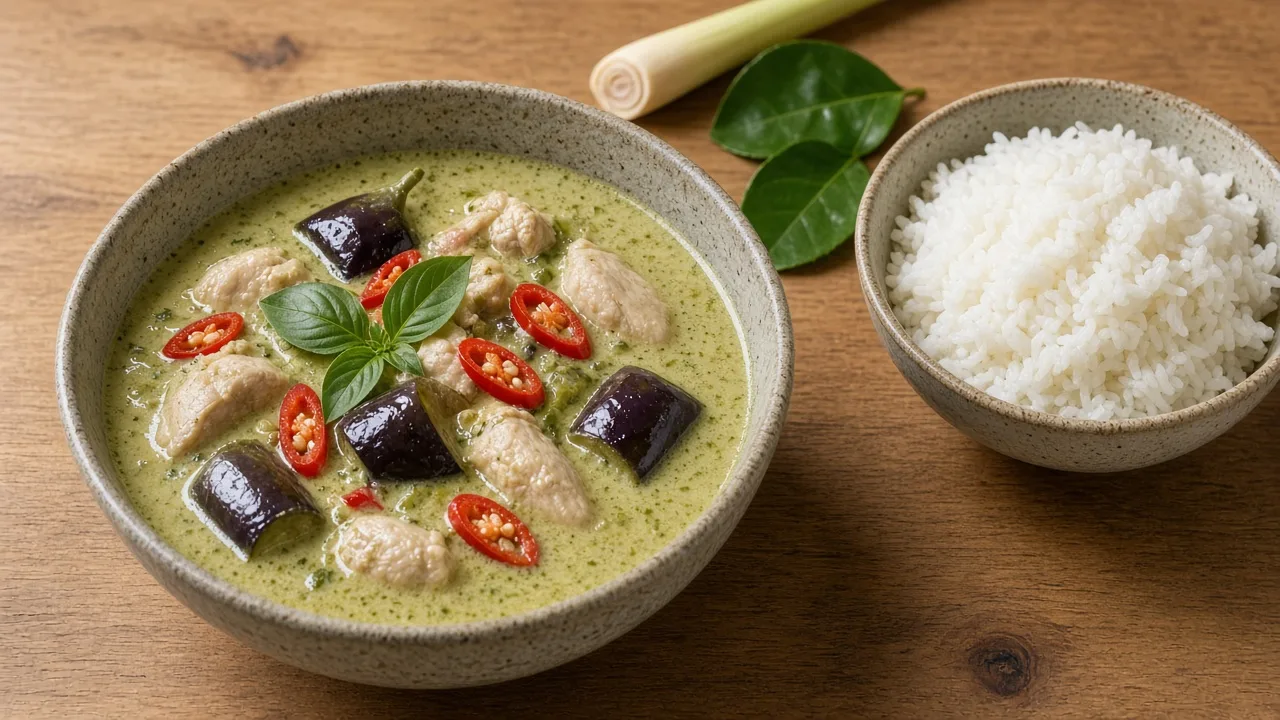
Green curry, or gaeng keow wan, is one of central Thailand's best-known dishes. The name roughly translates as "sweet green curry". The "sweet" does not mean sugary; it describes the soft, pale green colour that fresh green chillies give when they are cooked into coconut milk. It is a younger dish than many Thai curries and is thought to have become popular in the early twentieth century.
Ready-made paste is convenient, but making your own takes about fifteen minutes in a food processor and gives a brighter, more aromatic result. The curry itself follows a pattern used throughout Thai cooking: fry the paste in coconut cream until fragrant, add protein and vegetables, then balance the flavours with fish sauce, palm sugar and fresh herbs.
Serves: 4 | Prep: 25 minutes | Cook: 20 minutes
Ingredients
Green curry paste
- 6–10 green bird's eye chillies (to taste), roughly chopped
- 2 stalks lemongrass, tender inner part only, sliced
- 3 cm (1¼ in) piece of galangal or ginger, sliced
- 4 shallots, chopped
- 5 garlic cloves
- 3 kaffir lime leaves, central vein removed
- Small bunch of coriander (cilantro), stems and roots included
- 1 tsp ground coriander seed and ½ tsp ground cumin
- ½ tsp ground white pepper
- 1 tsp shrimp paste (optional)
- 1 tbsp neutral oil
Curry
- 2 × 400 ml (14 fl oz) cans coconut milk
- 500 g (1.1 lb) boneless chicken thighs, sliced
- 200 g (7 oz) Thai aubergines or 1 small aubergine, cut into chunks
- 100 g (3½ oz) green beans, trimmed
- 2–3 tbsp fish sauce
- 1–2 tsp palm sugar or brown sugar
- 4 kaffir lime leaves, torn
- A large handful of Thai basil leaves
- 1 red chilli, sliced, to garnish
Method
- Blend all the paste ingredients in a food processor until they form a fairly smooth paste, scraping down the sides and adding a splash of water if needed. You will need about 4–5 tablespoons. Store the rest in the fridge for up to a week.
- Open the coconut milk without shaking the cans. Scoop about 200 ml (¾ cup) of the thick cream from the top into a wok or wide pan.
- Simmer the cream over medium heat, stirring, for 3–5 minutes until it thickens and the oil begins to separate.
- Add 4 tablespoons of curry paste and fry, stirring constantly, for 2–3 minutes until it smells very fragrant.
- Add the chicken and stir to coat it in the paste. Cook for 2 minutes, then pour in the remaining coconut milk.
- Add the aubergine and lime leaves. Simmer for 10 minutes until the chicken is cooked and the aubergine is tender. Add the green beans for the final 3 minutes.
- Season with fish sauce and palm sugar. Taste and adjust until the curry is salty, rich and slightly sweet, with a noticeable chilli heat.
- Turn off the heat, stir in the Thai basil and garnish with sliced red chilli.
Tips for Success
- Frying the paste in separated coconut cream is the key step. It brings out the aromatics and gives the curry its characteristic sheen.
- Taste the paste before cooking. Chilli heat varies a great deal, so start with less and add more if needed.
- Thai basil has a sweet anise flavour. Italian basil is not the same, but it is a reasonable substitute if you add it right at the end.
- Do not boil the curry hard once the coconut milk goes in, or it may split and turn grainy.
Variations
Prawns, beef or fish fillets all work well. Add seafood near the end so it does not overcook. For a vegetarian version, use tofu and pumpkin, replace the fish sauce with light soy sauce or salt, and leave out the shrimp paste.
Bamboo shoots, courgette, pea aubergines and baby corn are common additions.
How to Serve
Serve with steamed jasmine rice to soak up the sauce. In Thailand green curry is also eaten with soft rice noodles called khanom jeen.
A crunchy side such as cucumber relish or a simple stir-fry of morning glory or greens balances the richness. Lime wedges on the side let everyone add brightness to taste.
Like many curries, green curry often tastes even better the next day once the flavours have settled. Cool it quickly, refrigerate it for up to two days, and reheat it gently. Add a fresh handful of basil just before serving, as the original leaves will have darkened.