Sugar has become noticeably more expensive in the run-up to Diwali 2026, and sweet shops in some cities are already passing the cost on. The Centre released an extra sugar quota for the second half of October and tightened stock limits for dealers this week, while some mills in Maharashtra have started crushing sugarcane early to get fresh sugar into markets before the festival.
For home cooks planning laddoos, barfis and halwa, the question is simple: how much more will festive sweets cost, and are there smart ways to cook around it? Here is what is happening, and a simple low-sugar sweet you can make at home.
How much have sugar prices risen?
According to Business Standard, ex-mill sugar prices rose by nearly ₹1,000 per quintal in the 10 days before 14 October. Data from the Department of Consumer Affairs showed:
- All-India average retail price: ₹56.67 per kg on 13 October
- All-India average wholesale price: ₹5,254.91 per quintal on 13 October
Firstpost, citing a Hindustan Times report quoting local traders, said ex-mill rates in Uttar Pradesh rose 13% in six days to ₹5,200 per quintal on 12 October, from ₹4,600 on 6 October. In Maharashtra, prices were reported up 17% to ₹5,100.
Local markets vary. Reports from cities in Uttar Pradesh, such as Agra and Ghaziabad, have described sugar selling above the national average and sweet sellers raising prices. Those local figures differ from shop to shop, so check prices where you live.
Why sugar is costlier this year
Government data cited by Firstpost puts sugar production for the 2025-26 season at around 30.6 million tonnes, about 11% below an earlier estimate of 34.3 million tonnes. The government has blamed lower sugarcane cultivation and weaker rainfall linked to El Niño, as well as hoarding.
Strong festive demand from households and sweet makers has added pressure at the same time.
What the government is doing
The Centre has taken several steps in the past week:
- Extra quota: The Department of Food and Public Distribution released 1.4 million tonnes of sugar for domestic sale for 13-31 October, two days ahead of schedule, plus 200,000 tonnes for sugar importers, Business Standard reported.
- Tighter stock limits: From 15 October to 30 November 2026, dealers can hold a maximum of 1,000 quintals of sugar for up to 15 days. Kolkata and Assam are exempt.
- Early crushing: According to The Economic Times, a quarter of Maharashtra's sugar mills are starting to crush cane this week, a month ahead of schedule. Millers expect fresh sugar to reach markets after 20 October.
If that new supply arrives on time, prices could steady before Diwali. But there is no guarantee, and festive demand peaks in the final weeks.
What it means for mithai
Sugar is a core ingredient in most Indian sweets, but it is not the only cost. Ghee, milk, khoya and dry fruits matter too, and food prices more broadly are rising. India's food inflation reached 7.74% in September, according to government data.
For shoppers, that means:
- Shop-bought sweets may cost more than last year, especially closer to Diwali.
- Buying early, or making some sweets at home, can help control costs.
- Sweets sweetened with dates, figs or jaggery are an alternative. Many sweet shops already sell "no added sugar" ranges, though jaggery is still a form of sugar, and dates and figs contain natural sugars.
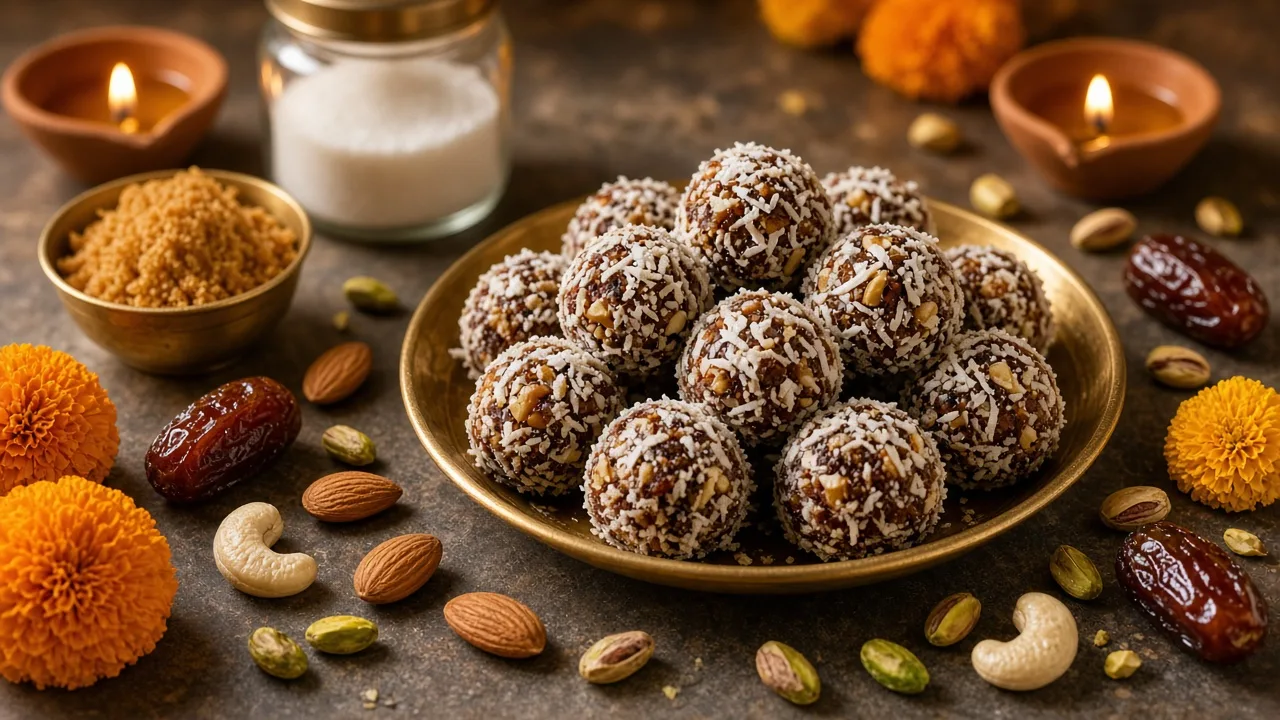
Recipe: No-added-sugar date and nut laddoo
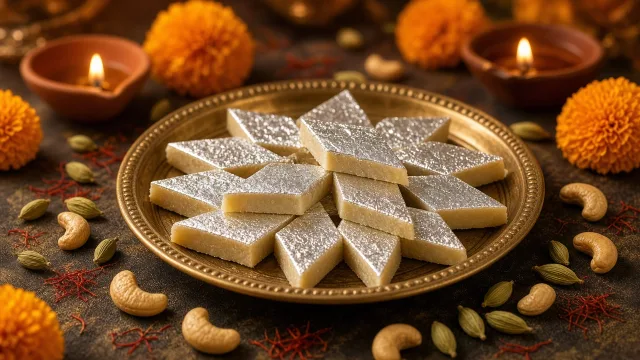
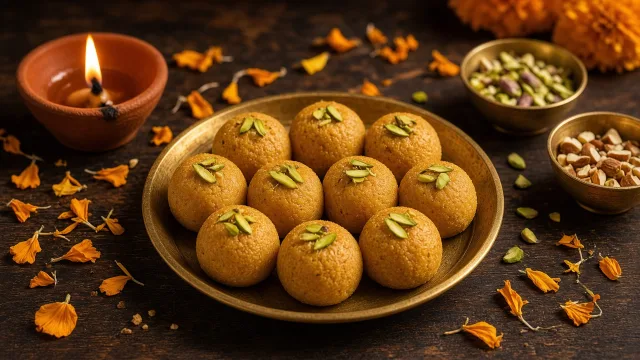
This simple sweet uses dates for sweetness and needs no sugar syrup. It is a useful addition to a festive platter alongside classics such as kaju katli and besan ladoo.
Makes: about 12-14 laddoos Time: about 25 minutes
Ingredients
- 1 cup soft seedless dates, packed
- 1/2 cup almonds
- 1/2 cup cashews
- 2 tbsp pistachios
- 2 tbsp desiccated coconut, plus extra for rolling
- 1 tsp ghee
- 1/4 tsp cardamom powder
- 1 tbsp poppy seeds or sesame seeds (optional)
Method
- Toast the nuts. Heat a heavy pan on low. Dry-roast the almonds, cashews and pistachios for 4-5 minutes until fragrant. Cool, then chop coarsely or pulse briefly in a mixer. Keep some texture.
- Toast the coconut and seeds. In the same pan, toast the coconut and seeds for a minute until lightly golden. Set aside.
- Make the date paste. Pulse the dates in a mixer until they form a sticky paste. If the dates are dry, soak them in warm water for 10 minutes and drain well first.
- Cook briefly. Warm the ghee in the pan on low heat. Add the date paste and stir for 2-3 minutes until it softens and comes together.
- Combine. Switch off the heat. Add the nuts, coconut, seeds and cardamom, and mix well.
- Shape. When the mixture is cool enough to handle but still warm, grease your palms lightly and roll into small balls. Roll in coconut if you like.
- Store. Keep in an airtight container in a cool place for up to a week, or in the fridge for longer.
Tips
- Choose soft dates. Soft varieties bind better and need no added sugar.
- Swap the nuts. Walnuts or peanuts work well and can lower the cost.
- Watch portions. These laddoos are calorie-dense. People with diabetes should check with their doctor, as dates still raise blood sugar.
Other ways to sweeten smarter this Diwali
- Make smaller pieces. Smaller laddoos and barfi squares stretch each batch further.
- Use fruit. Ripe banana, apple or dried figs can replace part of the sugar in halwas and kheer.
- Buy sugar early. If you plan to cook large batches, buying before the final festive rush may help.
If you are travelling home for the festival, also plan ahead for fares, as we covered in our guide to Diwali and Chhath airfares.
Sources
- Business Standard: Centre releases 1.4 mn tonnes sugar quota to cool prices ahead of Diwali (14 October 2026)
- The Economic Times: Early crushing to shore up sugar supplies before Diwali (15 October 2026)
- Firstpost: Mithai on a budget? Why India's sugar prices are soaring ahead of the festive season (15 October 2026)
- MoSPI: CPI press release for September 2026