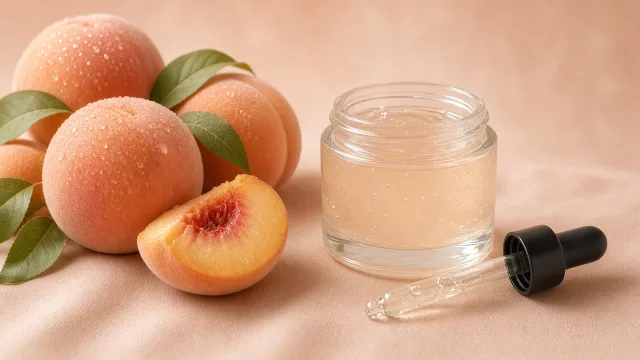
Scroll through any beauty feed this autumn and two ingredients keep appearing: PDRN, often nicknamed "salmon DNA", and exosomes. Both are part of a wider shift towards "regenerative" skincare, and both have been taking "the internet and the treatment room by storm", as dermatologist Dr Dendy Engelman told Cosmopolitan.
But being popular isn't the same as being proven. Here's what these ingredients are, what recent research shows and how to decide whether they deserve a place on your shelf.
What is PDRN?
PDRN stands for polydeoxyribonucleotide, a DNA-derived material most commonly extracted from salmon sperm. It has been used for years in injectable treatments in parts of Asia, valued for its reported tissue-repair effects. More recently it has moved into creams and serums, especially in Korean skincare.
The latest evidence
A study published in PLOS One in July 2026 tested a medium-length topical PDRN preparation. In lab and skin-sample experiments, it activated repair-related pathways in skin cells and increased several types of collagen and elastic-fibre proteins in UV-damaged skin.
The study also included a randomised, double-blind, split-face trial in 31 women aged 35–55 with sensitive skin. Each applied a 0.1% PDRN eye cream to one side of the face and a 0.1% retinol eye cream to the other, twice daily for 28 days. The authors reported roughly two-fold greater improvements in wrinkles, dermal thickness and eye-bag measurements on the PDRN side, and no reported adverse reactions with either cream.
Reasons for caution
- The trial was small and short, at 31 participants over four weeks.
- The authors themselves noted that early changes may partly reflect hydration or "plumping" rather than lasting structural repair.
- Several authors are affiliated with skincare biotechnology companies, and the PDRN was supplied by a manufacturer, though the paper declares no competing interests.
- Results for one specific PDRN preparation don't automatically apply to every product that lists PDRN.
What are exosomes?
Exosomes are tiny membrane-bound packages released by cells to carry signals to other cells. In skincare, they're typically derived from stem cells or plants and marketed as a way to support repair and rejuvenation.
The latest evidence
A 2026 systematic review of exosome-based skin rejuvenation in humans identified 19 studies. It found associations with short-term improvements in hydration, elasticity, wrinkles, pores, pigmentation and overall appearance. Most studies reported good safety for topical use, though there were individual reports of risks with off-label injectable use.
The reviewers were clear about the limits: most studies weren't randomised, methods varied widely and follow-up was lacking. They concluded that rigorous randomised trials and standardised reporting are needed.
Both ingredients look promising. Neither has the decades of evidence behind sunscreen, retinoids or simple moisturisers.
PDRN vs exosomes at a glance
- Source: PDRN is usually derived from salmon DNA; exosomes come from cell cultures, often stem cells or plants.
- Track record: PDRN has a longer history in injectable use; topical exosomes are newer.
- Evidence quality: both have encouraging early studies, but few large, long-term, independent trials.
- Standardisation: products vary enormously in concentration, size and source, which makes comparison difficult.
How to shop sensibly
- Keep the basics first. Daily sunscreen, a gentle cleanser and a good moisturiser deliver more proven benefit than any trending ingredient.
- Look for specifics. Brands that state the concentration and source of the ingredient, and cite studies on their own formula, are more credible than vague claims.
- Be wary of miracle language. Phrases such as "reverses ageing" or "replaces injectables" are red flags.
- Patch test. Try any new product on a small area for a few days first, especially if you have sensitive skin or allergies, including to fish.
- Be extra careful with injections. Treatments involving injected exosomes or PDRN should only be done by qualified professionals using properly regulated products.
- Give it time, but set a limit. Use a product consistently for 8–12 weeks before judging it, and stop if it irritates.
Reading the label
On ingredient lists, PDRN may appear as "sodium DNA" or "polydeoxyribonucleotide". Some products use related ingredients called polynucleotides, which are not identical. Exosome products may describe their contents as "extracellular vesicles" or name a source such as a plant or cell culture. Remember that ingredients are listed roughly in descending order of concentration, so an ingredient near the end of a long list may be present in only tiny amounts. If a product makes big claims but lists its star ingredient last, treat that as a reason for scepticism.
Where they fit in a routine
Most PDRN and exosome products are serums, essences or creams, so they fit after cleansing and before moisturiser. Because they're marketed as soothing and repairing, they're often used after in-clinic treatments or alongside retinoids to reduce irritation. As with any new product, introduce one at a time so you can tell what's working.
Who might want to try them?
If your routine already covers the basics and you're curious about gentler alternatives to retinoids, particularly around the delicate eye area, a PDRN product could be worth trying. Exosome skincare is best treated as experimental for now: potentially interesting, but not a must-have.
A word on price
Trending ingredients often carry premium prices. Before you buy, ask whether the money would do more good spent on a sunscreen you enjoy wearing every day.
The takeaway
PDRN and exosomes reflect a welcome move towards repair rather than aggression in skincare, and early research is promising. But the evidence is still young. Enjoy them as optional extras, judge products by transparency rather than hype and keep sunscreen at the centre of your routine.