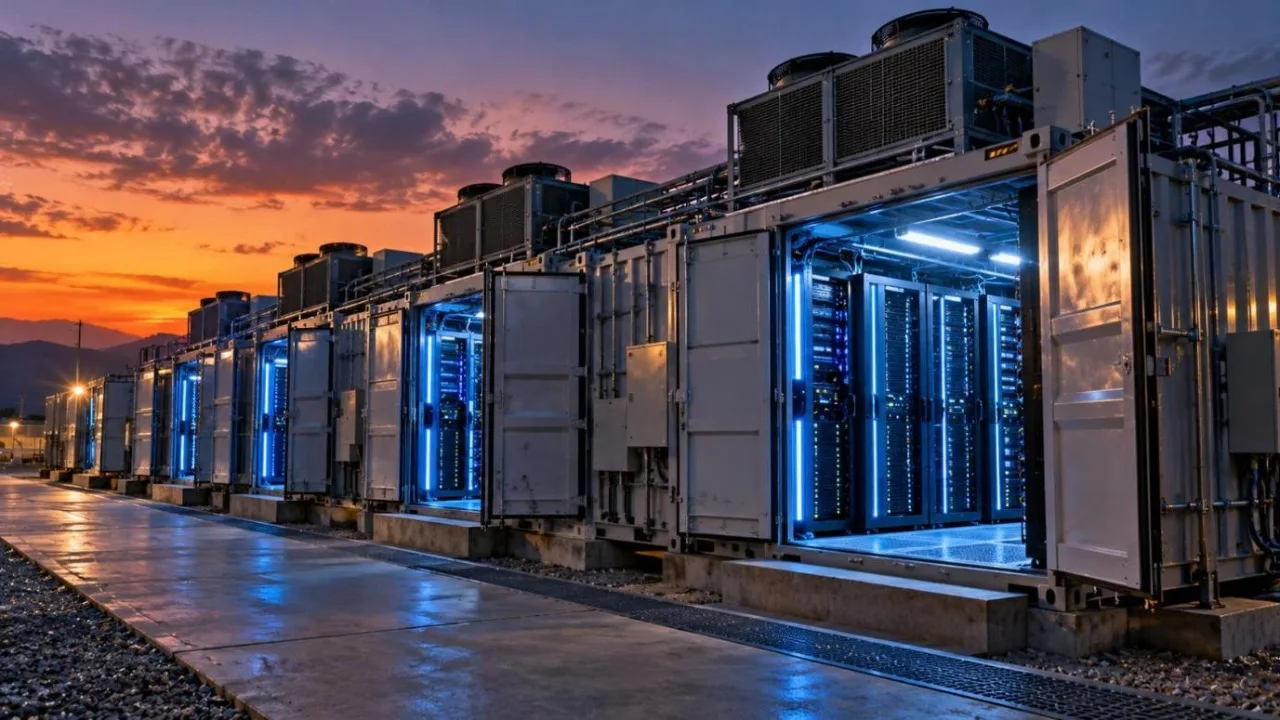
Nvidia has unveiled DSX POD, a reference design for complete AI data centres built inside modular containers, which it says can be switched on in a matter of weeks rather than months. Chief executive Jensen Huang presented the system at the company's GTC conference in Berlin on Wednesday, 21 October 2026, pitching it as a way to speed up Europe's AI build-out.
What is DSX POD?
DSX POD is a blueprint for "AI factories" based on Nvidia's new Vera Rubin chips. Partner companies build the systems inside modular containers, integrate and test them before shipping, and then connect them to a prepared site's power, cooling and network, according to Nvidia.
- Speed: Nvidia says deployment at a prepared site can fall from about six months to as little as 14 days. A transcript of the keynote cited a more modest "four to five months to about a month", so the exact gain may depend on the site.
- Water: its dry-cooling design could save about 54 million litres of water a day at a 2-gigawatt deployment, according to Yahoo Finance and the keynote transcript.
- Timing: partners plan worldwide deliveries from early 2027.
- Partners: they include Dell, HPE, Lenovo, Foxconn, Schneider Electric, Vertiv, Eaton, Crusoe, Wistron, Gigabyte, Bull, Delta, Armada and Anduril.
"An AI factory creates value when it starts producing tokens," Huang said. Moving from months to weeks is "completely game-changing for all of these AI factories," he added, according to Yahoo Finance.
Not a replacement for data centres
Nvidia said DSX PODs are not meant to replace traditional data centres. Instead, they let customers start running AI work while permanent sites are still being built. Huang said a 1-gigawatt AI factory costs about $50 billion, which helps explain why customers want them earning money as quickly as possible.
A push for Europe
Nvidia said it had invested nearly $10 billion in Europe over the past year and has more than 12,000 European partnerships, according to the keynote transcript. Europe has lagged the US in building AI computing capacity, and faster, prefabricated deployments are one way to narrow the gap, though power supply and permits remain bottlenecks, as shown by today's problems at Australian operator NextDC.
For a wider view of the AI spending boom, see our analysis Is AI a Bubble?